Loading...
Loading...
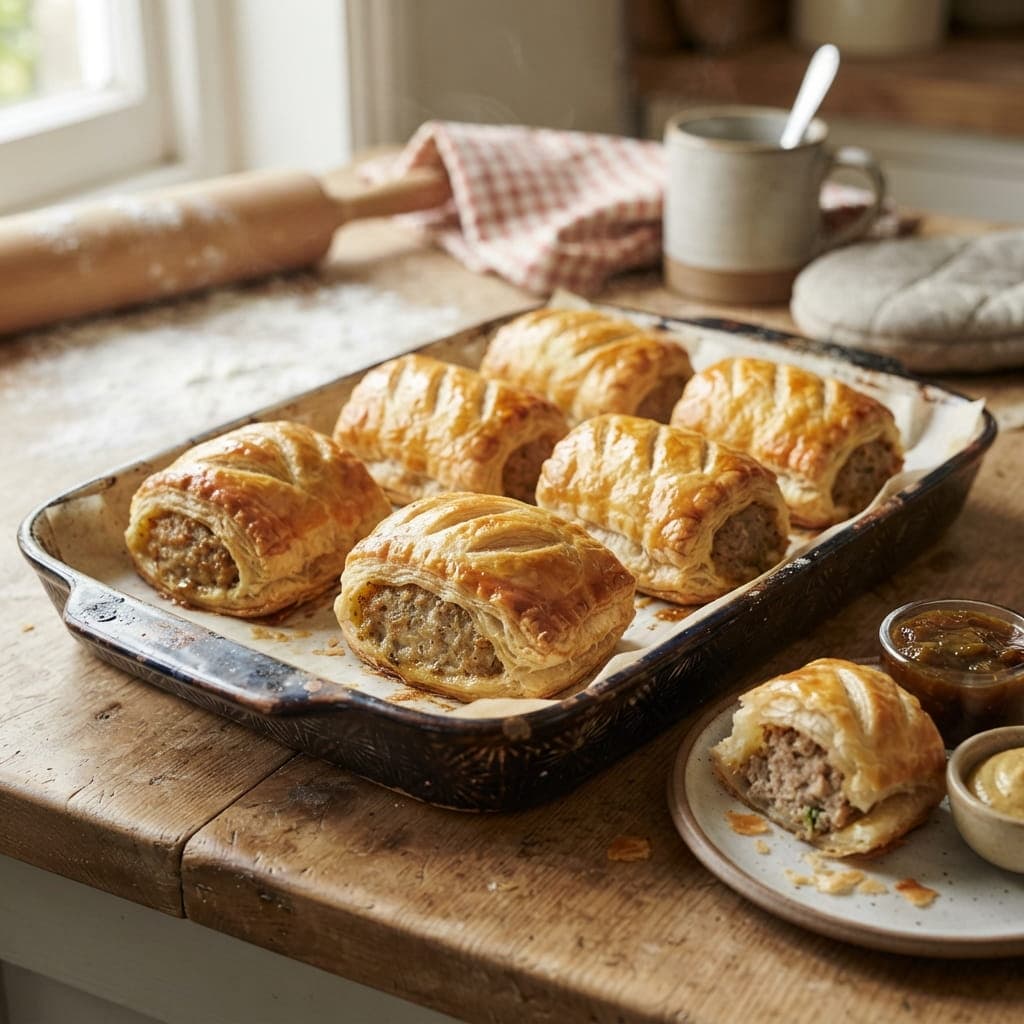
Scoring shallow diagonal lines across the top of the pastry before baking isn't just decorative - it helps steam escape evenly, which is what keeps the puff pastry from splitting unevenly or turning soggy underneath the sausage meat. A British bakery and party staple, these are simple enough to make from scratch but forgiving enough that even a slightly imperfect roll still turns out properly flaky and golden.
Prep Time
20 min
Per serving
240kcal
Calories
8g
Protein
16g
Carbs
17
Cook Time
28 min
Servings
12 people
Difficulty
medium
Fat
1g
Fiber
1g
Sugar
Follow step-by-step with voice guidance.
Preheat the oven to 200°C (400°F) and line a baking sheet with parchment paper.
In a bowl, combine the sausage meat, breadcrumbs, chopped onion, dried sage, salt, and black pepper, mixing until well combined.
Roll out the puff pastry into a large rectangle and cut in half lengthwise to form two long strips.
Shape the sausage mixture into two long logs and place one down the center of each pastry strip.
Brush one long edge of each pastry strip with beaten egg, then fold the pastry over the sausage mixture, sealing the edge firmly by pressing with a fork.
Cut each long roll into individual pieces, about 5cm long.
Place the rolls seam-side down on the prepared baking sheet, spacing them apart, and brush the tops with the remaining beaten egg.
Score a few shallow diagonal lines across the top of each roll.
Bake for 25-30 minutes, until the pastry is puffed and deep golden brown and the sausage is cooked through.
Serve warm or at room temperature.
Seal the Pastry Seam Well: Pressing firmly along the edge with a fork prevents the filling from leaking out during baking and helps the pastry hold its shape. Score the Top Before Baking: This lets steam escape evenly as the pastry puffs, preventing it from splitting unevenly or becoming soggy from trapped moisture. Don't Overfill the Pastry: A moderate amount of sausage filling makes rolling and sealing much easier, and prevents the rolls from bursting open in the oven.
Yes, assemble them uncooked and refrigerate for up to a day, or freeze for up to 3 months - bake straight from frozen, adding a few extra minutes to the baking time.
0 reviews • 0.0 / 5 Average Rating
No reviews yet. Be the first to review this recipe!
More Like This
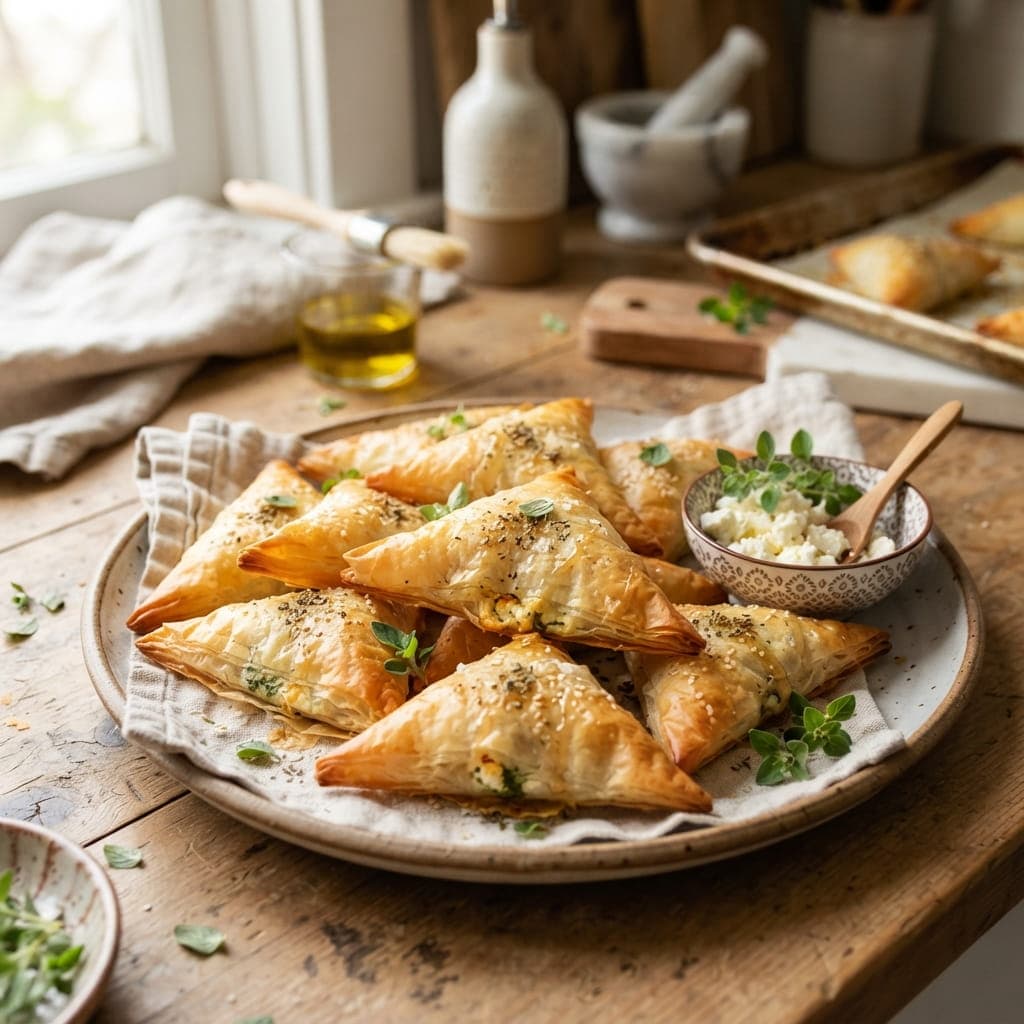
This borrows the flavor of traditional Greek tiropita (cheese pie) but swaps the usual delicate phyllo dough for puff pastry, which is far more forgiving for a quick appetizer - no risk of the paper-thin sheets tearing or drying out mid-assembly. Folded into neat triangles the same way phyllo triangles are traditionally shaped, these puff up into golden, flaky pockets around a salty, creamy feta filling.
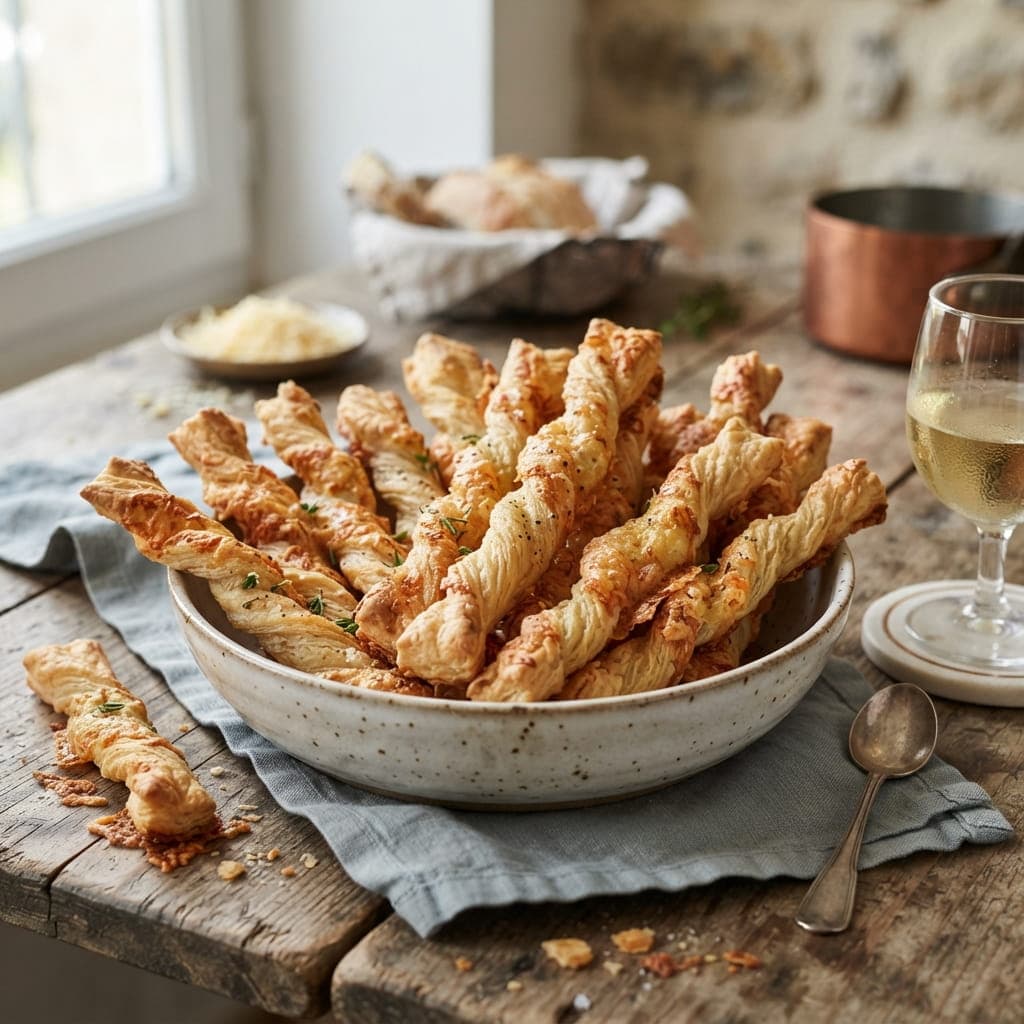
Twisting each strip of cheese-topped pastry several times before baking is what gives these their signature spiral shape, and it also increases the surface area that turns golden and crisp in the oven compared to a flat strip. A quick chill before baking keeps the butter in the pastry solid, which is essential for the many thin layers to puff up properly rather than melting together into a dense, flat strip.
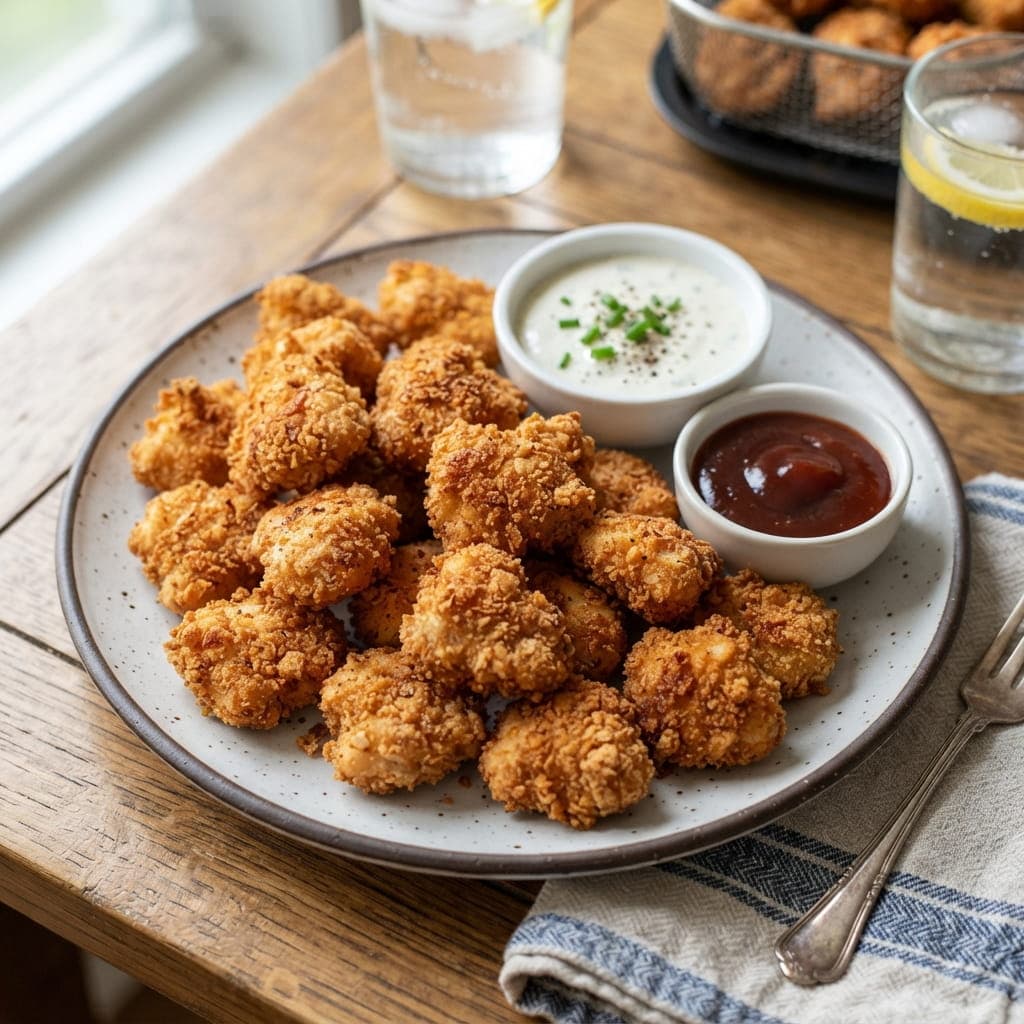
Crushed cornflakes mixed into the breadcrumb coating is the shortcut that gets these closer to a fast-food crunch than plain breadcrumbs alone could manage, using a fraction of the oil a deep fryer would need. Cutting the chicken into uniform pieces matters more than it seems, since unevenly sized nuggets cook at different rates and some end up dry while others stay underdone.
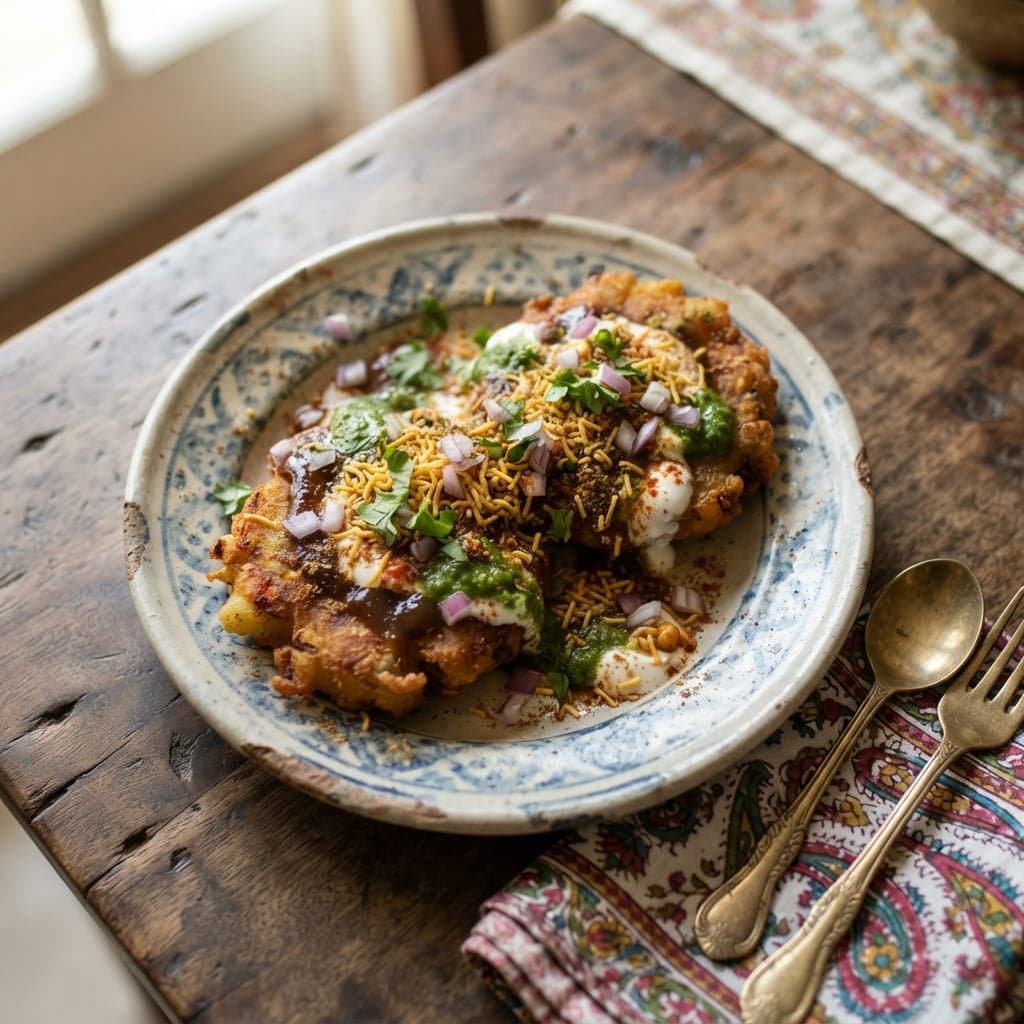
Boiling the potatoes a day ahead and letting them cool completely in the fridge is a trick that makes a real difference here - warm, freshly boiled potatoes hold too much moisture and fall apart in the pan, while cold, dried-out ones bind and hold their shape far better. Pan-fried in just a little oil until deeply crusted on both sides, these are the popular street-cart patties found across Indian night markets.