Loading...
Loading...
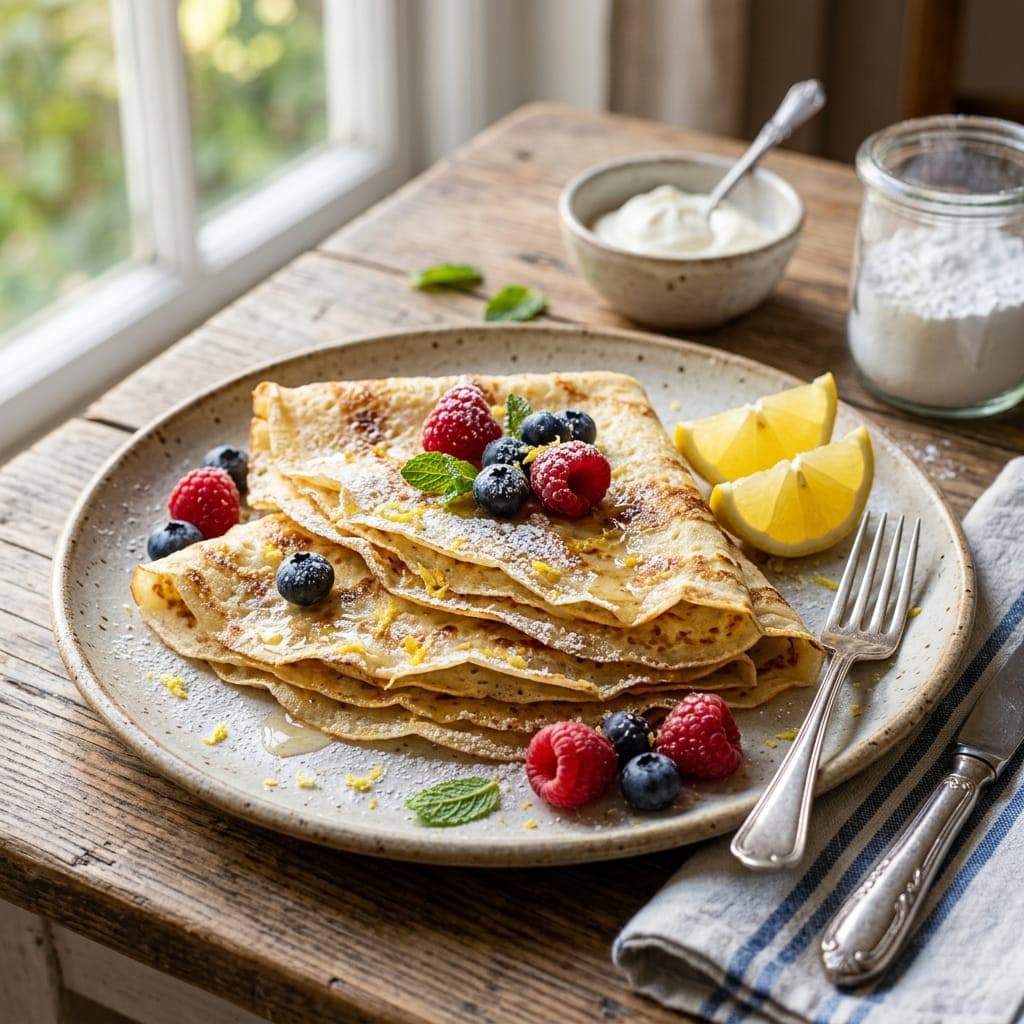
A crepe batter is really just a thin custard - mostly milk and egg with just enough flour to hold together. There's no leavening at all, which is what gives crepes their signature paper-thin, lacy texture instead of any puff. Served the traditional way, folded into quarters with fresh lemon juice and a dusting of sugar, it's dessert-simple and genuinely elegant.
Per serving
210kcal
Calories
7g
Protein
26g
Carbs
8g
Fat
Prep Time
40 min
Cook Time
20 min
Servings
4 people
Difficulty
medium
1g
Fiber
8g
Sugar
Follow step-by-step with voice guidance.
In a blender, combine the flour, milk, eggs, melted butter, sugar, and salt. Blend on high for about 20-30 seconds, until completely smooth with no lumps.
Let the batter rest in the refrigerator for at least 30 minutes (up to overnight) - this relaxes the gluten and gives more tender, tear-resistant crepes.
Heat a crepe pan or nonstick skillet over medium heat and lightly brush with butter.
Pour about 1/4 cup of batter into the center of the pan, immediately tilting and swirling the pan in a circular motion to spread the batter into a thin, even layer.
Cook for 1-2 minutes, until the edges lift and turn golden and the surface looks matte rather than wet, then carefully flip and cook the other side for 30-60 seconds.
Stack the finished crepes on a plate, covering loosely to keep them warm and pliable, while you cook the remaining batter.
To serve, sprinkle each crepe with a little sugar and a squeeze of fresh lemon juice, then fold into quarters and serve immediately.
Rest the Batter First: Skipping the resting time results in crepes that tear easily and shrink unevenly in the pan - even 30 minutes in the fridge makes a noticeable difference. Swirl Immediately After Pouring: You have only a couple of seconds before the batter starts to set, so pour and swirl in one continuous motion to get an even, paper-thin crepe. Don't Flip Too Early: Wait until the edges naturally lift away from the pan and the surface loses its wet sheen - flipping too soon will tear the delicate crepe.
This usually happens if the batter wasn't rested long enough, or if you flip before the surface has fully lost its wet sheen. Let the batter rest at least 30 minutes and wait for the edges to lift naturally before flipping.
0 reviews • 0.0 / 5 Average Rating
No reviews yet. Be the first to review this recipe!
More Like This
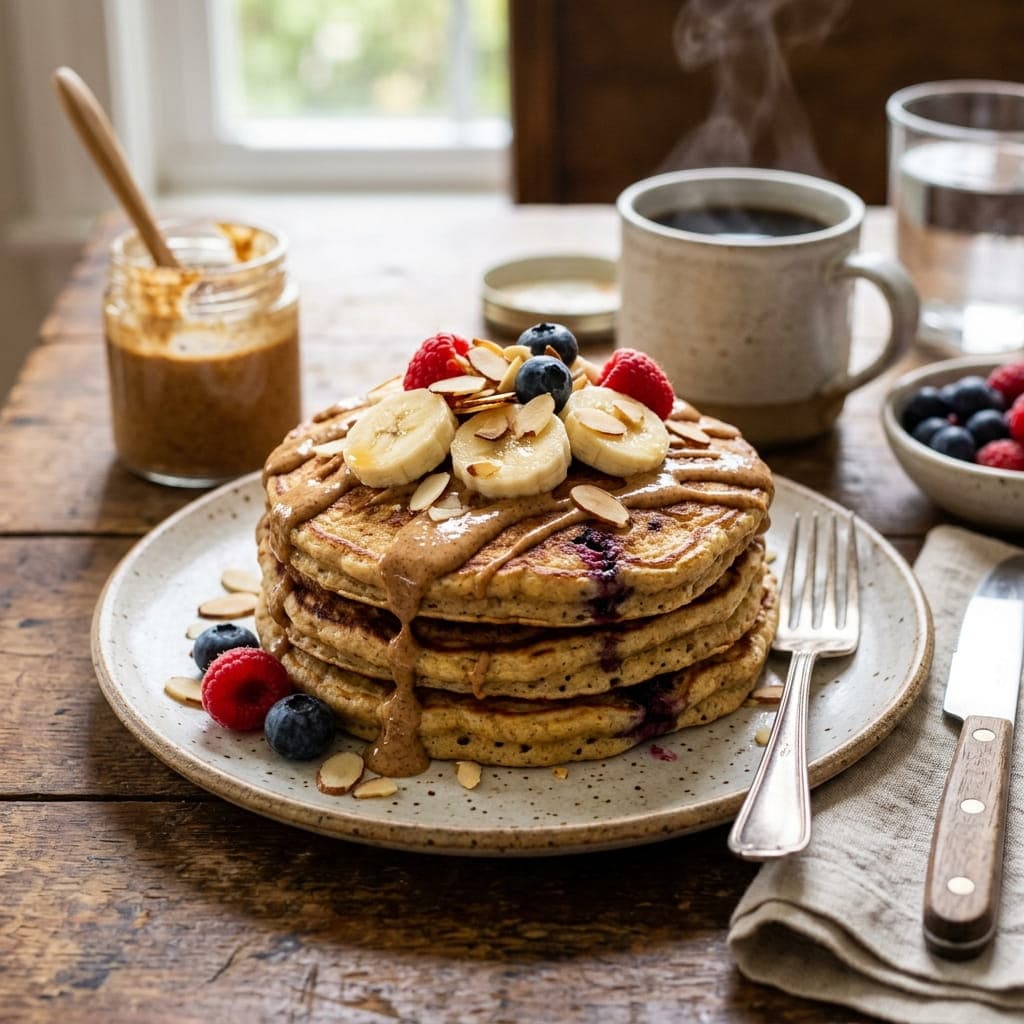
Just three core ingredients - mashed banana, eggs, and almond butter - whisk together into a batter with no flour, no dairy, no sweetener, and nothing that falls outside Whole30 or paleo guidelines. They're thinner and more delicate than flour-based pancakes, closer to a crepe in texture, but naturally sweet enough to skip syrup entirely.
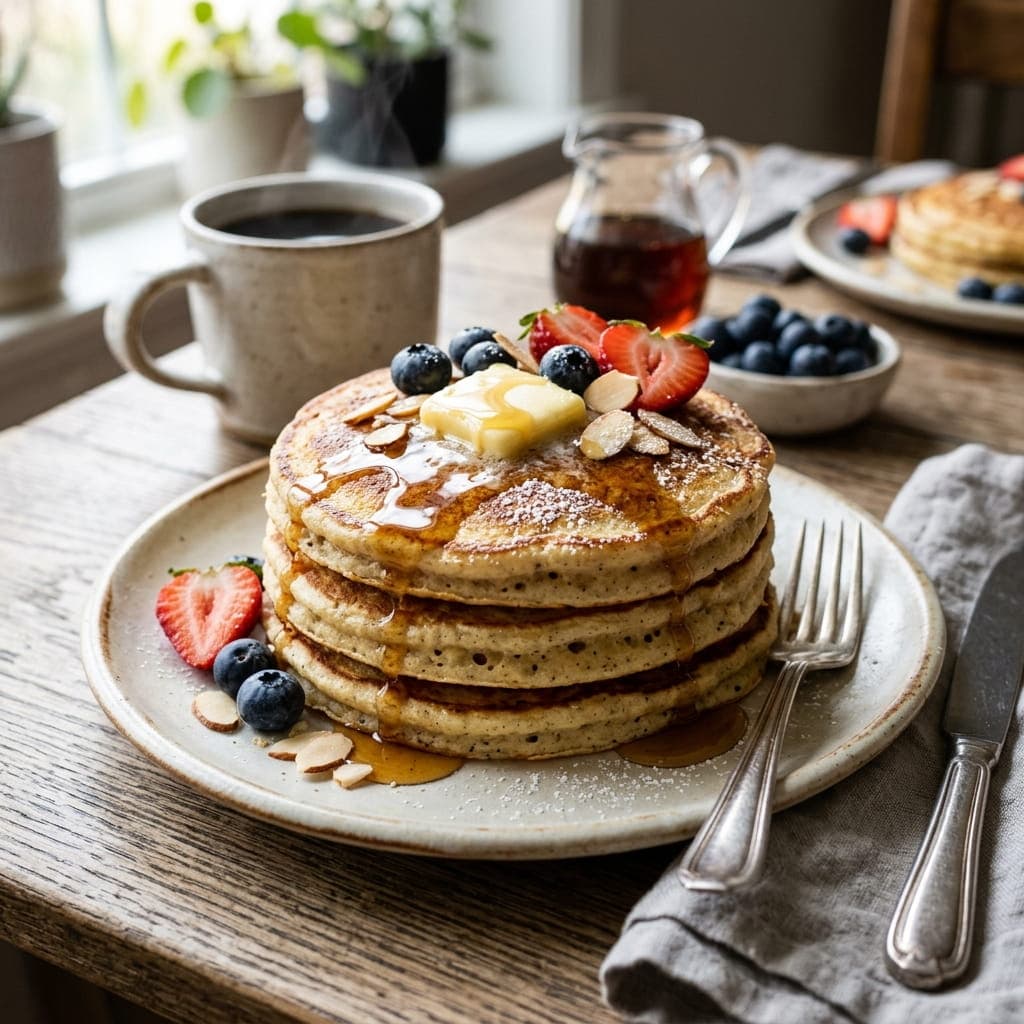
Almond flour behaves nothing like wheat flour - it's denser, has no gluten to grab onto, and needs more egg and a gentler hand on the heat to hold together. These vanilla pancakes lean into that instead of fighting it, coming out tender, slightly nutty, and completely sugar-free without tasting like a compromise.
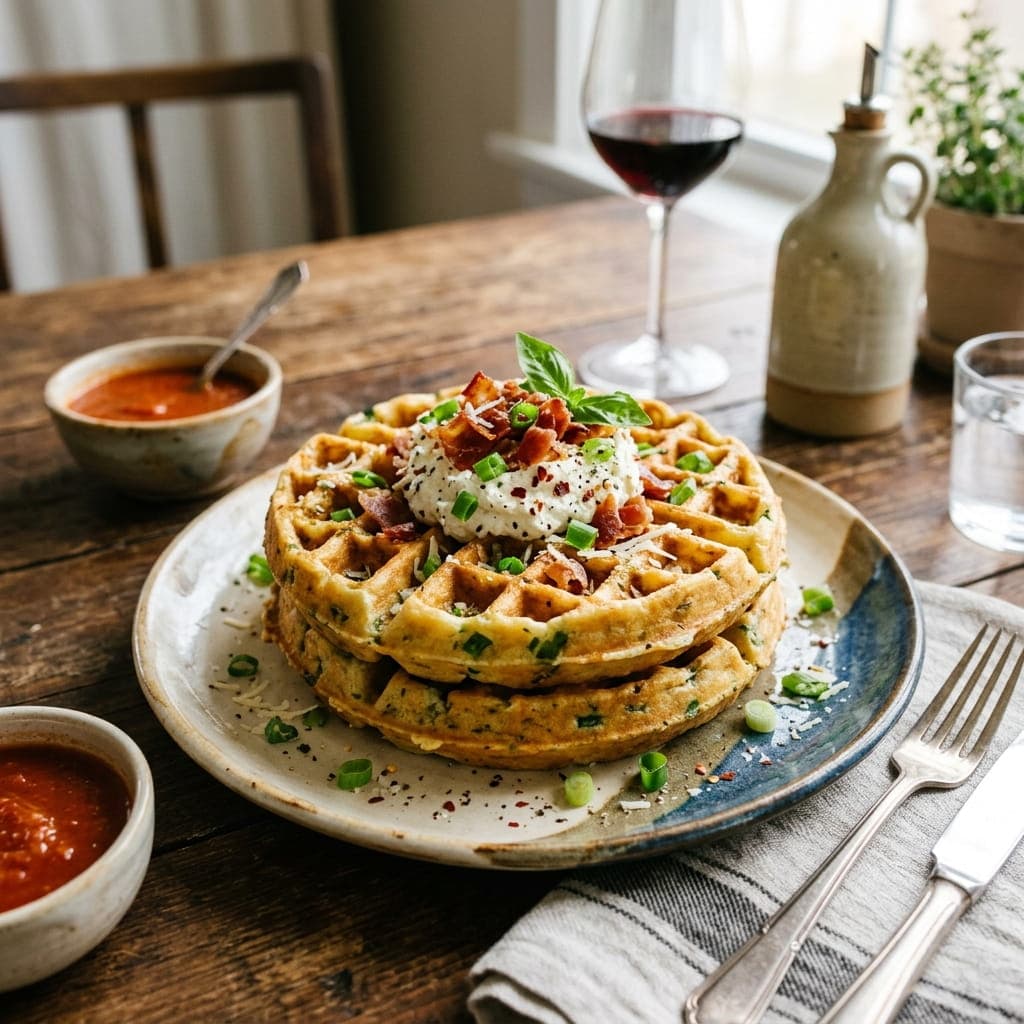
Waffles don't have to be dessert. This batter trades sugar and vanilla for parmesan, green onion, and a touch of garlic, then presses into the iron the same way a sweet batter would - crisp ridges outside, tender crumb inside, but built to be topped with an egg or a slice of prosciutto instead of syrup.
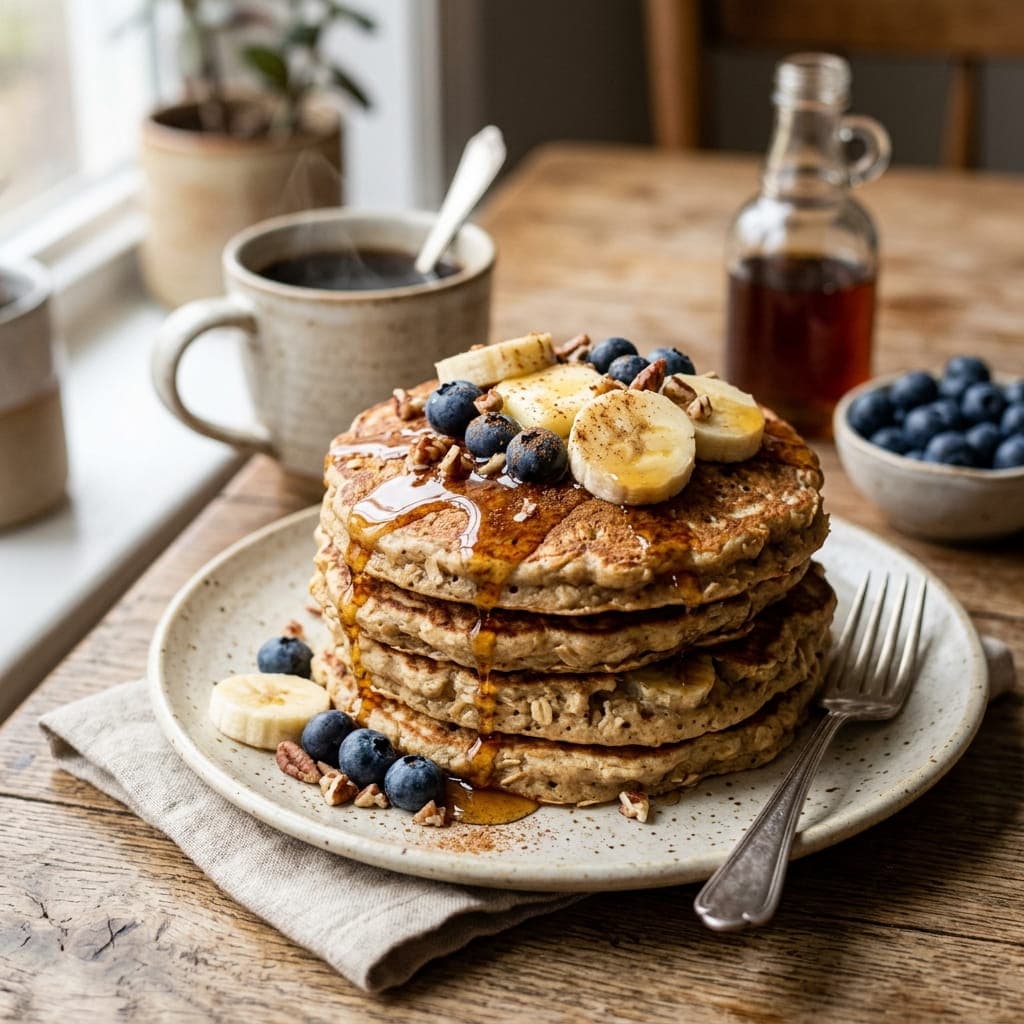
Overripe bananas and blended oats do double duty here - the bananas add natural sweetness so you barely need sugar, and ground oats replace wheat flour without the gummy texture gluten-free baking sometimes gets a bad reputation for. A wholesome pancake that holds together well and tastes like banana bread hit the griddle.