Loading...
Loading...
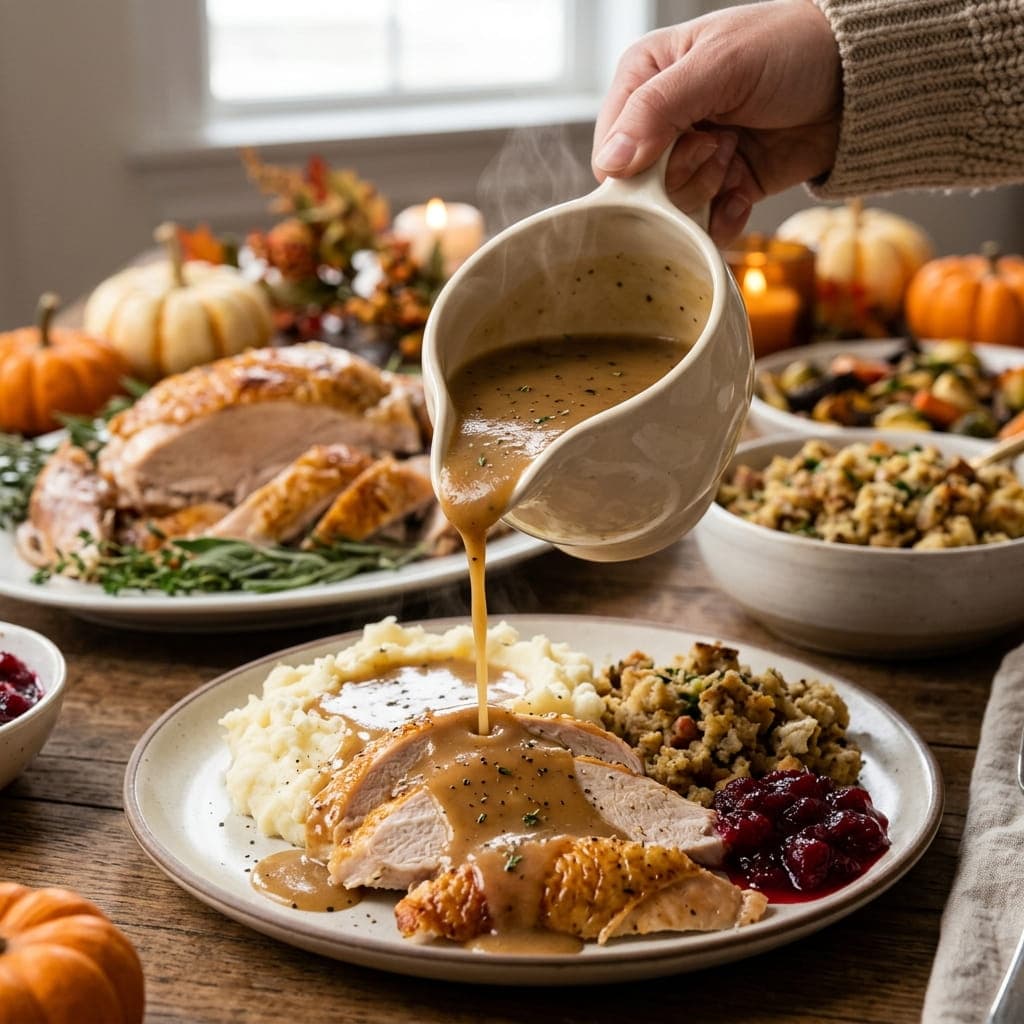
This separates the fat from the turkey drippings first, since using too much fat in the roux can leave the gravy tasting greasy rather than smooth and savory. Simmering the gravy with the reserved turkey neck and giblets, if available, while the bird rests is what deepens the flavor well beyond what drippings alone could provide.
Prep Time
10 min
Per serving
60kcal
Calories
2g
Protein
3g
Carbs
4g
Fat
Cook Time
15 min
Servings
10 people
Difficulty
medium
Follow step-by-step with voice guidance.
After removing the turkey from the roasting pan, pour the pan drippings into a fat separator or a bowl, letting the fat rise to the top.
Spoon off about a quarter cup of the fat, discarding or reserving the rest, and keep the flavorful drippings underneath.
In a saucepan, heat the reserved fat over medium heat.
Whisk in the flour and cook, stirring constantly, for 1 to 2 minutes, until lightly golden.
Gradually whisk in the turkey broth and reserved drippings, a little at a time, making sure no lumps form.
Bring to a simmer, whisking often, and cook for 8 to 10 minutes, until thickened.
Season with salt and pepper to taste.
Strain through a fine mesh sieve for a smoother texture, if desired, before serving hot.
Separate the Fat From the Drippings First: Using too much fat in the roux can leave the gravy tasting greasy, so measure out just what's needed and keep the flavorful drippings underneath. Simmer Giblets for Extra Depth: If available, simmering the turkey neck and giblets in the broth while the bird roasts builds significantly more flavor into the base of the gravy. Whisk Constantly While Adding Broth: This is what keeps the gravy smooth, since pockets of unmixed flour are what cause lumps.
Supplement with butter to reach the needed amount of fat for the roux, and use a good quality turkey or chicken broth to make up the difference in liquid and flavor.
0 reviews • 0.0 / 5 Average Rating
No reviews yet. Be the first to review this recipe!
More Like This
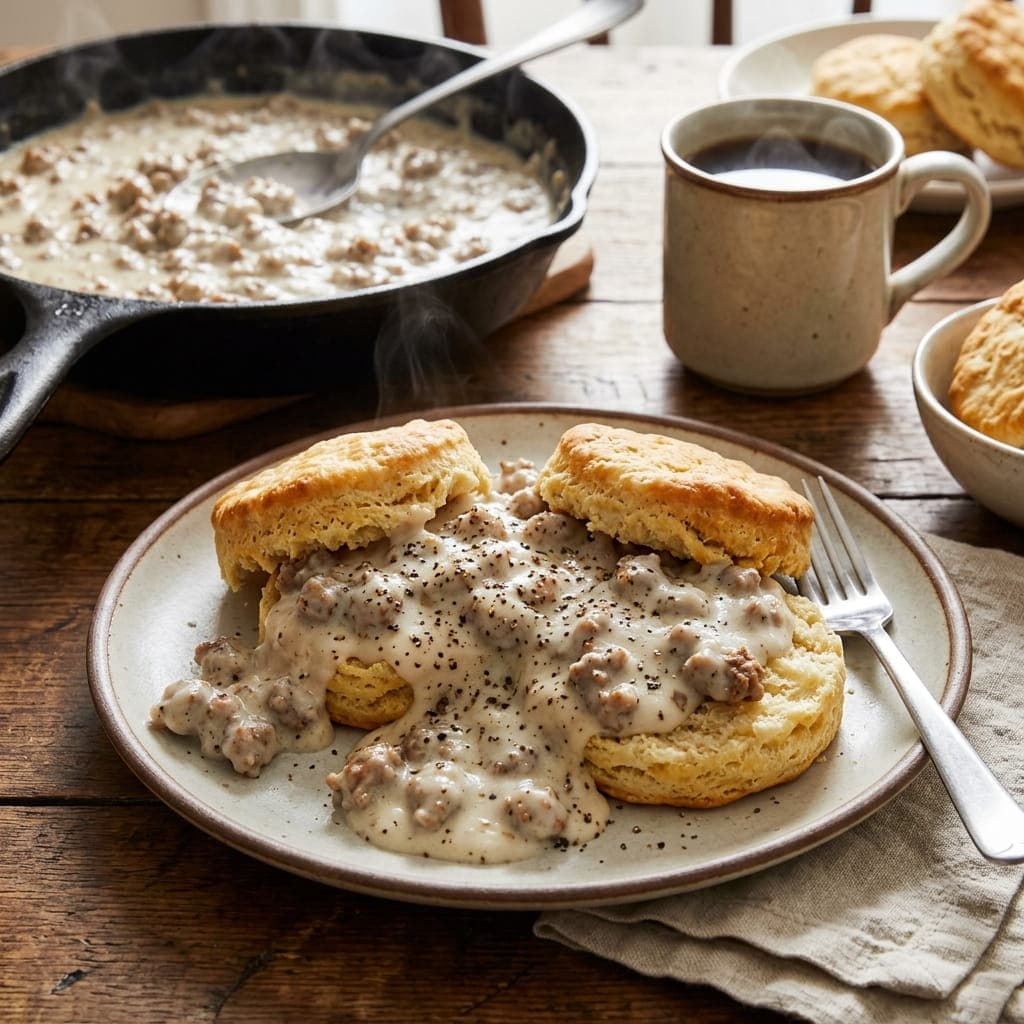
This browns the breakfast sausage thoroughly and leaves all its rendered fat in the pan, since that flavorful fat becomes the base for the roux instead of adding butter or oil separately. A generous amount of black pepper stirred in at the end is what gives this Southern staple its characteristic peppery bite, cutting through the richness of the milk based gravy.
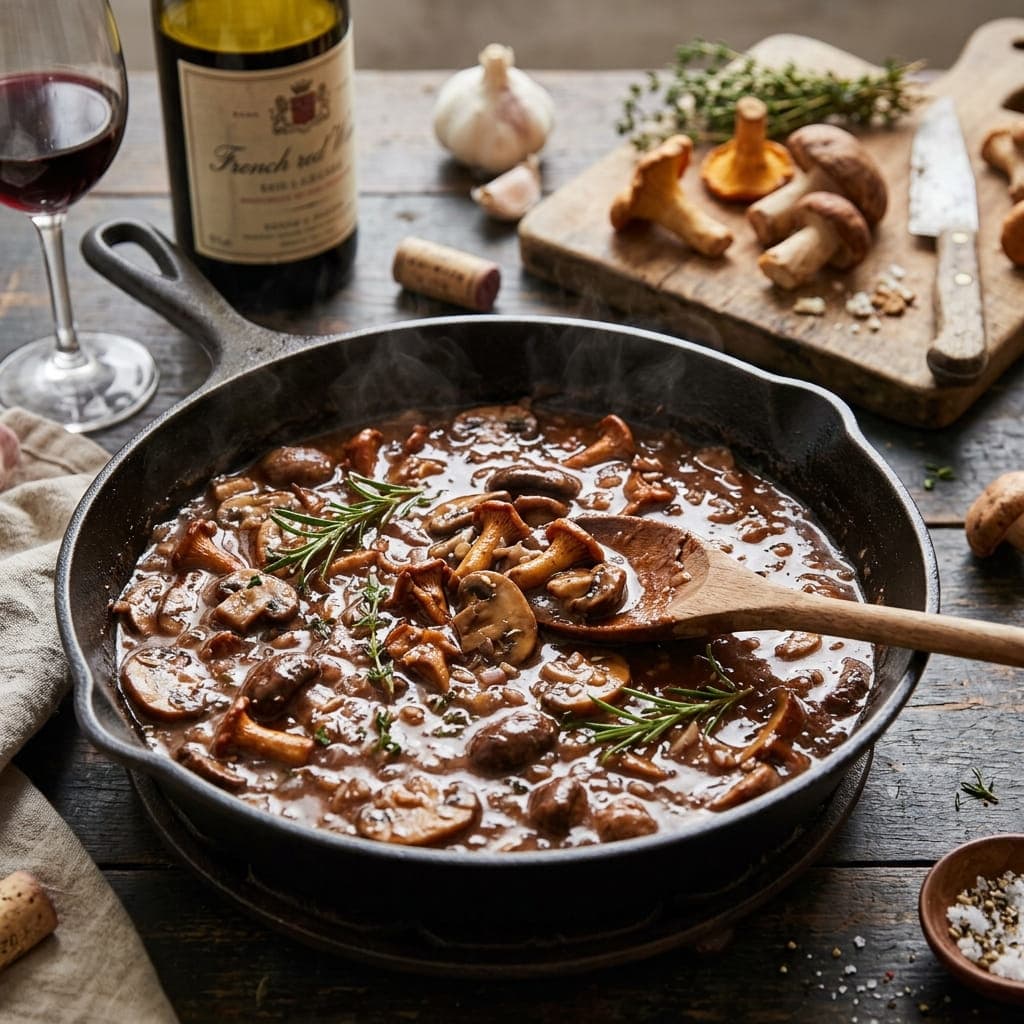
This sears the mushrooms in a single layer without crowding the pan, since overcrowded mushrooms steam instead of browning, missing out on the deep, caramelized flavor this French style gravy depends on. Deglazing the pan with red wine after the mushrooms and shallots are cooked lifts every browned bit stuck to the bottom straight into the sauce.
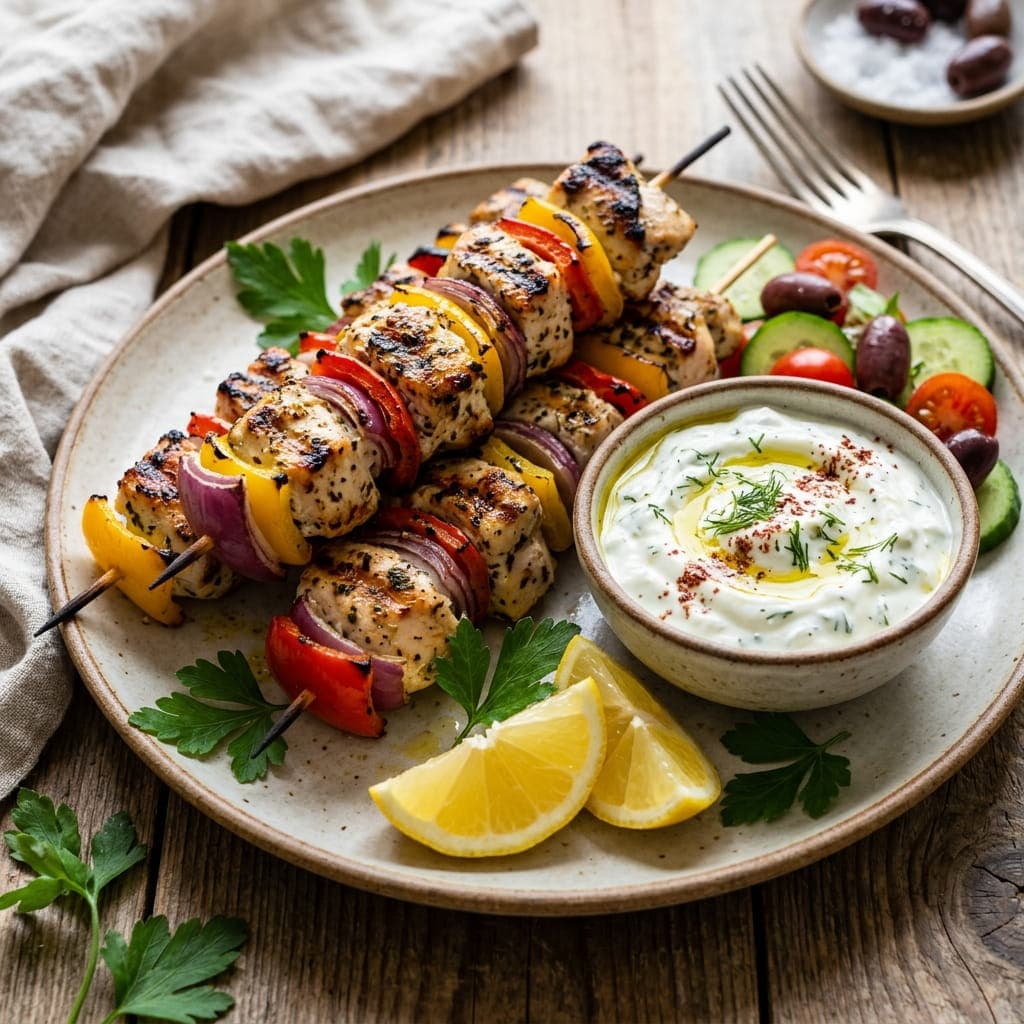
This uses Greek yogurt as the marinade base, which is thicker and higher in protein than regular yogurt, so it clings to the meat more effectively while also gently tenderizing it thanks to its mild natural acidity. Fresh oregano and lemon zest whisked directly into the yogurt bring the same bright, herbaceous flavor found in classic Greek souvlaki without needing any added oil to carry it.
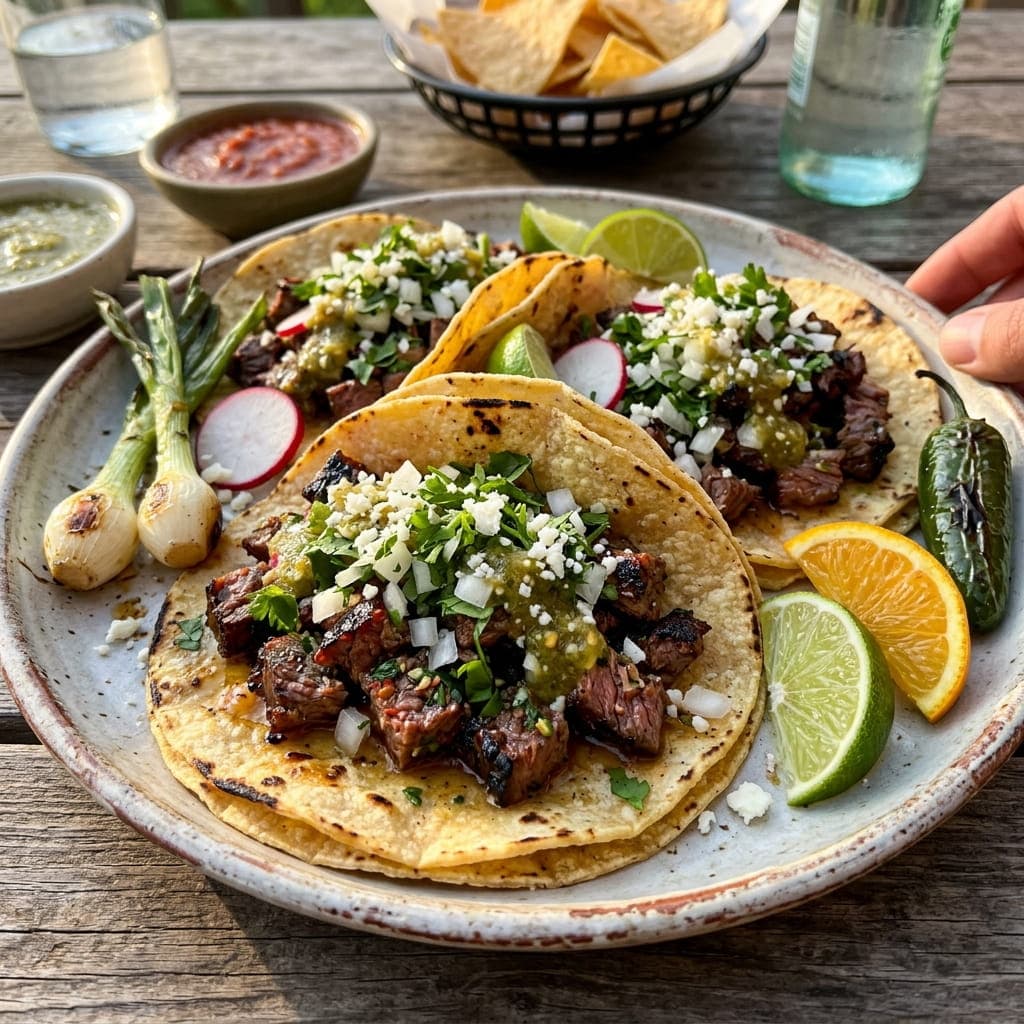
This combines both orange and lime juice, following the traditional carne asada approach, since the orange's natural sweetness balances the lime's sharp acidity, together tenderizing the beef while building a more complex citrus flavor than either juice could achieve alone. A generous amount of fresh cilantro blended right into the marinade infuses the beef with flavor from the inside rather than just being sprinkled on as a garnish afterward.