Loading...
Loading...
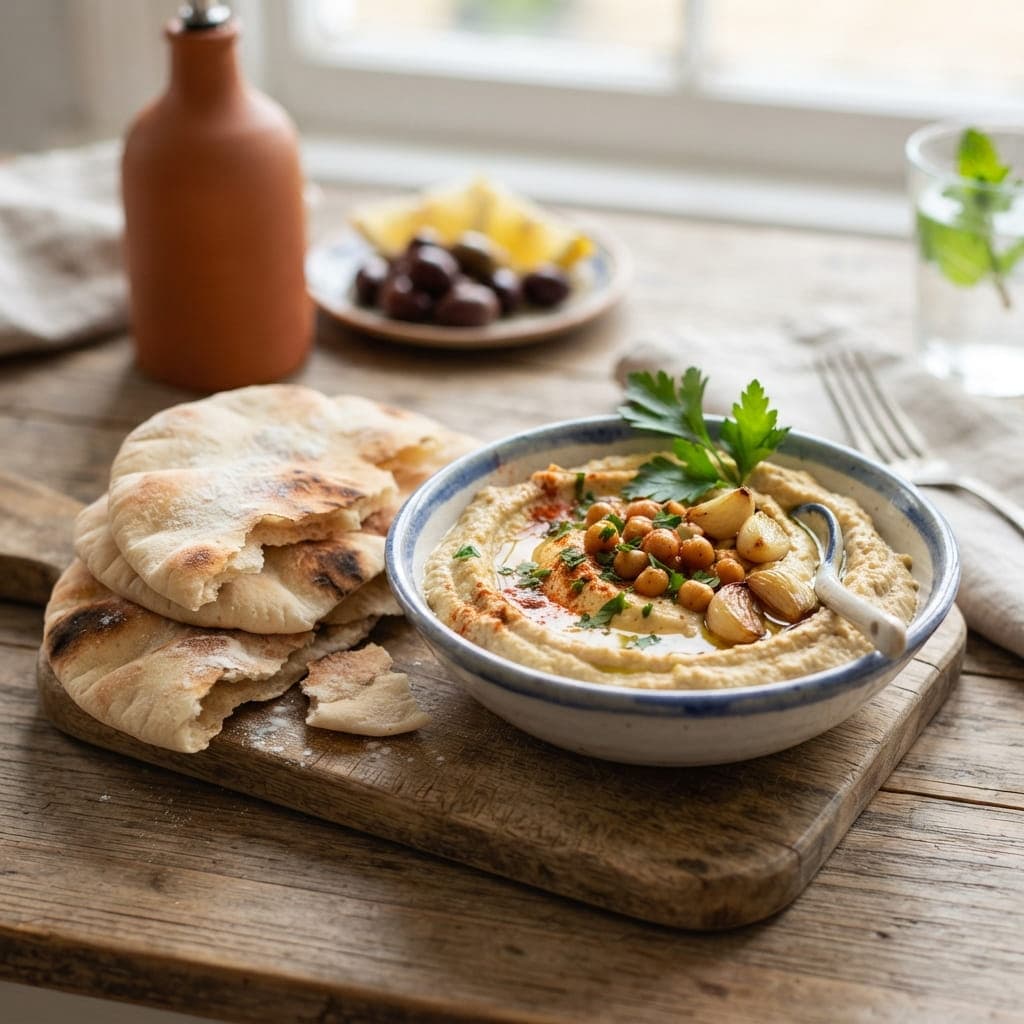
Peeling the skins off the chickpeas - tedious as it sounds - is the single biggest factor in getting genuinely silky, restaurant-style hummus rather than a slightly grainy dip. Blending the tahini and lemon juice together first, before adding the chickpeas, is a lesser-known trick that whips the tahini into a lighter, fluffier base that makes the final texture noticeably smoother.
Per serving
220kcal
Calories
7g
Protein
24
Prep Time
20 min
Cook Time
0 min
Servings
6 people
Difficulty
easy
Carbs
12g
Fat
6g
Fiber
2g
Sugar
Follow step-by-step with voice guidance.
Drain the chickpeas, reserving the liquid, and rub them between your palms or a clean towel to loosen and remove the skins. Discard the skins (this step takes a few extra minutes but significantly improves texture).
In a food processor, blend the tahini and lemon juice together for 1-2 minutes, until pale and fluffy.
Add the minced garlic, cumin, and a pinch of salt, blending briefly to combine.
Add the peeled chickpeas and blend for 2-3 minutes, scraping down the sides as needed, until mostly smooth.
With the processor running, drizzle in the olive oil and a few tablespoons of the reserved chickpea liquid, blending until the hummus reaches a light, creamy consistency.
Taste and adjust salt, lemon, or garlic as needed.
Spread the hummus into a shallow bowl, drizzle with extra olive oil, and sprinkle with paprika and chopped parsley.
Warm the pita bread briefly in a dry pan or oven, then cut into wedges and serve alongside the hummus.
Peel the Chickpea Skins: This step is often skipped for convenience, but it's the biggest single factor in achieving truly smooth, restaurant-quality hummus rather than a slightly grainy dip. Blend Tahini and Lemon First: Whipping these two together before adding the chickpeas creates a lighter, fluffier base that results in a noticeably smoother final texture. Use the Reserved Chickpea Liquid: This starchy liquid (sometimes called aquafaba) helps thin the hummus to the right consistency without diluting the flavor the way plain water would.
It's optional but makes a real difference - peeled chickpeas blend into a noticeably smoother, silkier hummus, while skipping this step results in a slightly grainier texture.
0 reviews • 0.0 / 5 Average Rating
No reviews yet. Be the first to review this recipe!
More Like This

Street vendors fry samosas in two stages - low heat first to cook the pastry all the way through, then a blast of higher heat to turn the outside deep golden and blistered. Skip the first stage and you get raw, doughy pastry under a browned shell; skip the second and the samosas stay pale and soft instead of properly crisp and flaky.
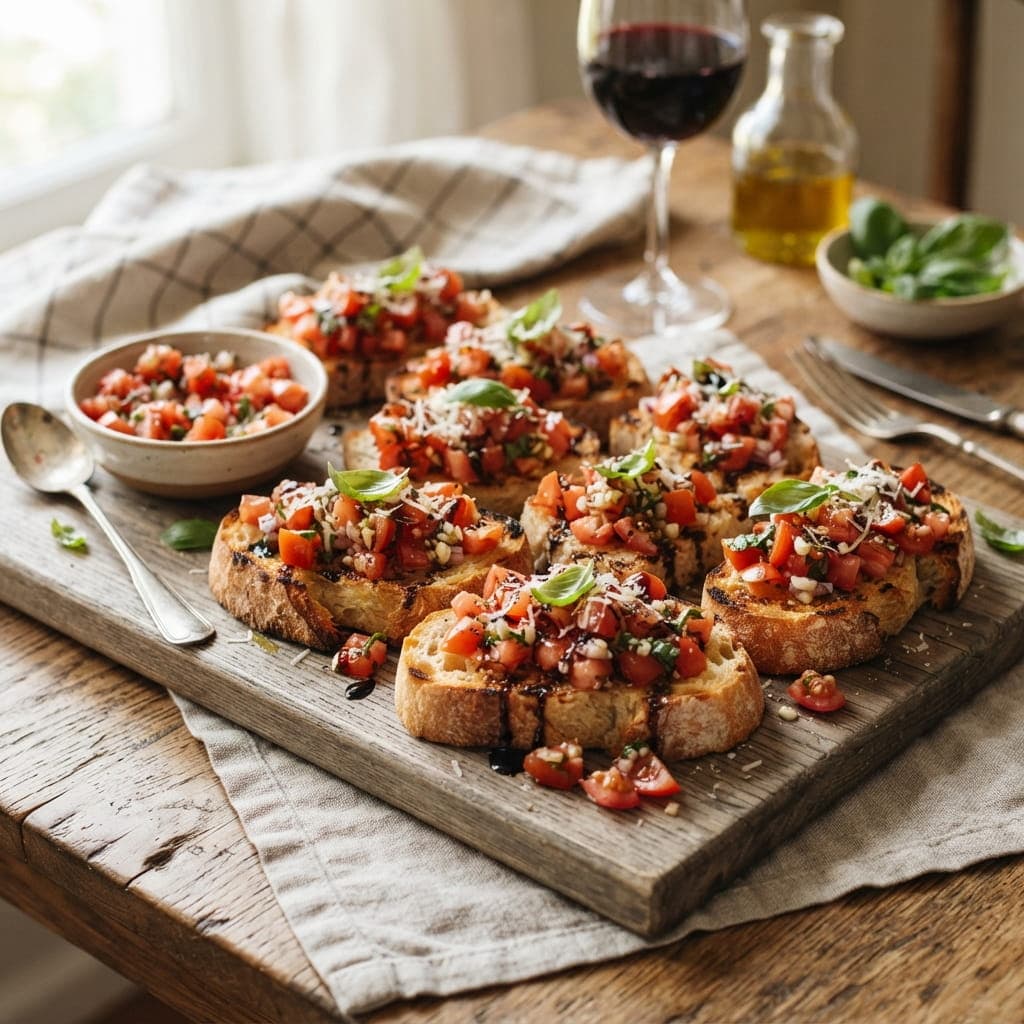
Rubbing a raw garlic clove directly onto the warm, toasted bread is the traditional finishing touch that infuses each slice with a sharp, aromatic bite no amount of minced garlic in the topping could replicate. Letting the diced tomato mixture sit for a few minutes before spooning it on lets the salt draw out excess juice, keeping the bread from turning soggy underneath.
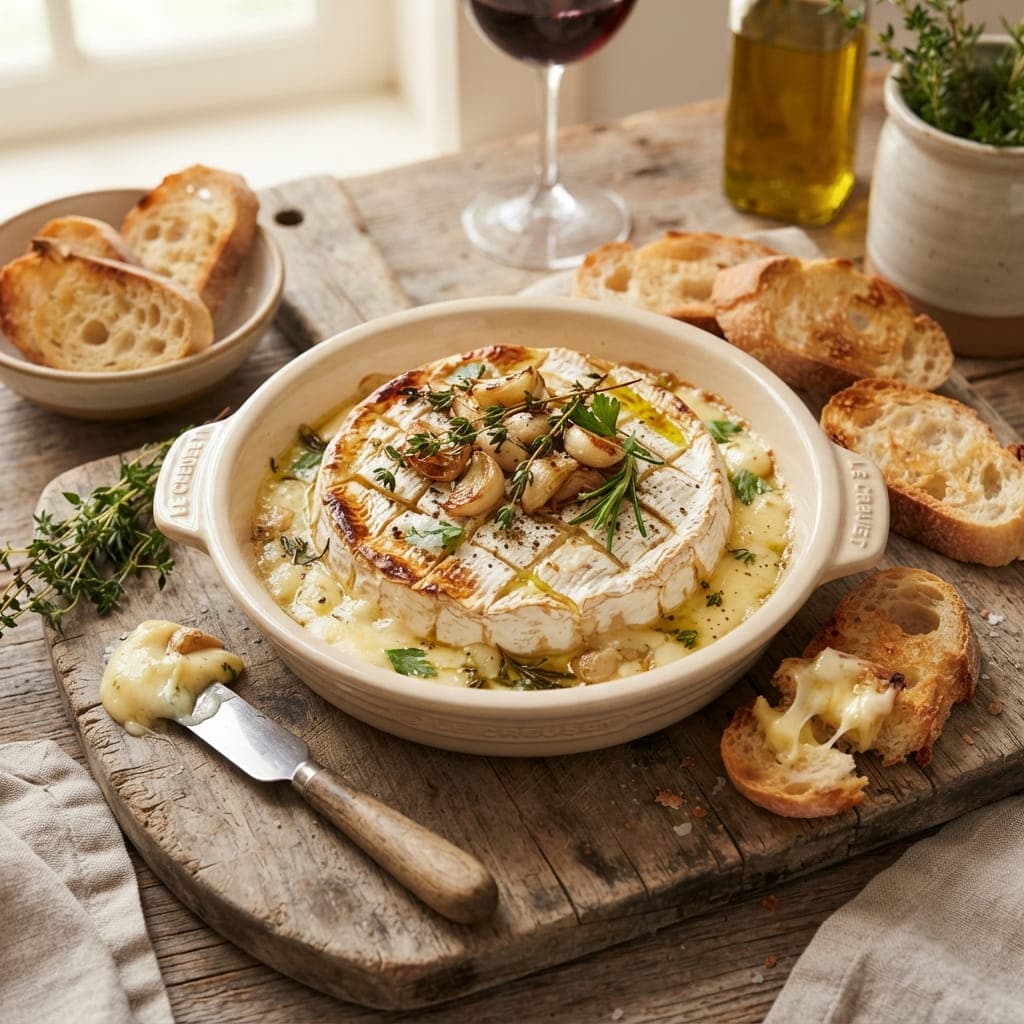
Scoring a shallow criss-cross pattern into the top rind before baking gives the garlic and herb oil somewhere to seep in, rather than just sitting on the surface. Baked just until the center turns molten, this whole wheel becomes an effortless centerpiece that needs nothing more than a knife and some bread for scooping.
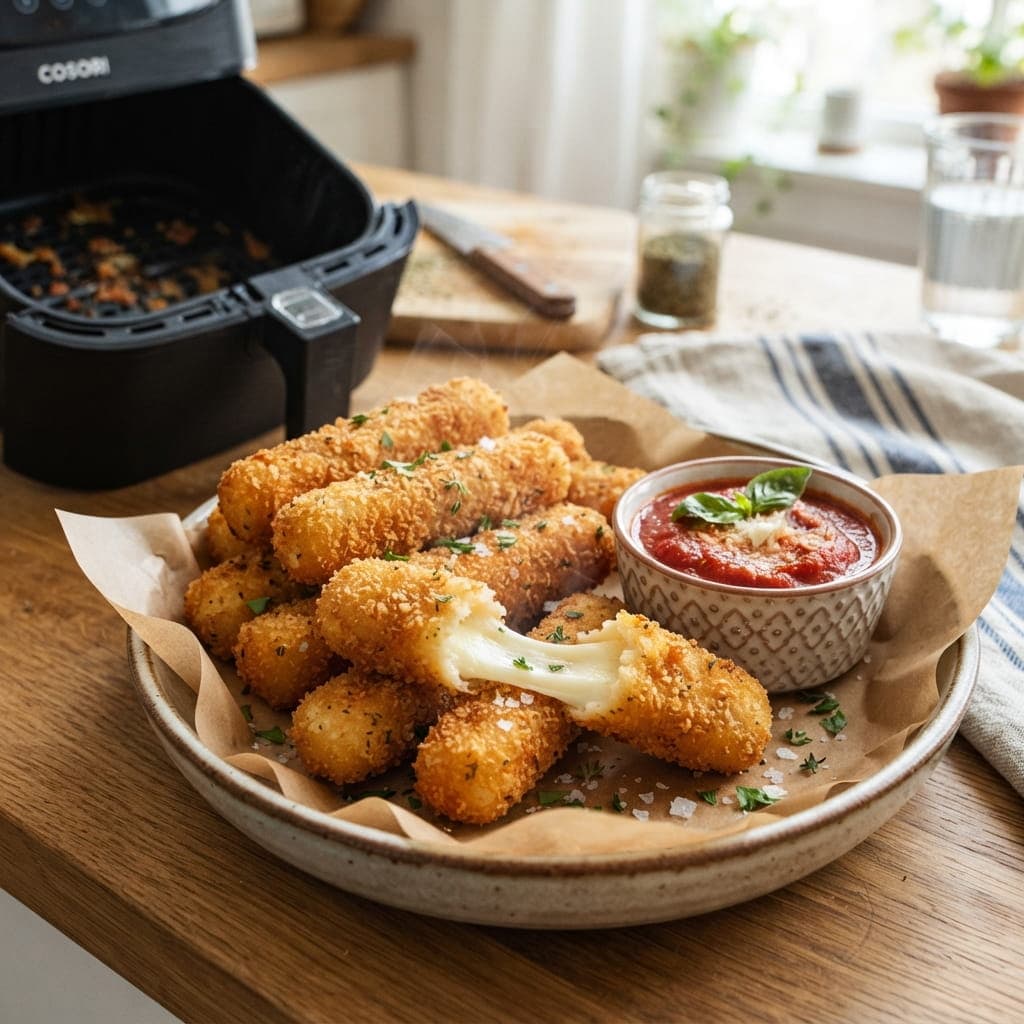
Freezing the breaded mozzarella sticks solid before they ever touch the air fryer is the step that keeps the cheese from bursting through the coating - without it, the cheese melts and escapes before the breadcrumbs even turn golden. A double coat of egg and breadcrumbs also matters here, sealing every gap so nothing but crunch surrounds the melted center.