Loading...
Loading...
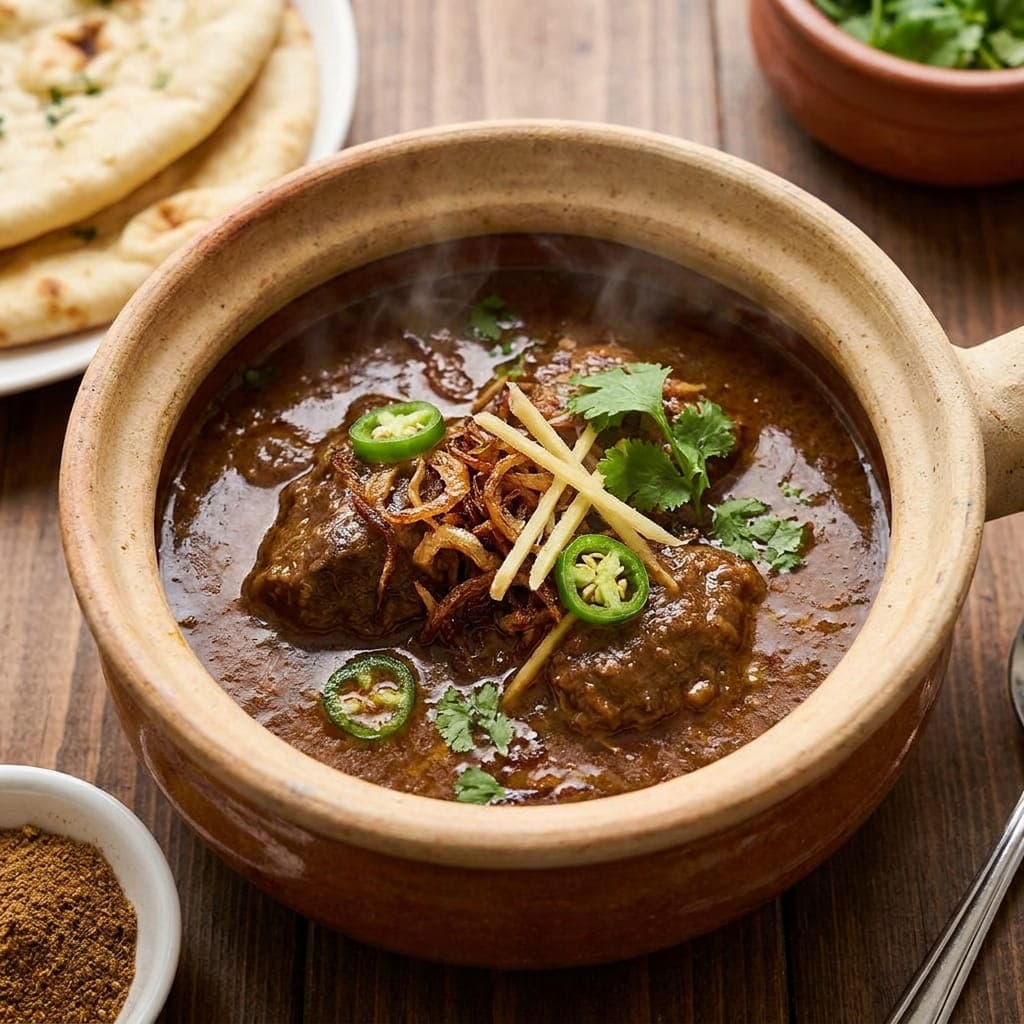
The word nihari comes from the Arabic 'nahar,' meaning morning - this was originally a Mughal-era dish, slow-cooked overnight by royal cooks and served at dawn. In Old Lahore, nihari shops still open before sunrise and sell out by mid-morning. The non-negotiable ingredient here is nalli, bone-in beef shank with the marrow intact, which slowly liquefies into the gravy over hours of cooking, giving nihari its signature silky, clinging texture that no amount of ghee alone could replicate.
Prep Time
40 min
Cook Time
330 min
Servings
6 people
Difficulty
hard
Per serving
460kcal
Calories
38g
Protein
14g
Carbs
28g
Fat
1g
Fiber
2g
Sugar
Follow step-by-step with voice guidance.
Dry-roast all the whole spices for the nihari masala in a dry pan over medium heat for 2-3 minutes, until fragrant. Let cool completely, then grind into a fine powder; set aside.
Heat the oil and ghee together in a large, heavy-bottomed pot over medium-high heat. Add the sliced onions and fry, stirring frequently, for 15-20 minutes, until deeply golden brown, almost approaching burnt - this dark color is the foundation of nihari's characteristic dark gravy. Remove about a third of the fried onions for garnish and set aside.
Add the ginger-garlic paste to the remaining onions in the pot and cook for 2 minutes, until the raw smell disappears.
Add the red chili powder and turmeric, stirring for 30 seconds, then add the beef shank pieces and sear on all sides for 5 minutes - the meat just needs initial contact with the spiced base, not full browning.
Add the ground nihari masala and salt, stirring to coat the meat evenly.
Pour in enough water to fully submerge the meat by a couple of inches. Bring to a boil, then reduce to a low simmer, cover, and cook for 4-5 hours on the stovetop (or 45-60 minutes in a pressure cooker), until the meat is completely tender and falling off the bone.
In a separate dry pan, roast the chapati flour (atta) over medium heat for 3-4 minutes, until fragrant and lightly darkened, then whisk with a cup of water until smooth.
Stir the atta slurry into the simmering nihari, mixing well, and continue simmering uncovered for 20-25 minutes, until the gravy turns thick, glossy, and clings to the meat rather than running off.
Ladle the nihari into deep bowls, topping each with the reserved fried onions, julienned fresh ginger, slit green chilies, chopped coriander, and a generous squeeze of lemon juice.
Serve immediately with hot naan for tearing and scooping.
Insist on Nalli, Not Boneless Beef: The bone marrow is what separates real nihari from an ordinary spiced beef stew - as the shank bones cook for hours, the marrow liquefies into the gravy, giving it a richness nothing else can replicate. Fry the Onions Until Nearly Burnt: This isn't a mistake to avoid - deeply golden, almost-burnt onions are exactly what gives nihari its dark, foundational color and flavor. Stop just short of actual burning. The Atta Slurry Is Not a Roux: Unlike a butter-and-flour roux, the atta here is dry-roasted separately first to remove its raw taste, then mixed only with water - this is what gives nihari its signature thick, almost gelatinous gravy that clings to naan instead of running off.
As the shank bones simmer for hours, the marrow gradually liquefies into the gravy, giving nihari its signature richness and silky mouthfeel - boneless beef alone cannot replicate this texture, no matter how much ghee is added.
0 reviews • 0.0 / 5 Average Rating
No reviews yet. Be the first to review this recipe!
More Like This
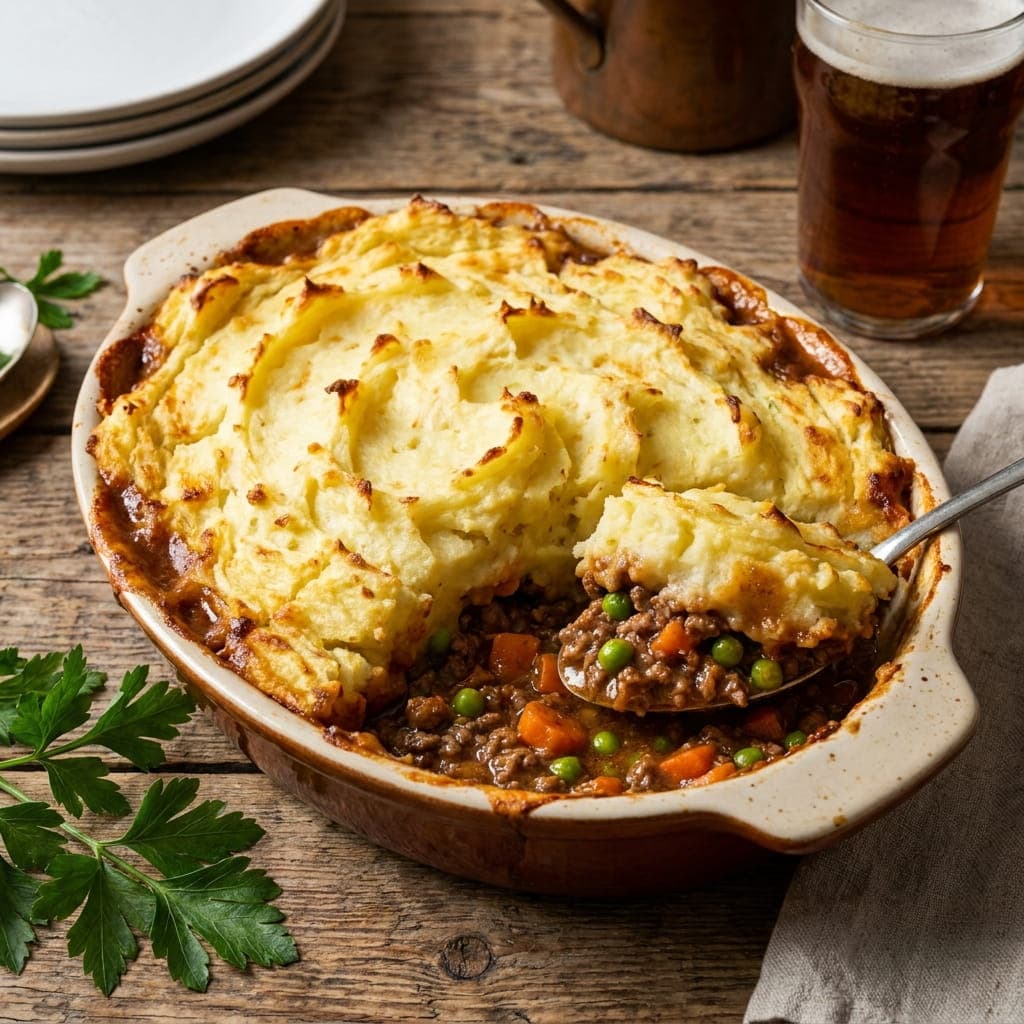
The distinction matters to the British - cottage pie uses beef, while its cousin shepherd's pie is made with lamb, both topped with mashed potato rather than pastry. A savory beef and vegetable filling simmered until rich and thick, then blanketed with fluffy mash and baked until the peaks turn golden, this is exactly the kind of dish built to use up leftover mince and stretch a family dinner.
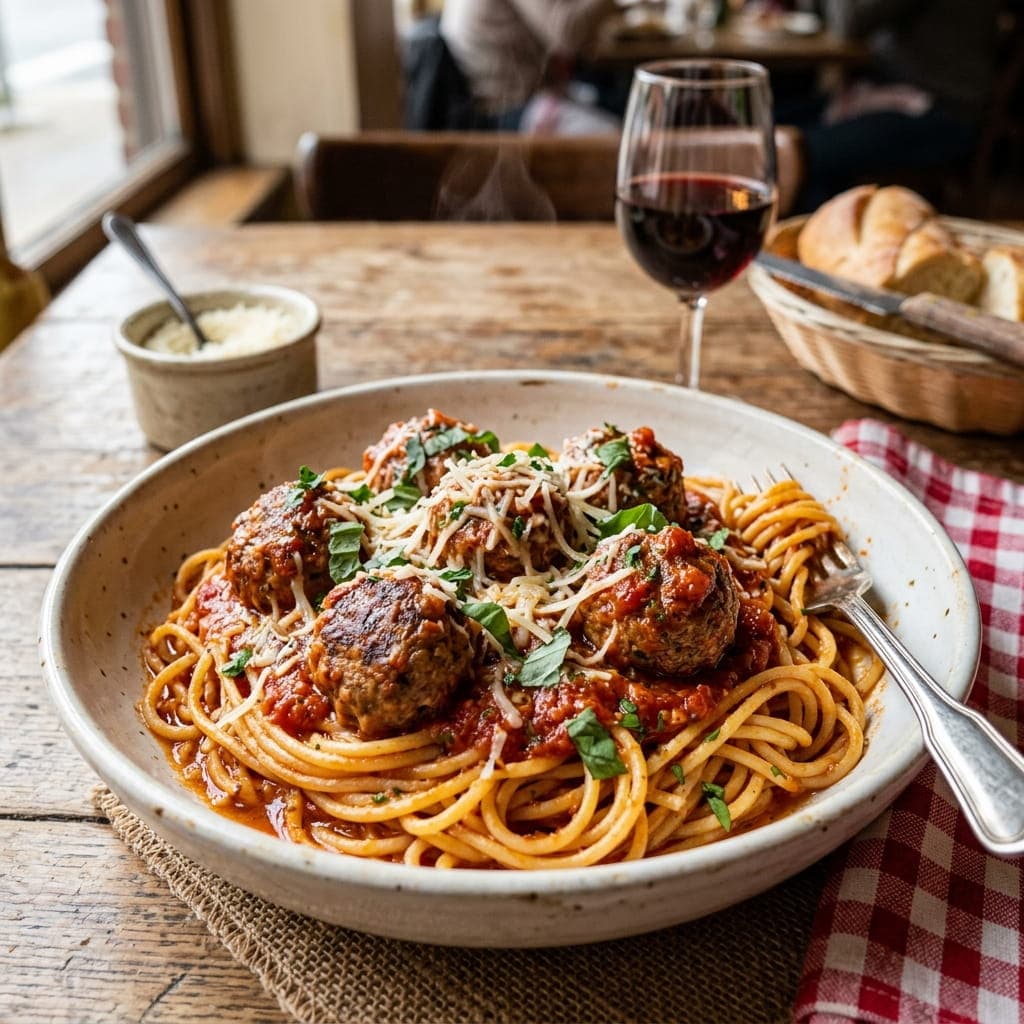
Soaking breadcrumbs in milk before mixing them into the meatballs (a panade) is what keeps them tender rather than dense - the moisture gets trapped inside the meat as it cooks instead of evaporating out. Simmering the browned meatballs directly in the marinara sauce for the last stretch of cooking lets them finish gently while the sauce picks up their flavor.
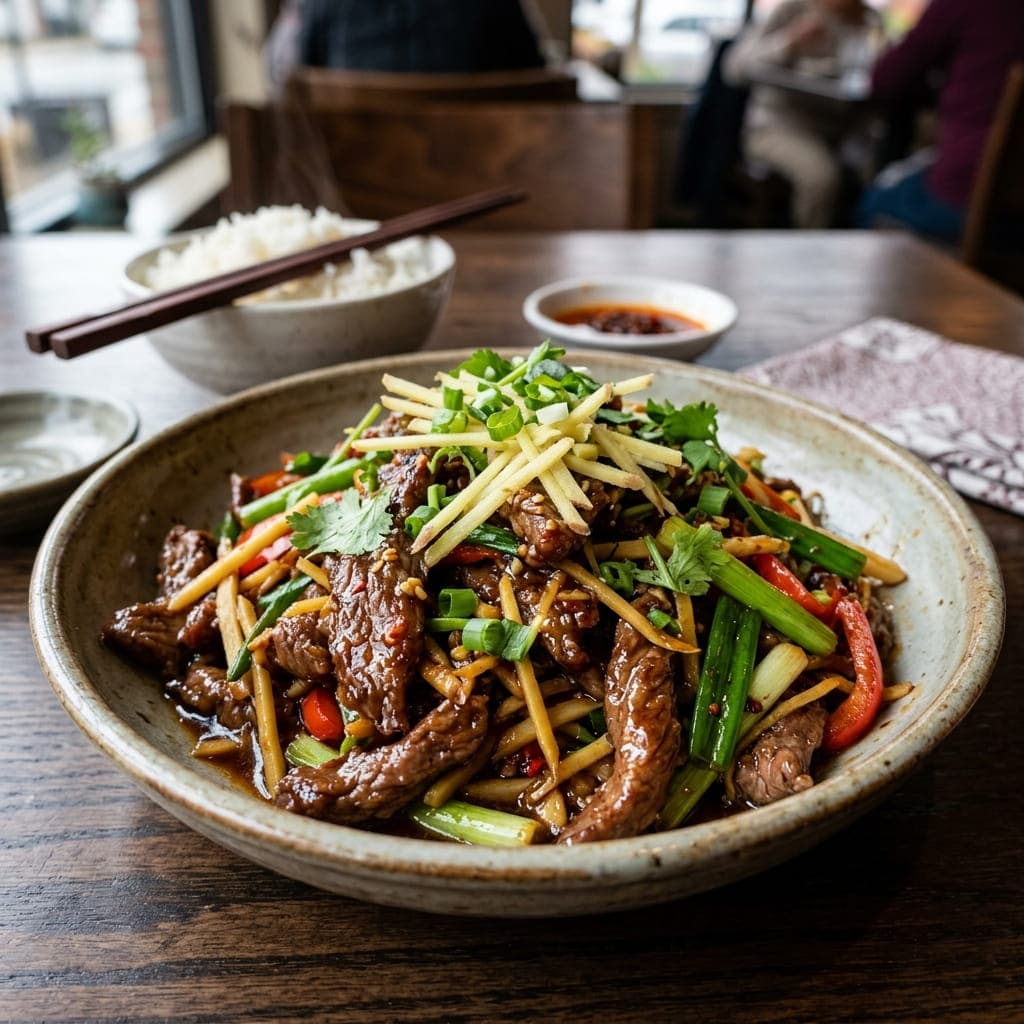
Velveting - a Chinese technique of coating thin-sliced beef in cornstarch and a splash of soy sauce before it hits the wok - creates a thin protective layer that seals in moisture during the intense heat of stir-frying, so the meat stays tender rather than turning tough and stringy. A generous amount of fresh ginger, sliced rather than minced, gives this dish its sharp, warming bite.
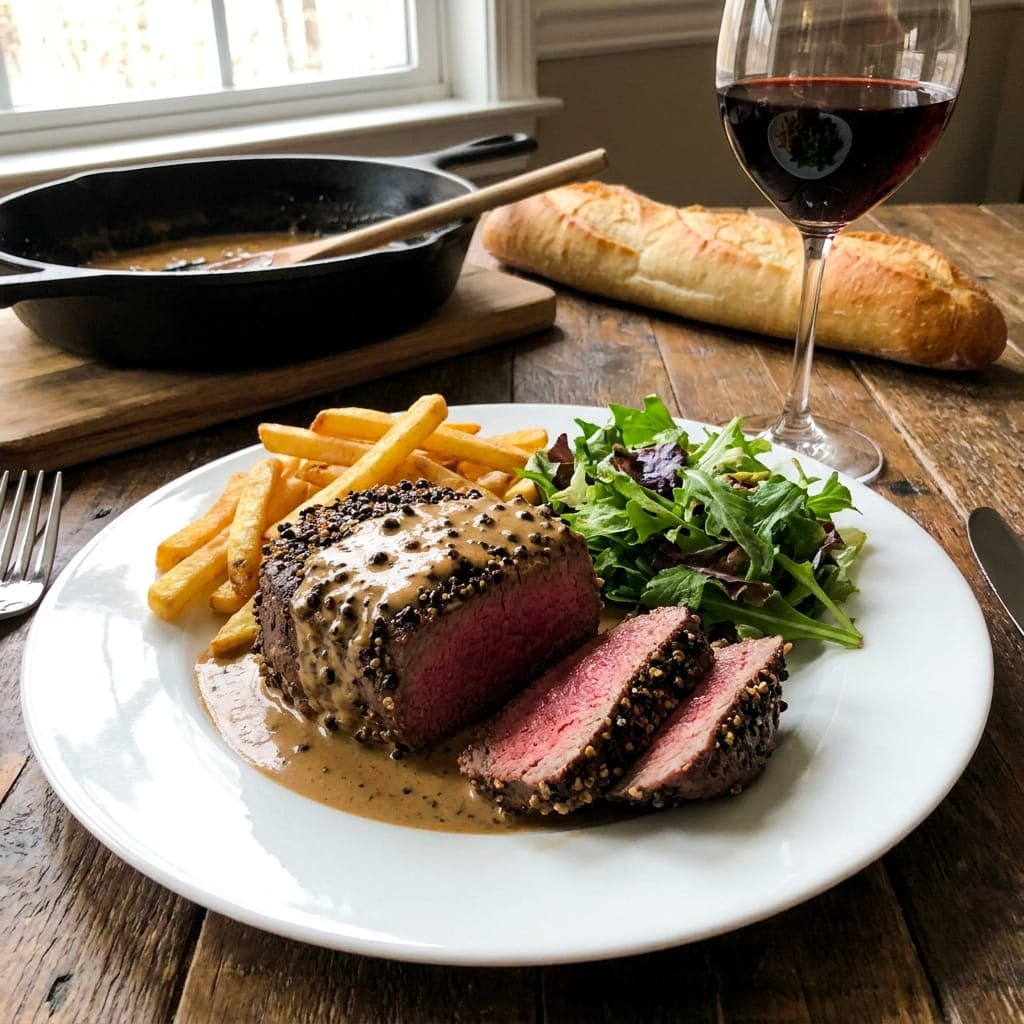
Crushing whole peppercorns coarsely, rather than using pre-ground pepper, is what gives steak au poivre its signature crust - large, cracked pieces press into the meat and hold their bite through cooking rather than dissolving into dust. The classic finishing move is deglazing the same pan with brandy and cream, turning the fond left behind by the sear into a glossy pan sauce in under five minutes.