Loading...
Loading...
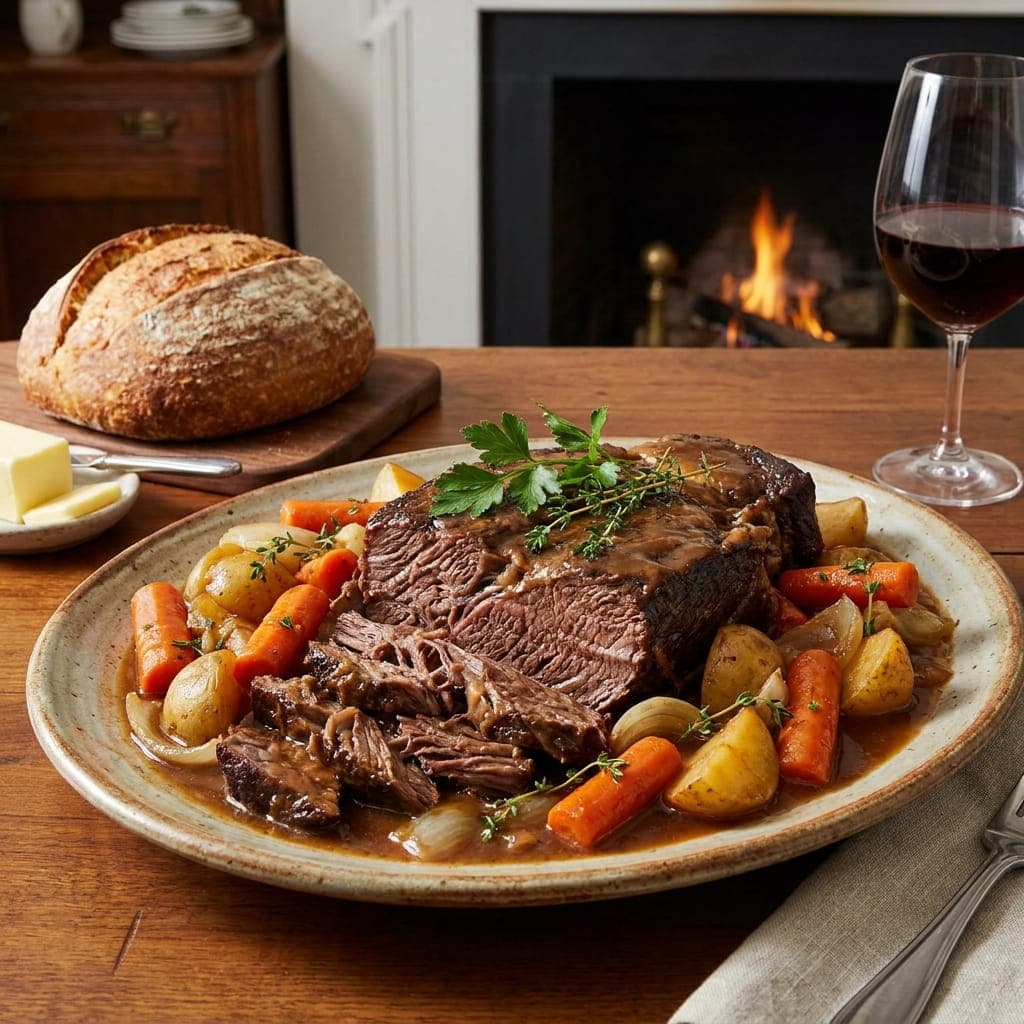
Chuck roast is a tough cut loaded with connective tissue, which is exactly why it's the right choice here - hours of slow, moist cooking break that tissue down into gelatin, turning what would be a chewy cut on the grill into something that falls apart with a fork. Carrots and potatoes added partway through soak up the beefy, herb-scented braising liquid right alongside it.
Prep Time
20 min
Per serving
480kcal
Calories
Cook Time
240 min
Servings
6 people
Difficulty
medium
38g
Protein
24g
Carbs
25g
Fat
4g
Fiber
6g
Sugar
Follow step-by-step with voice guidance.
Pat the chuck roast dry and season generously with the salt and black pepper.
Heat the oil in a large Dutch oven over medium-high heat and sear the roast on all sides until deeply browned, about 8-10 minutes total. Remove and set aside.
In the same pot, add the diced onion and cook for 4-5 minutes, until softened, then add the garlic and cook for 1 minute more.
Stir in the tomato paste and cook for 1 minute, then pour in the beef stock and red wine, scraping up any browned bits from the bottom.
Return the roast to the pot, add the bay leaves and thyme, and bring to a simmer.
Cover and transfer to a 160°C (325°F) oven (or continue on the stovetop over low heat). Braise for 2.5 hours.
Add the carrots and potatoes to the pot, nestling them around the roast, and continue cooking, covered, for another 1-1.5 hours, until the meat is fork-tender and the vegetables are soft.
Remove the roast and vegetables to a serving platter. If desired, whisk a flour-water slurry into the remaining liquid and simmer for a few minutes to thicken into a gravy.
Slice or shred the roast, discard the bay leaves, and serve with the vegetables and gravy.
Sear the Roast Deeply First: A dark, well-developed crust before braising builds the foundation of flavor for the entire dish - don't rush this step even though it adds time upfront. Add Vegetables Partway Through: Carrots and potatoes added at the start would turn to mush by the time the meat is tender - waiting until the last 1-1.5 hours keeps them soft but intact. Check for Tenderness, Not Just Time: Pot roast is done when it shreds easily with a fork, not simply based on the clock - if it still feels tough, it needs more time regardless of the recipe's suggested duration.
Yes, after searing the roast and building the braising liquid on the stovetop, transfer everything to a slow cooker and cook on low for 8-9 hours, adding the vegetables for the last 2-3 hours.
0 reviews • 0.0 / 5 Average Rating
No reviews yet. Be the first to review this recipe!
More Like This
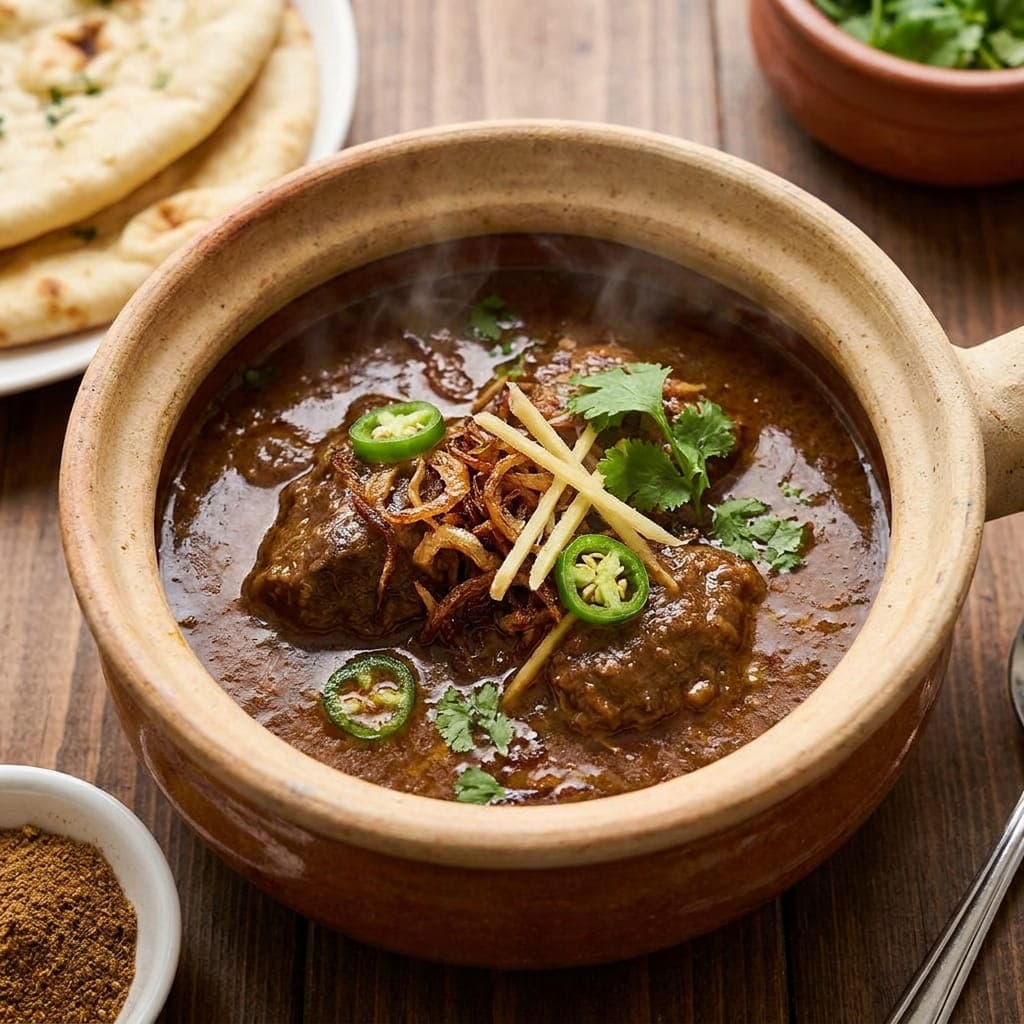
The word nihari comes from the Arabic 'nahar,' meaning morning - this was originally a Mughal-era dish, slow-cooked overnight by royal cooks and served at dawn. In Old Lahore, nihari shops still open before sunrise and sell out by mid-morning. The non-negotiable ingredient here is nalli, bone-in beef shank with the marrow intact, which slowly liquefies into the gravy over hours of cooking, giving nihari its signature silky, clinging texture that no amount of ghee alone could replicate.
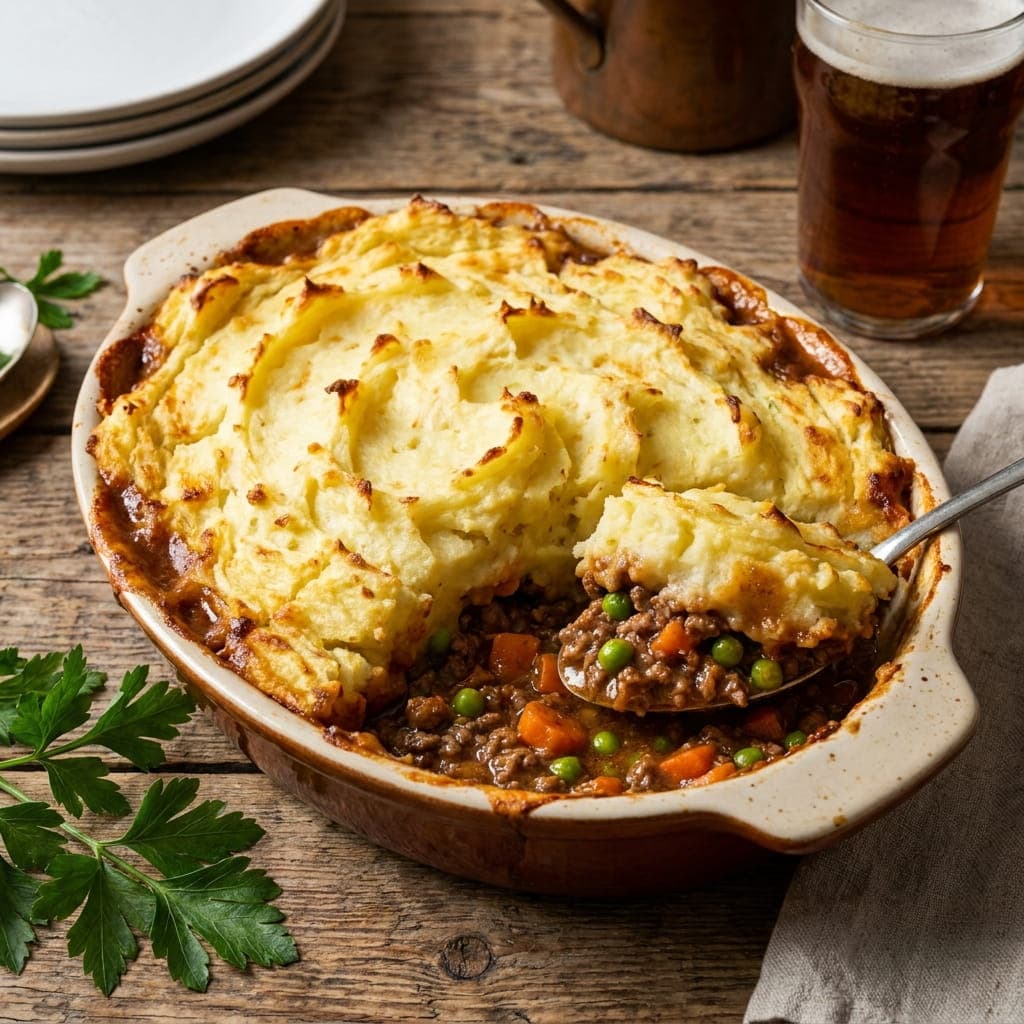
The distinction matters to the British - cottage pie uses beef, while its cousin shepherd's pie is made with lamb, both topped with mashed potato rather than pastry. A savory beef and vegetable filling simmered until rich and thick, then blanketed with fluffy mash and baked until the peaks turn golden, this is exactly the kind of dish built to use up leftover mince and stretch a family dinner.
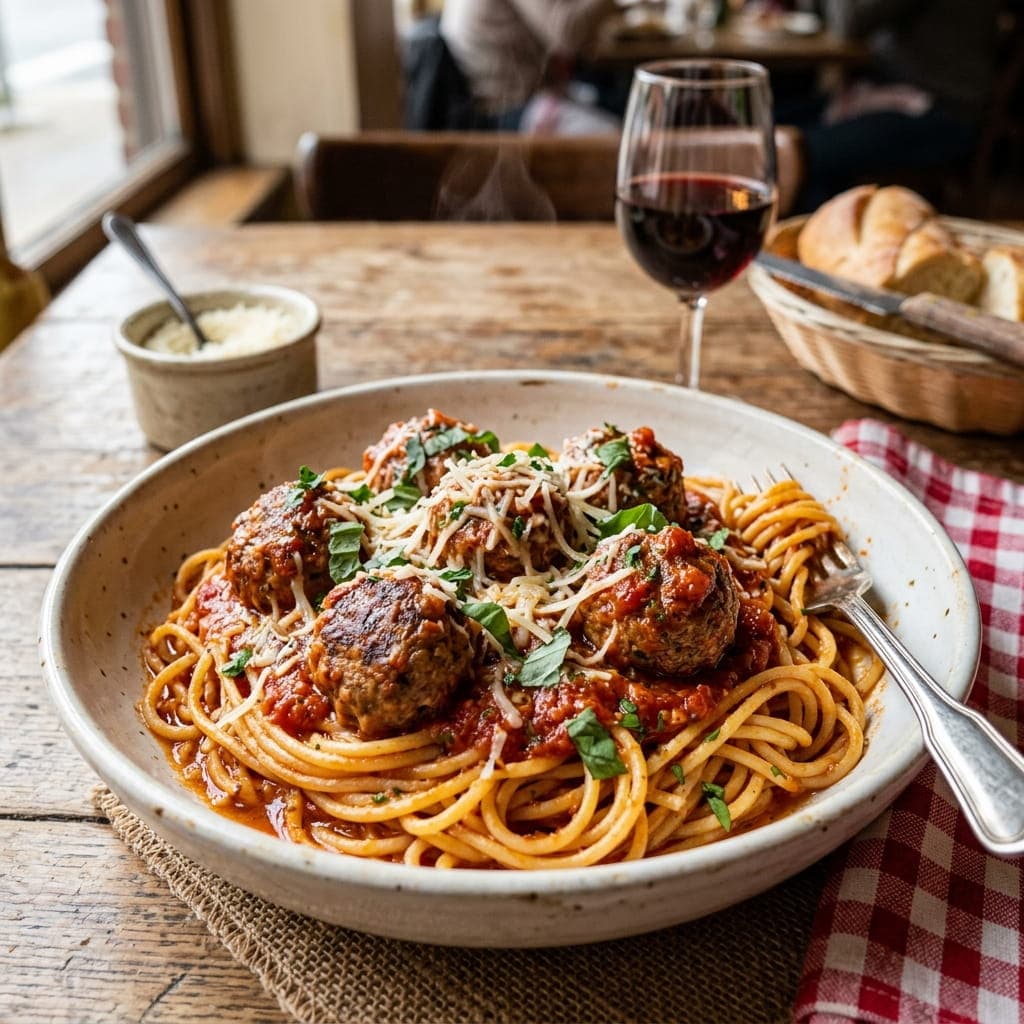
Soaking breadcrumbs in milk before mixing them into the meatballs (a panade) is what keeps them tender rather than dense - the moisture gets trapped inside the meat as it cooks instead of evaporating out. Simmering the browned meatballs directly in the marinara sauce for the last stretch of cooking lets them finish gently while the sauce picks up their flavor.
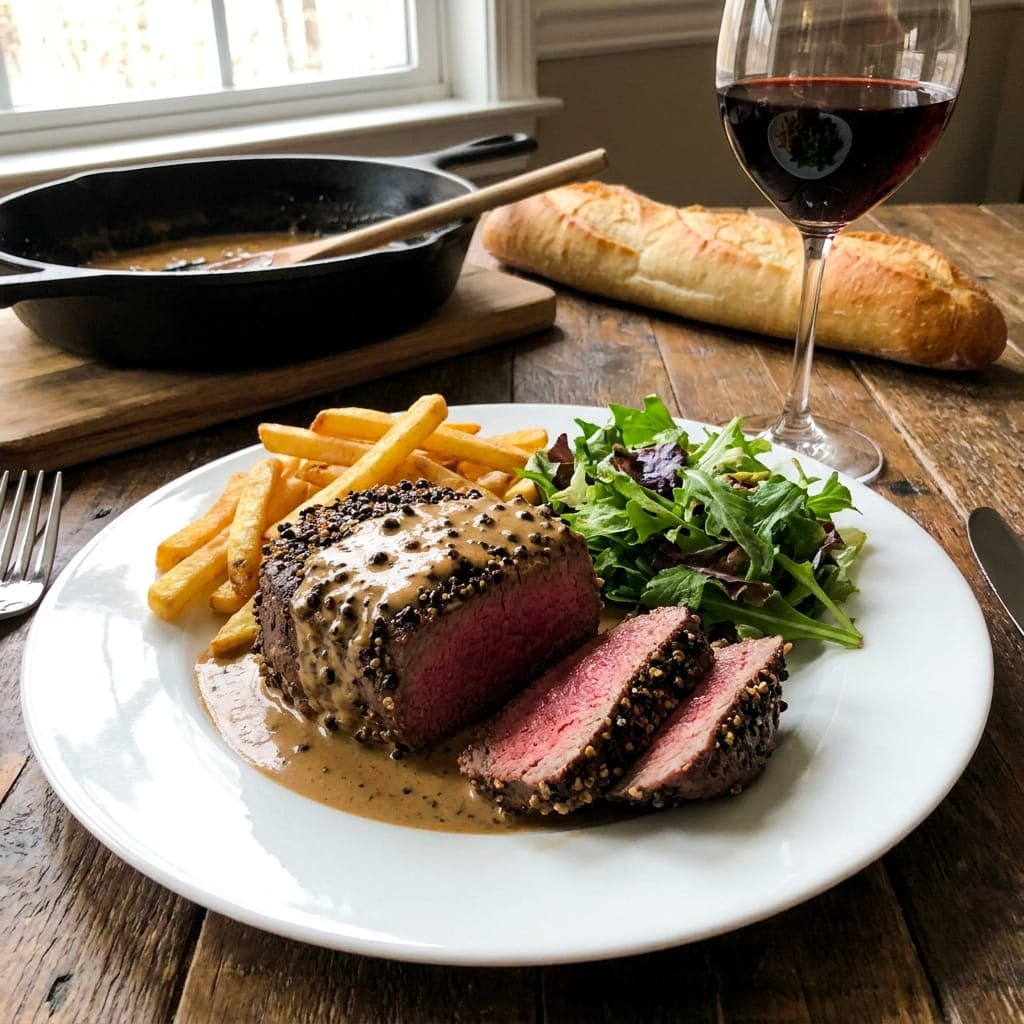
Crushing whole peppercorns coarsely, rather than using pre-ground pepper, is what gives steak au poivre its signature crust - large, cracked pieces press into the meat and hold their bite through cooking rather than dissolving into dust. The classic finishing move is deglazing the same pan with brandy and cream, turning the fond left behind by the sear into a glossy pan sauce in under five minutes.