Loading...
Loading...
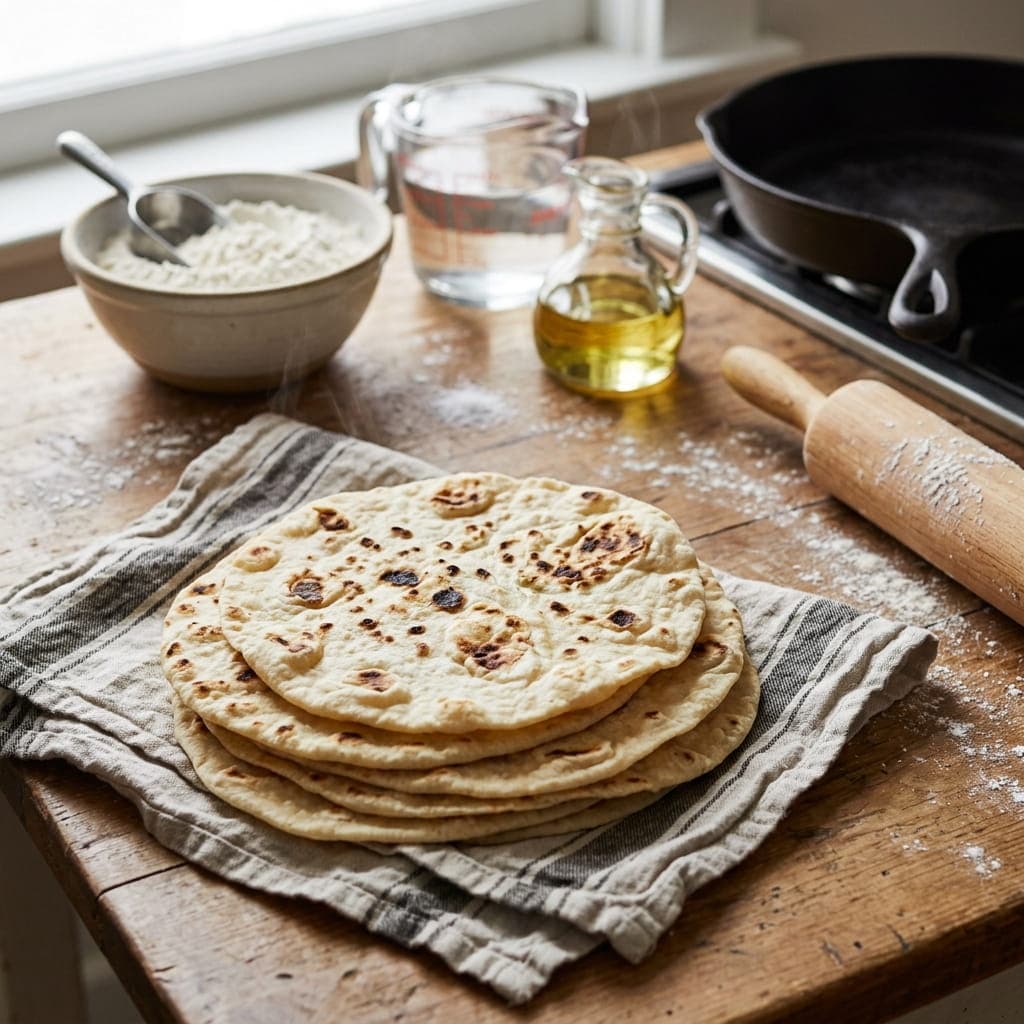
This lets the dough rest for a full 20 minutes before rolling, a step that relaxes the gluten enough to make the tortillas easy to stretch thin without snapping back into a smaller shape. Cooking them in a completely dry, hot skillet rather than one with oil is what gives these tortillas their characteristic light brown spots and soft, pliable texture.
Per serving
130kcal
Calories
4g
Protein
27g
Carbs
1g
Fat
1g
Fiber
Prep Time
30 min
Cook Time
10 min
Servings
8 people
Difficulty
easy
Follow step-by-step with voice guidance.
In a large bowl, combine the flour and salt.
Add the warm water gradually, mixing until a shaggy dough forms.
Knead for 3 to 5 minutes, until smooth.
Cover and let the dough rest for 20 minutes.
Divide the dough into 8 equal pieces, rolling each into a smooth ball.
On a lightly floured surface, roll each ball into a thin, round tortilla, about 8 inches across.
Heat a dry skillet over medium high heat.
Cook each tortilla for 30 to 45 seconds per side, until light brown spots appear and it puffs slightly.
Stack the cooked tortillas under a clean towel to keep them soft and warm while you finish the rest.
Let the Dough Rest: A full 20 minutes of resting relaxes the gluten, making the dough much easier to roll thin without it springing back into a smaller shape. Use a Dry Skillet: Cooking tortillas without oil is what gives them their characteristic light spots and soft, pliable texture rather than a greasy, fried result. Stack Them Under a Towel: Keeping the cooked tortillas covered as you work traps steam, which keeps them soft and pliable instead of drying out and cracking.
Traditional recipes often add fat for extra softness and flavor, but this simplified 3 ingredient version relies on the resting time and dry skillet cooking method to still achieve a soft, pliable tortilla without it.
0 reviews • 0.0 / 5 Average Rating
No reviews yet. Be the first to review this recipe!
More Like This
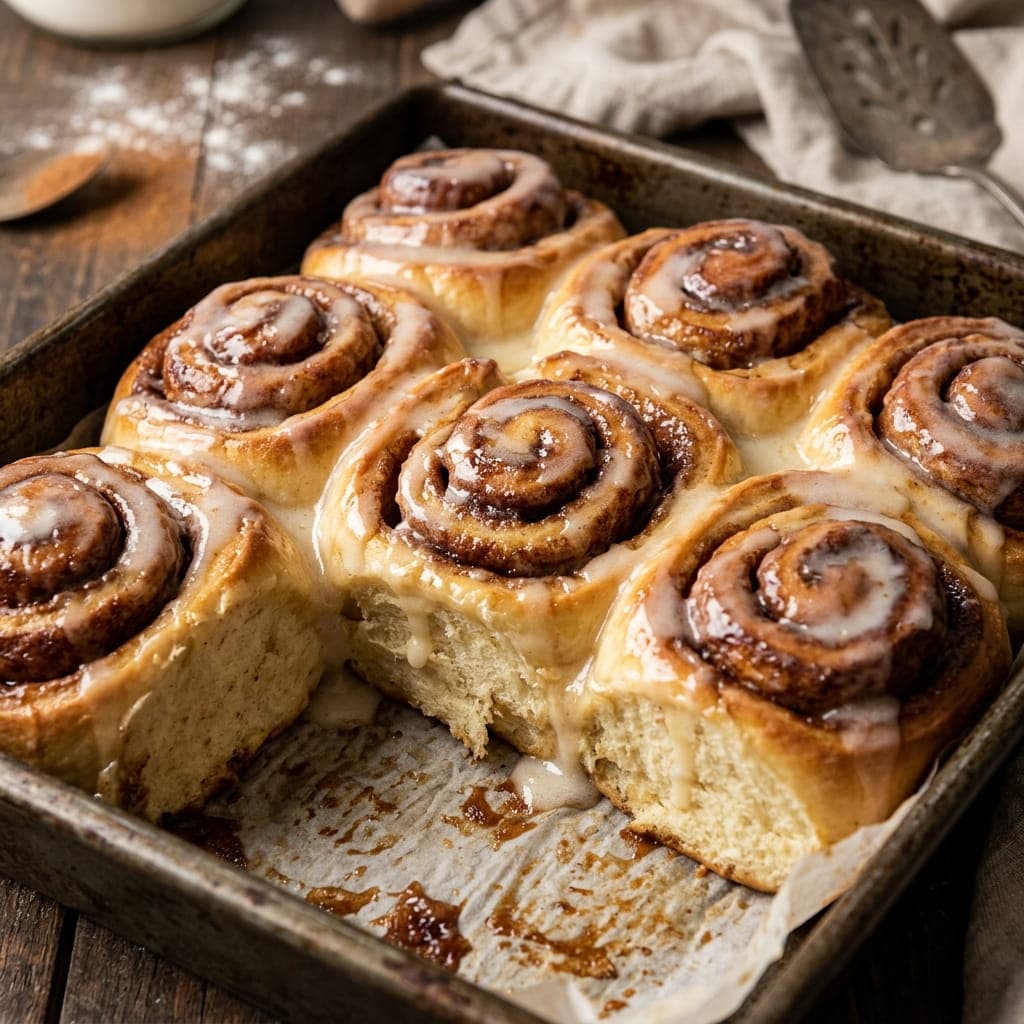
This spreads the softened butter all the way to the edges of the rolled out dough before adding the cinnamon sugar, since any bare spots are where the filling can't stick and will leak out as gaps once the rolls are sliced. Rolling the dough up tightly from the long side, rather than loosely, is what gives the finished rolls their tight, defined spiral instead of loose, uneven layers.
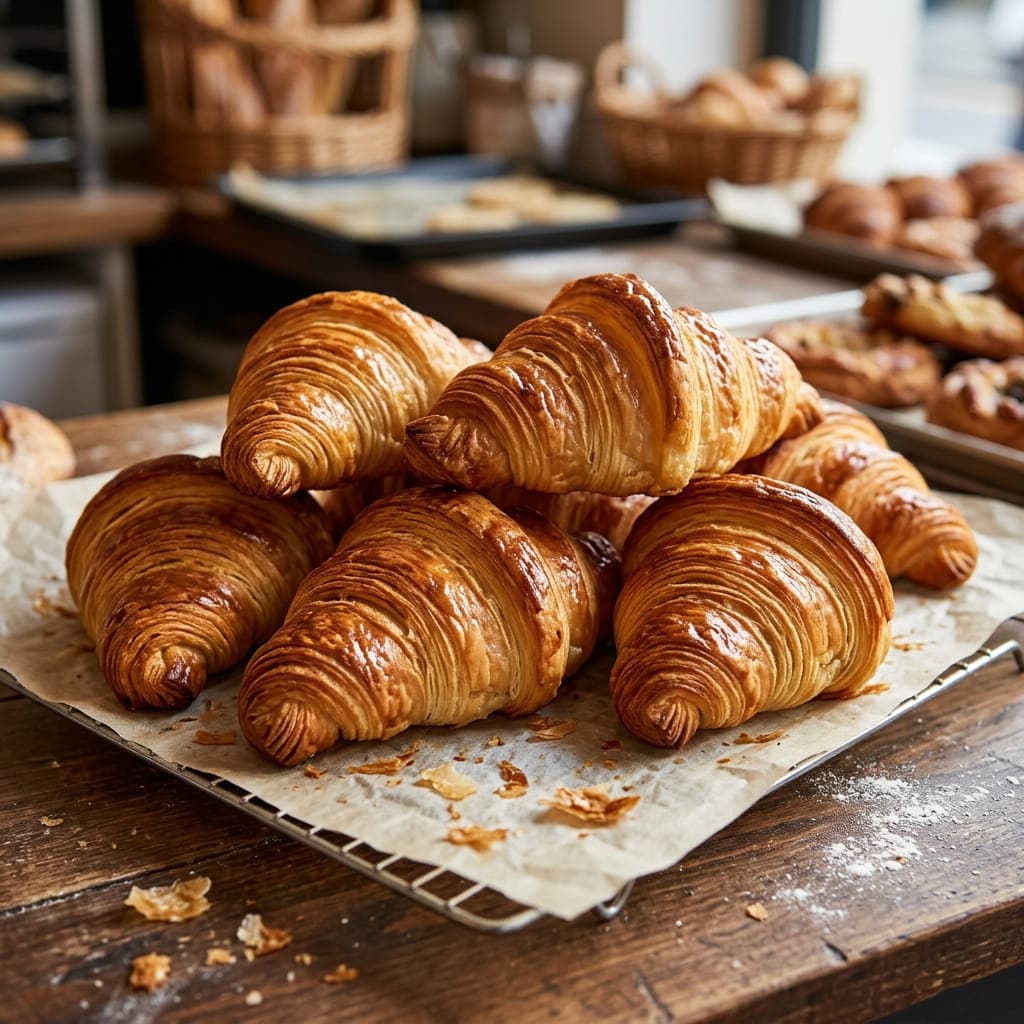
This relies on lamination, folding a solid block of cold butter into the dough and repeatedly rolling and folding it into thin layers, since it's those alternating layers of butter and dough that puff apart into hundreds of flaky sheets in the oven. Keeping everything cold throughout the process, chilling between every fold, is what prevents the butter from melting into the dough too early and turning the croissants dense instead of airy.
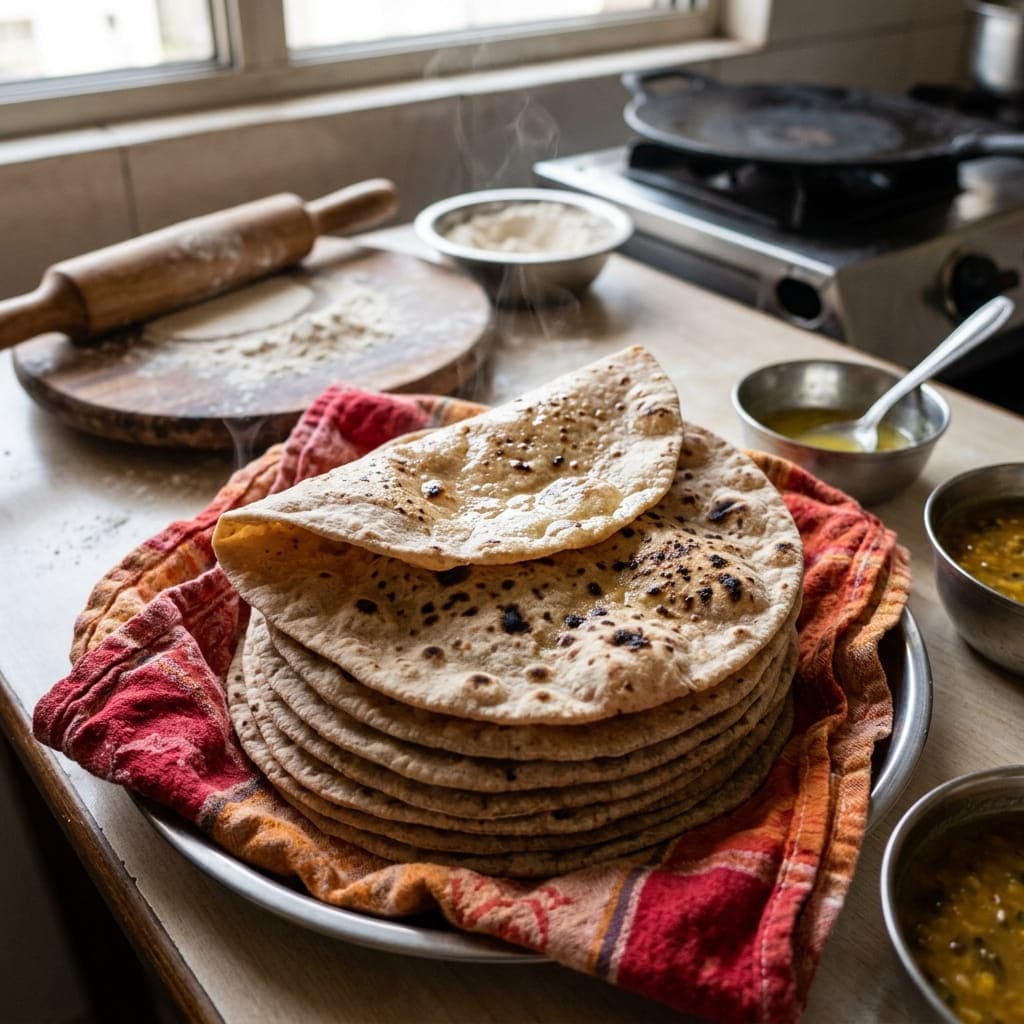
This uses whole wheat atta flour, a finely ground durum wheat flour, rather than standard whole wheat flour, since its finer texture is what allows the dough to roll out thin and pliable, closer to what's used in homes across India. Finishing the roti directly over an open flame for a few seconds after cooking on the tawa is a traditional technique that puffs it up fully and adds a light char.
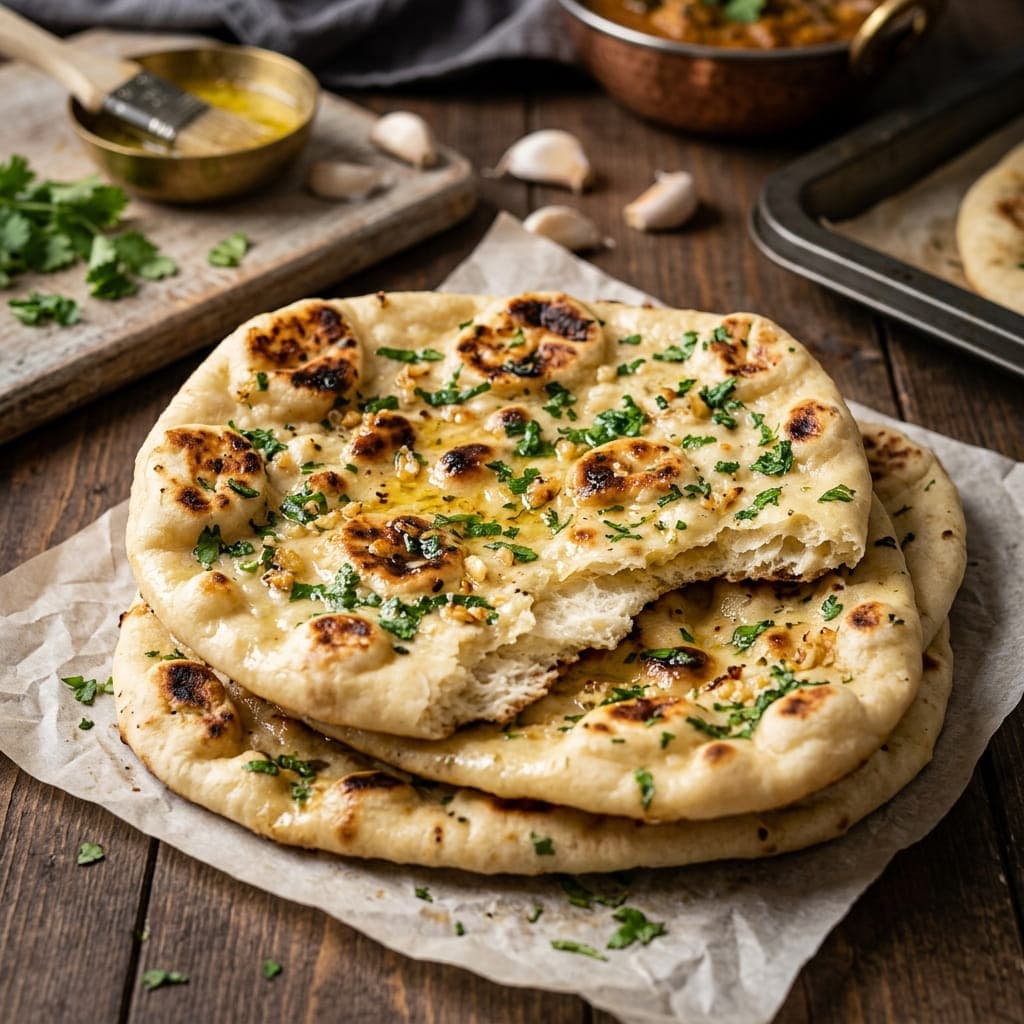
This builds the dough with yogurt instead of eggs, which is what gives naan its chewy texture and large, irregular air pockets rather than the tighter, cake like crumb that egg based versions produce. Cooking it in a screaming hot, dry skillet mimics the intense heat of a clay tandoor closely enough to get those same charred, bubbled spots without any special equipment.