Loading...
Loading...
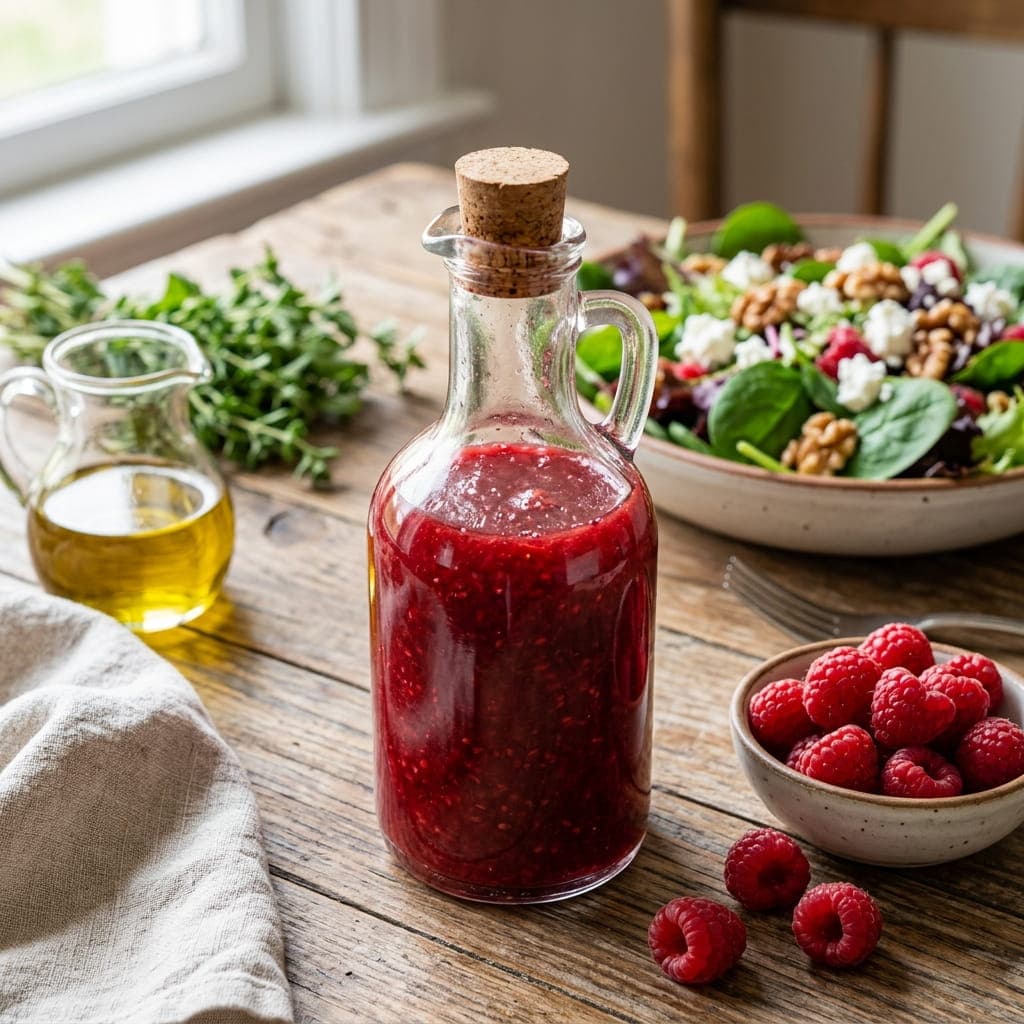
This purees fresh raspberries and strains out the seeds, relying entirely on the fruit's natural sweetness and a sugar free sweetener rather than any added sugar to balance the tang of the vinegar. Straining the puree through a fine mesh sieve is what gives this vinaigrette its smooth, glossy texture instead of a seedy, textured finish.
Per serving
110kcal
Calories
4g
Carbs
11g
Fat
1g
Fiber
2g
Prep Time
10 min
Cook Time
0 min
Servings
6 people
Difficulty
easy
Sugar
Follow step-by-step with voice guidance.
In a blender, puree the fresh raspberries until smooth.
Strain the puree through a fine mesh sieve into a bowl, pressing to extract as much liquid as possible, and discard the seeds.
Whisk the red wine vinegar and sugar free sweetener into the raspberry puree.
While whisking constantly, slowly drizzle in the olive oil until the dressing is emulsified.
Season with a pinch of salt.
Taste and adjust the sweetener as needed.
Transfer to a jar and store in the fridge.
Strain Out the Seeds: Pressing the raspberry puree through a fine mesh sieve gives this vinaigrette a smooth, glossy texture rather than a gritty, seedy one. Use a Granulated Sugar Substitute: A sweetener that measures like sugar, such as erythritol or monk fruit blend, helps replicate the texture and sweetness balance a traditional recipe would get from real sugar. Taste and Adjust: Raspberries vary in natural sweetness and tartness depending on ripeness, so taste the dressing and adjust the sweetener accordingly.
Yes, thawed frozen raspberries work just as well for pureeing, and since they're often picked at peak ripeness before freezing, they can sometimes give an even sweeter result.
0 reviews • 0.0 / 5 Average Rating
No reviews yet. Be the first to review this recipe!
More Like This
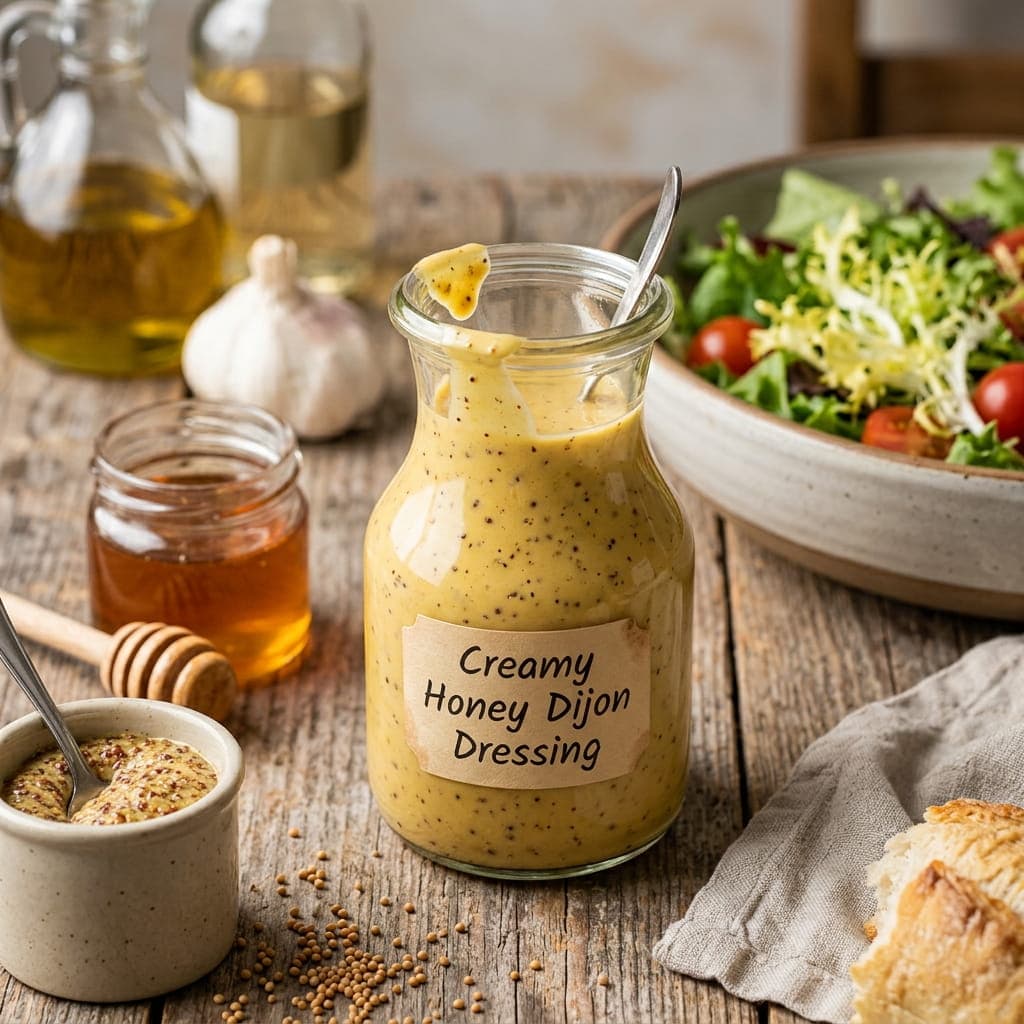
This whisks the Dijon mustard and honey together first before adding any vinegar, since mustard acts as a natural emulsifier that helps bind the oil and vinegar into a smooth, creamy dressing rather than one that separates quickly. A good quality Dijon, rather than a mild yellow mustard, is what gives this dressing its distinct sharp, slightly peppery French character.
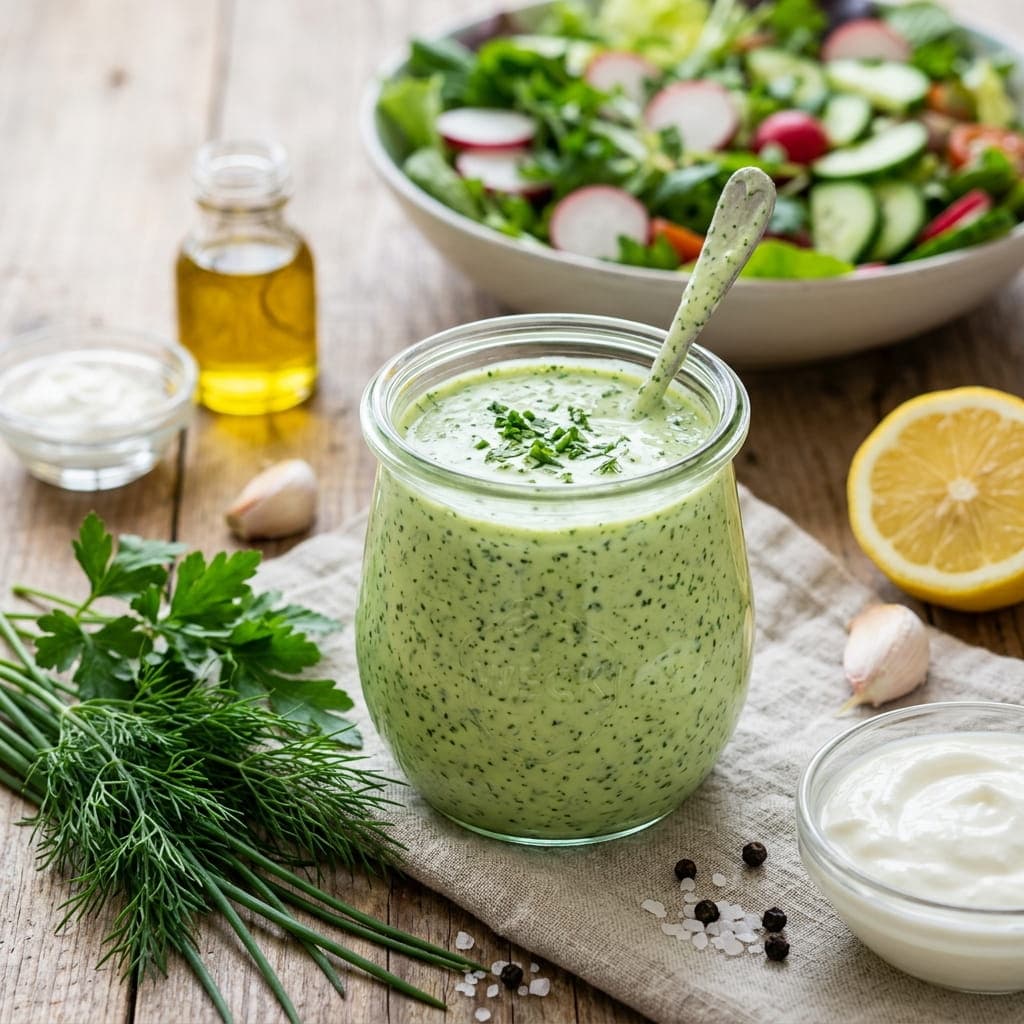
This blends a generous mix of fresh herbs directly into Greek yogurt rather than mayonnaise, which is what gives this modern take on green goddess dressing its vivid green color and significantly higher protein content than the classic version. Using a full bunch of herbs, rather than just a sprinkle, is what gives the dressing its bold, herbaceous flavor instead of tasting like plain yogurt with a hint of green.
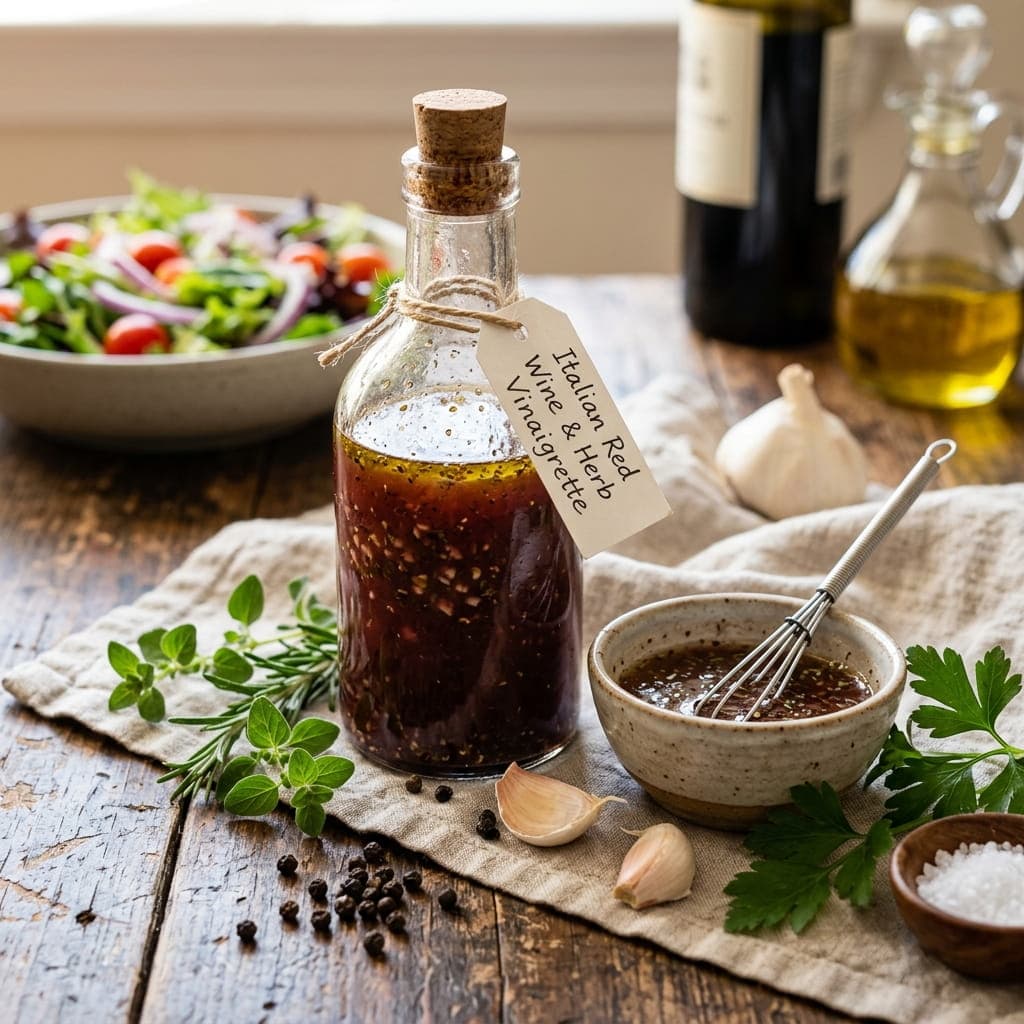
This lets the minced garlic and dried herbs sit in the red wine vinegar for a few minutes before whisking in the oil, giving them time to soften and release more flavor into the acidic base than if everything were combined all at once. A classic three to one ratio of oil to vinegar keeps the dressing balanced, rich enough to coat greens without the sharp vinegar overpowering every bite.
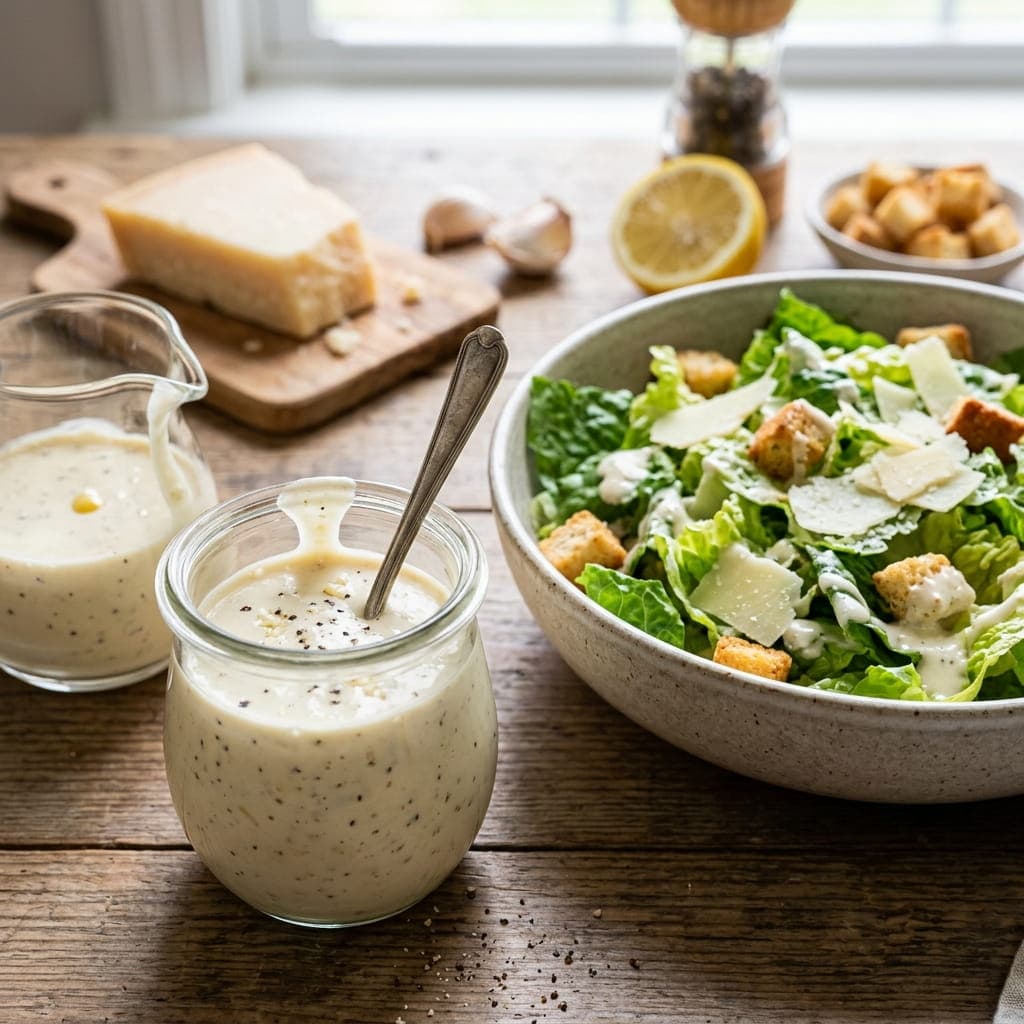
This whisks the egg yolk with lemon juice and garlic first before slowly streaming in the oil, the same emulsifying technique used for mayonnaise, which is what gives a scratch made Caesar dressing its thick, creamy body instead of a thin, oily texture. Mashing the anchovy fillets into a paste rather than mincing them is what lets their savory flavor blend seamlessly through the dressing instead of leaving distinct fishy bits.