Loading...
Loading...
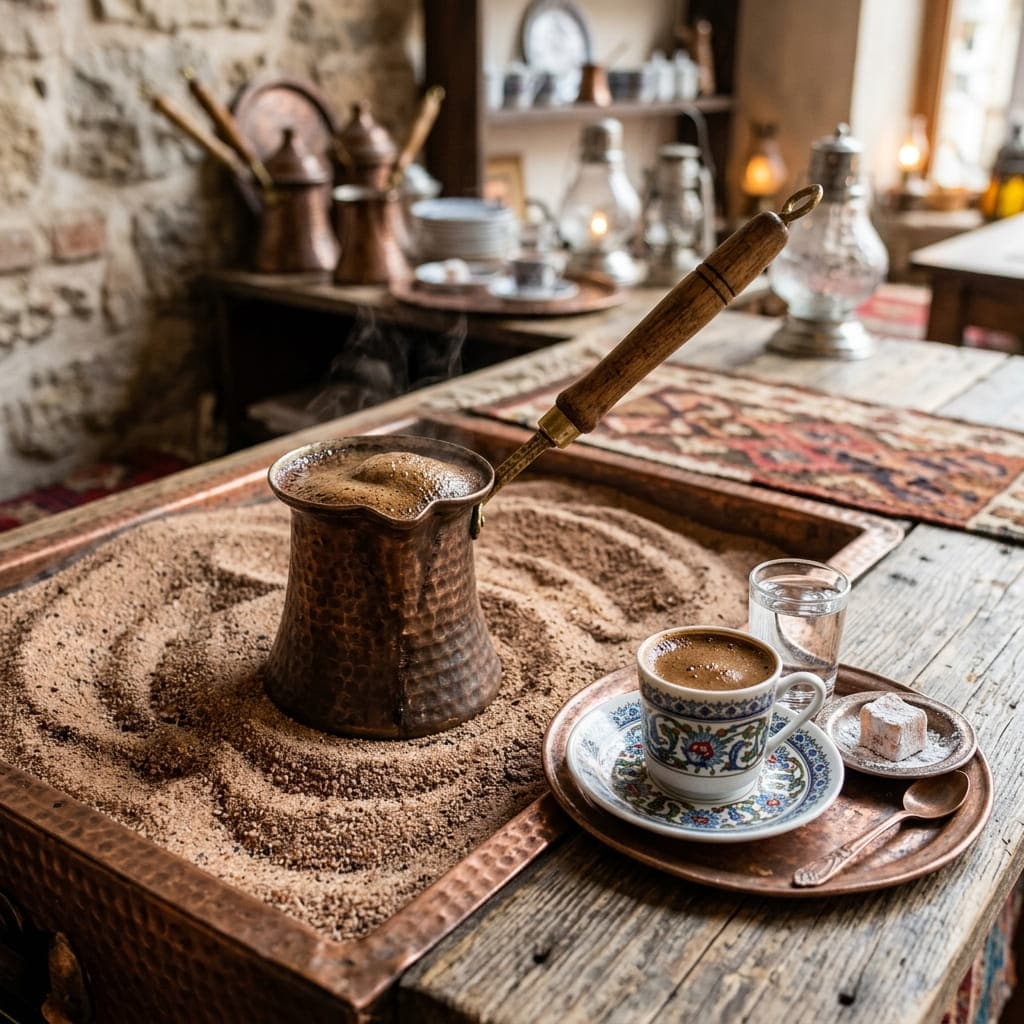
This uses the traditional method of nestling a small copper cezve into hot sand rather than placing it directly on a burner, since the sand acts as a buffer that heats the coffee slowly and evenly from all sides. That gentle, gradual heat is exactly what builds the thick foam and rich, velvety texture that sets real Turkish coffee apart.
Per serving
25kcal
Calories
5g
Carbs
4g
Sugar
Prep Time
5 min
Cook Time
10 min
Servings
2 people
Difficulty
hard
Follow step-by-step with voice guidance.
Fill a wide, heatproof pan with fine sand, about 2 to 3 inches deep, and heat it on the stove until very hot.
In the cezve, combine the cold water, finely ground Turkish coffee, and sugar.
Stir gently just until combined, without over mixing.
Nestle the cezve into the hot sand, burying it about halfway.
Let the coffee heat slowly, without stirring, as a dark foam begins to rise.
Just before it reaches a boil, lift the cezve out of the sand to let the foam settle.
Return it to the sand and repeat this process two to three times to build a thick foam.
Spoon the foam into each cup first, then pour the coffee gently on top.
Let the coffee sit for a minute so the grounds settle before drinking.
Use an Extremely Fine Grind: Turkish coffee requires a powder like grind, much finer than espresso, so the coffee stays suspended and produces the right foam. Never Stir Once It's in the Sand: Stirring after placing the cezve in the sand disrupts the foam that's building on top, so mix everything before it goes in. Lift and Return the Cezve Repeatedly: This repeated lifting is what builds up the thick, defining foam layer on the finished coffee.
Yes, you'll need a small long handled cezve and a wide heatproof pan filled with clean, fine sand, since the sand is what provides the slow, even heat this method depends on.
0 reviews • 0.0 / 5 Average Rating
No reviews yet. Be the first to review this recipe!
More Like This
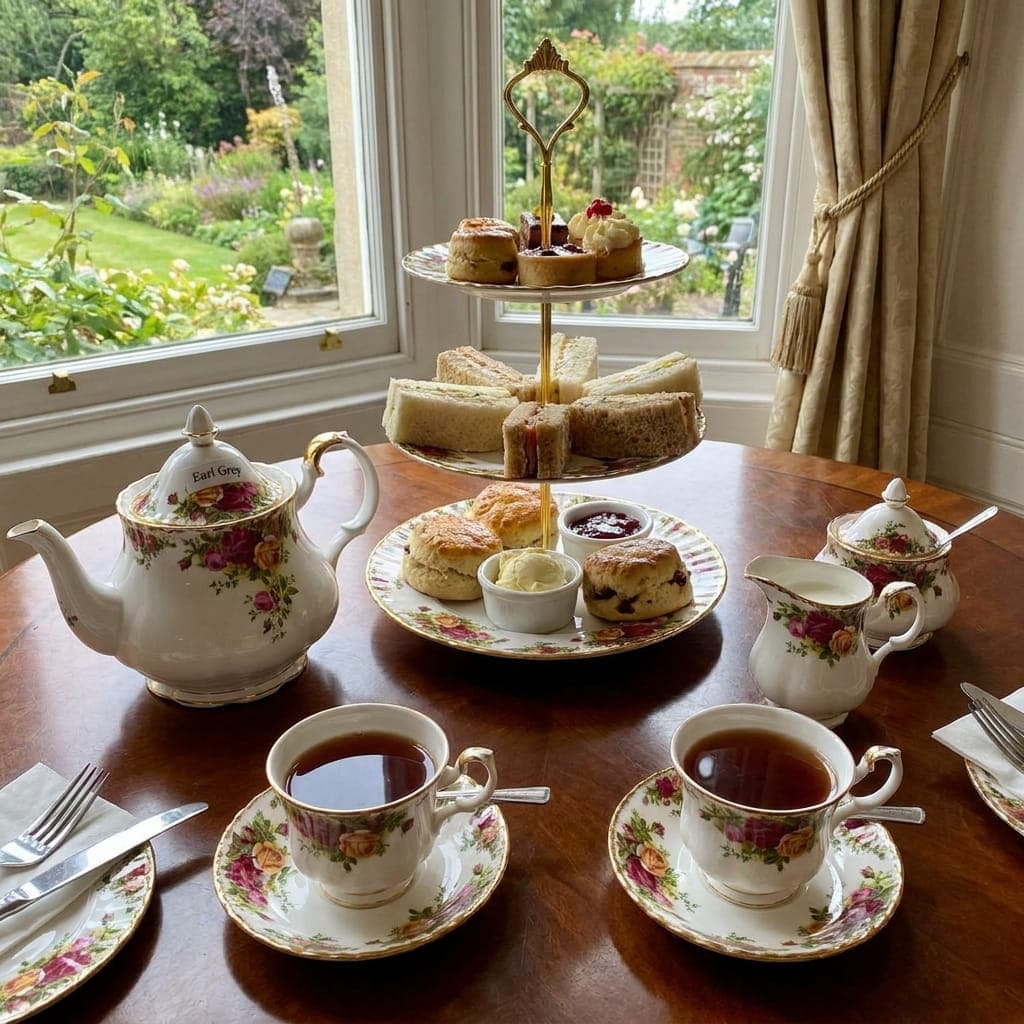
This follows the classic British method of warming the teapot before brewing, a small step that keeps the water at the right temperature long enough for the bergamot oil in Earl Grey to fully unfold. Served with a splash of milk the traditional way, it's the same cup that's been poured for afternoon tea across Britain for generations.

This follows the original bulletproof coffee method of blending hot coffee with butter and MCT oil rather than just stirring them in, since blending is what emulsifies the fat into the liquid and creates a thick, latte like froth instead of oily coffee with butter floating on top. It's built specifically to be sugar free, making it a popular fuel for anyone following a keto approach.
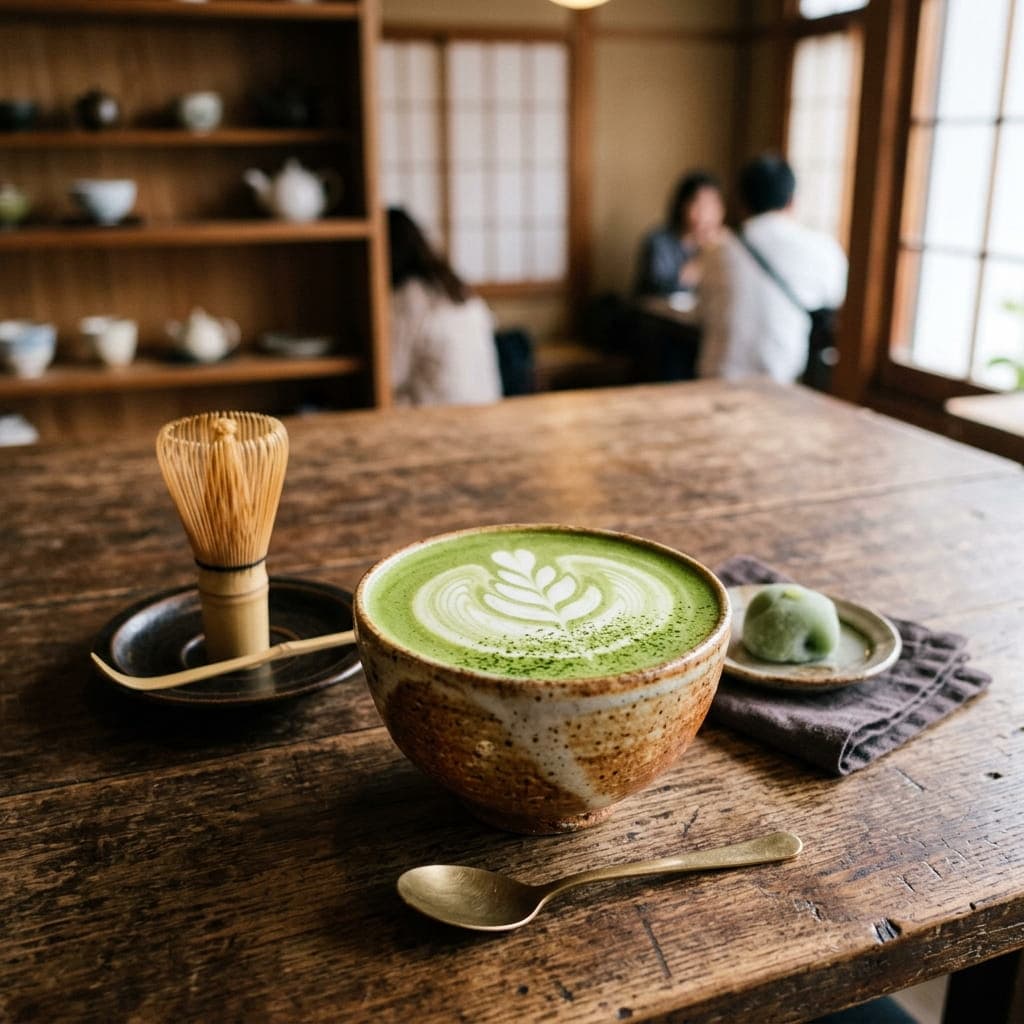
This follows the traditional Japanese method of whisking matcha powder into a small amount of hot water in a zigzag motion, which is what breaks up clumps and creates a smooth, lump free base before the milk is ever added. Skipping this step and just stirring matcha into milk directly almost always leaves behind gritty pockets of powder.
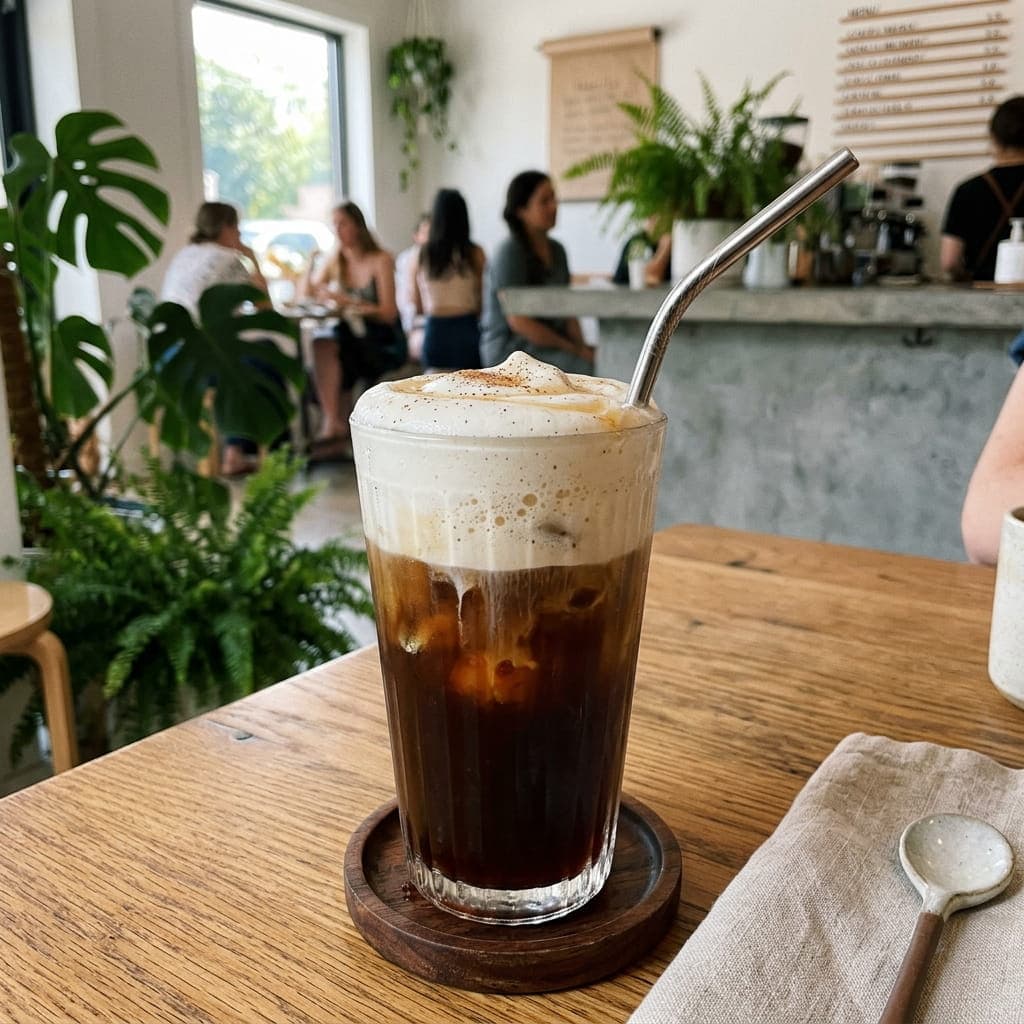
This recreates the coffee shop trend of topping cold brew with a thick, pourable foam instead of whipped cream, which stays light and slightly airy rather than melting into the coffee within minutes. Made by frothing cold milk with vanilla syrup until it thickens, it's the same technique baristas use behind the counter, just without the machine.