Loading...
Loading...
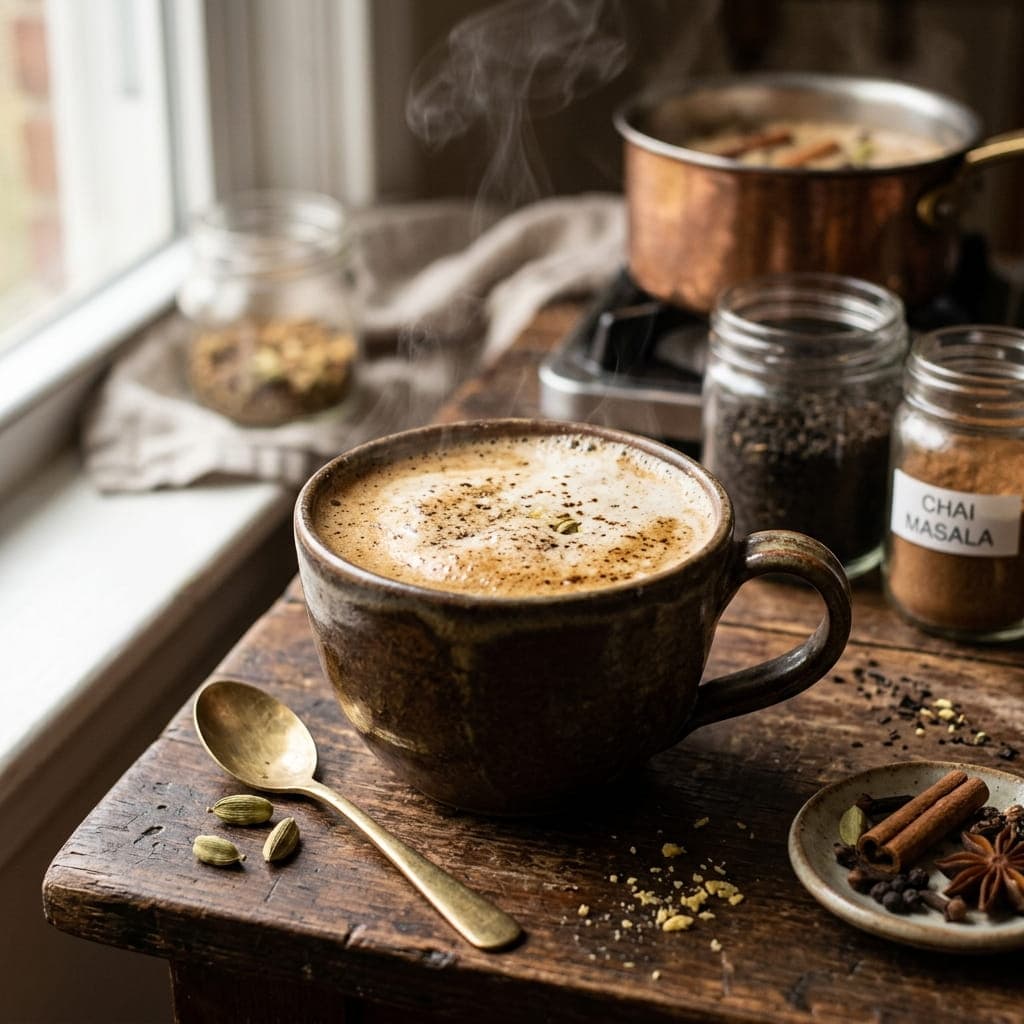
This uses whole spices crushed just before brewing rather than a pre-made powder, which is what gives homemade masala chai a sharper, more fragrant kick than the mellow blends found in most tea bags. Simmering the spices in water before the milk goes in also pulls out far more flavor than simply steeping them together all at once.
Per serving
140kcal
Calories
5g
Protein
17g
Carbs
Prep Time
8 min
Cook Time
12 min
Servings
2 people
Difficulty
medium
5g
Fat
1g
Fiber
15g
Sugar
Follow step-by-step with voice guidance.
Lightly crush the cardamom pods, cloves, cinnamon stick, black peppercorns, and ginger using a mortar and pestle.
Bring the water to a boil in a saucepan and add the crushed spices.
Simmer for 3 to 4 minutes to let the spices infuse the water.
Add the black tea leaves and simmer for another 2 minutes.
Pour in the milk and bring the mixture back to a gentle boil.
Reduce the heat and let it simmer for 3 to 5 minutes, allowing the color to deepen.
Add sugar to taste and stir well.
Strain into cups and serve hot.
Crush Whole Spices Fresh: Freshly crushed spices release far more essential oils than pre ground masala powder that has been sitting in a jar for months. Simmer the Spices in Water First: Building the spice base in water before adding milk extracts more flavor than adding everything together at once. Adjust the Spice Blend to Your Taste: Some households favor more ginger for heat, while others lean on extra cardamom for fragrance, so feel free to shift the ratios.
The most common blend includes cardamom, cloves, cinnamon, black pepper, and ginger, though households often adjust the ratios or add fennel and star anise for their own variation.
0 reviews • 0.0 / 5 Average Rating
No reviews yet. Be the first to review this recipe!
More Like This
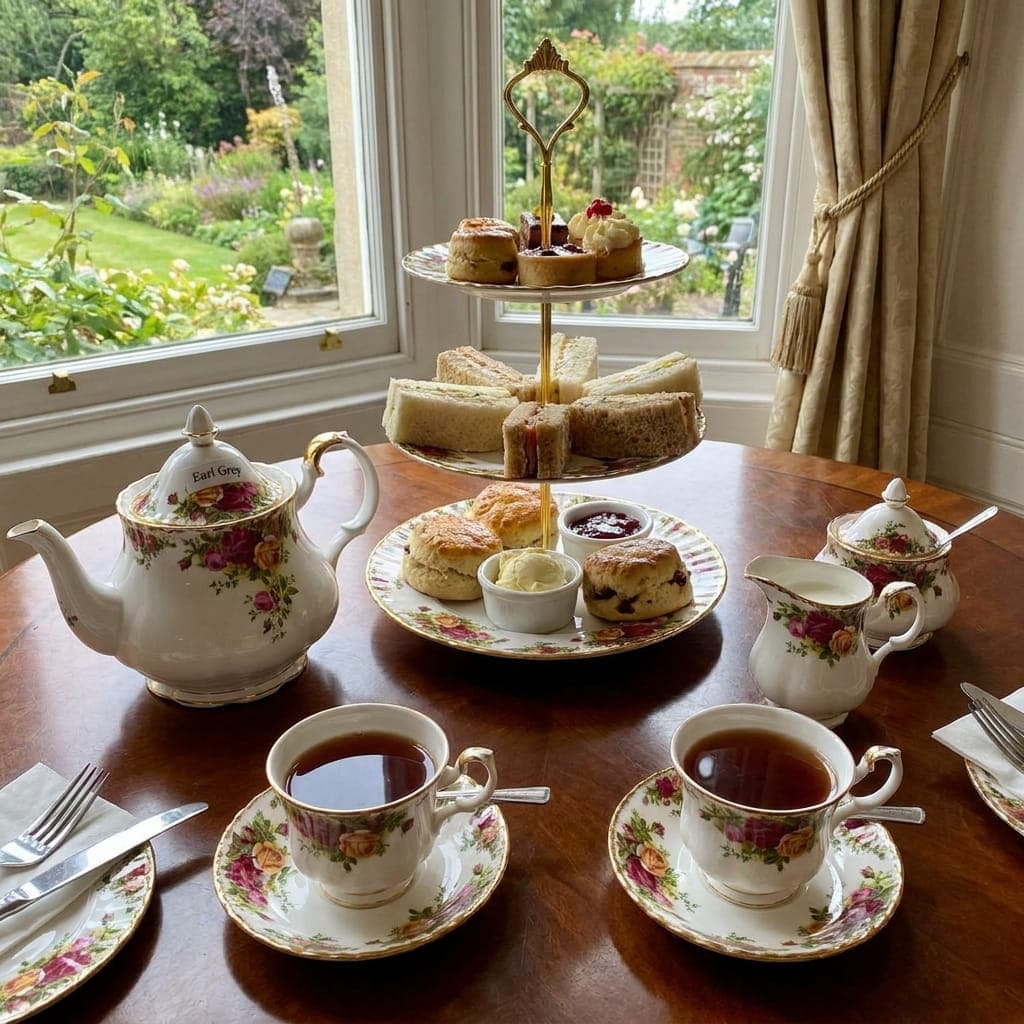
This follows the classic British method of warming the teapot before brewing, a small step that keeps the water at the right temperature long enough for the bergamot oil in Earl Grey to fully unfold. Served with a splash of milk the traditional way, it's the same cup that's been poured for afternoon tea across Britain for generations.
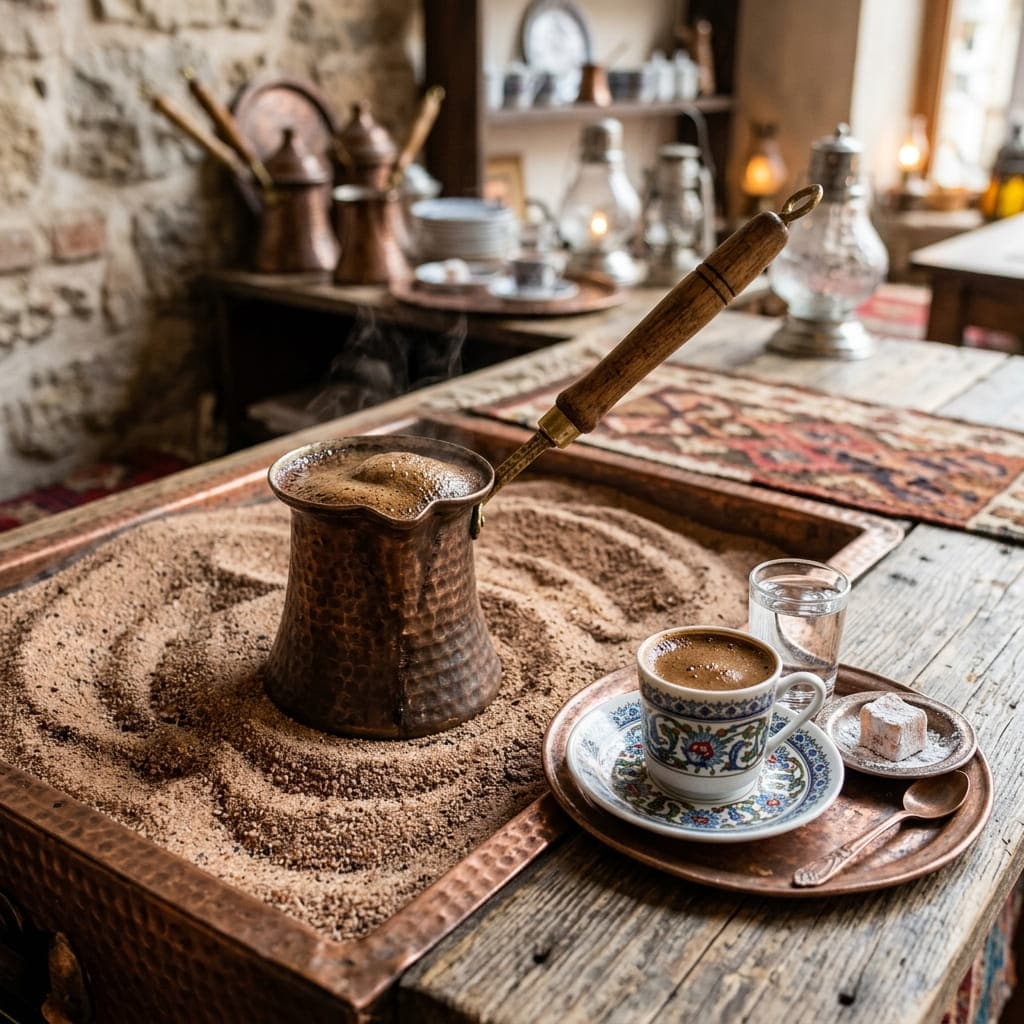
This uses the traditional method of nestling a small copper cezve into hot sand rather than placing it directly on a burner, since the sand acts as a buffer that heats the coffee slowly and evenly from all sides. That gentle, gradual heat is exactly what builds the thick foam and rich, velvety texture that sets real Turkish coffee apart.

This follows the original bulletproof coffee method of blending hot coffee with butter and MCT oil rather than just stirring them in, since blending is what emulsifies the fat into the liquid and creates a thick, latte like froth instead of oily coffee with butter floating on top. It's built specifically to be sugar free, making it a popular fuel for anyone following a keto approach.
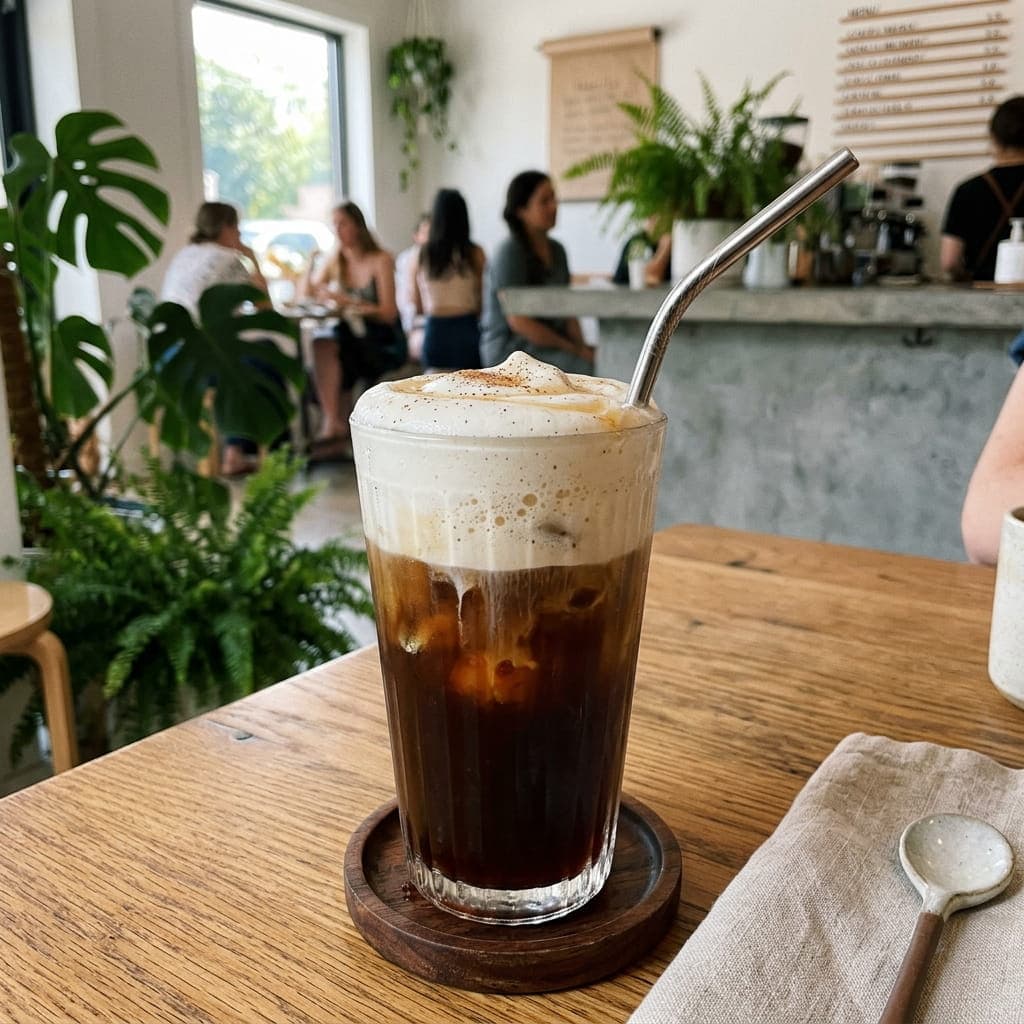
This recreates the coffee shop trend of topping cold brew with a thick, pourable foam instead of whipped cream, which stays light and slightly airy rather than melting into the coffee within minutes. Made by frothing cold milk with vanilla syrup until it thickens, it's the same technique baristas use behind the counter, just without the machine.