Loading...
Loading...
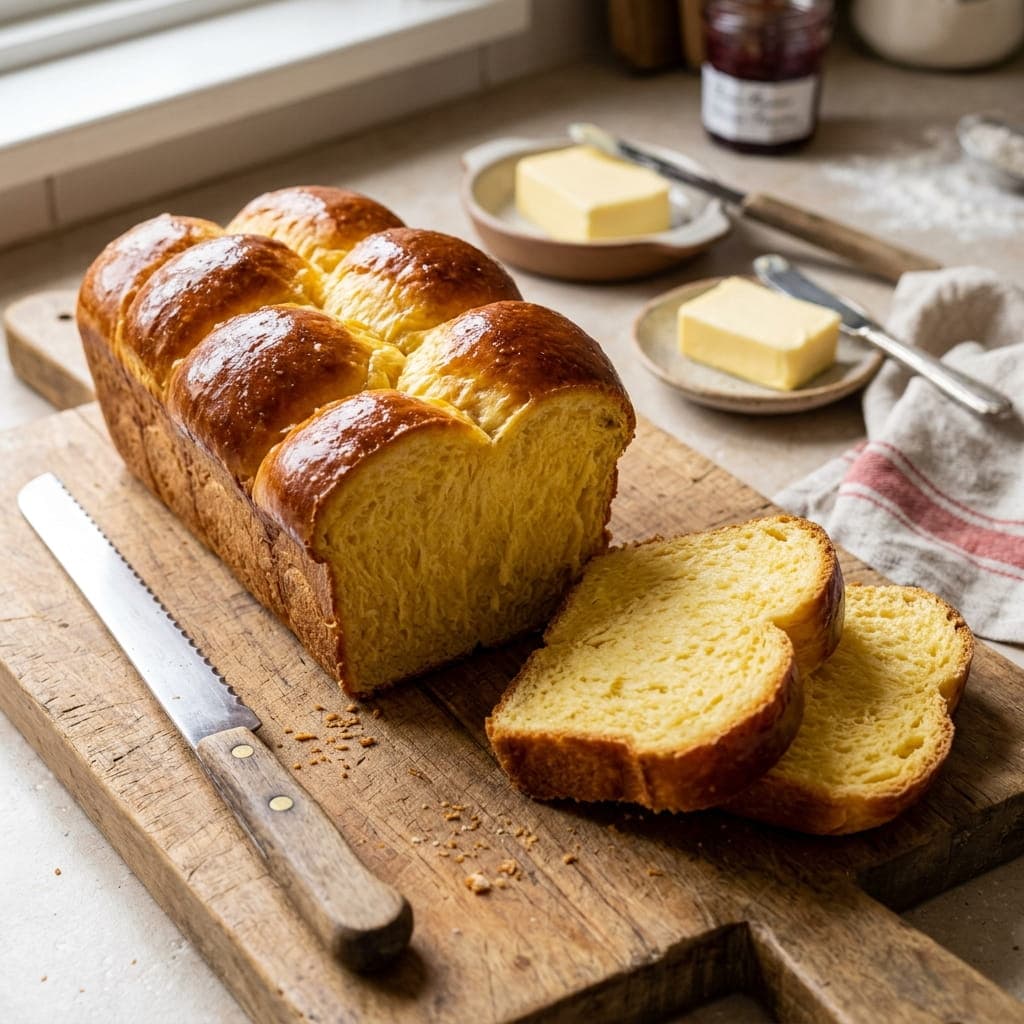
This adds the butter to the dough gradually, only once the base dough has already developed some gluten structure through kneading, since dumping in all that fat too early would coat the flour and prevent proper gluten formation. A cold overnight rest in the fridge firms the very soft, buttery dough back up, which is what makes it possible to shape without it collapsing into a sticky mess.
Per serving
290kcal
Calories
7g
Protein
30g
Carbs
16g
Prep Time
40 min
Cook Time
35 min
Servings
10 people
Difficulty
hard
Fat
1g
Fiber
6g
Sugar
Follow step-by-step with voice guidance.
In a large bowl, combine the flour, yeast, sugar, and salt.
Add the eggs and milk, and mix until a shaggy dough forms.
Knead for 8 to 10 minutes, until smooth and elastic.
Add the softened butter a few tablespoons at a time, kneading well after each addition, until fully incorporated and the dough is smooth and glossy.
Place the dough in an oiled bowl, cover, and let rise at room temperature for 1.5 to 2 hours, until doubled.
Punch down the dough, cover, and refrigerate overnight to firm up.
Divide the chilled dough into pieces and shape into a loaf, placing it in a greased loaf pan.
Cover and let rise at room temperature for 1.5 to 2 hours, until puffy.
Preheat the oven to 180°C (350°F).
Brush the top with the beaten egg wash.
Bake for 30 to 35 minutes, until deeply golden, tenting with foil if it browns too quickly.
Cool in the pan for 10 minutes, then transfer to a wire rack to cool completely before slicing.
Add the Butter Gradually: Working it in a little at a time after the dough already has gluten structure is what keeps brioche properly airy rather than dense and greasy. Chill the Dough Before Shaping: An overnight rest firms up the very soft, buttery dough, making it possible to shape without it sticking to everything. Watch the Bake Closely: Brioche browns quickly due to its high butter and egg content, so tent it with foil partway through baking if the top is browning too fast.
The high proportion of butter and eggs makes brioche dough naturally much softer and stickier than a lean bread dough, which is why chilling it before shaping makes it far more manageable.
0 reviews • 0.0 / 5 Average Rating
No reviews yet. Be the first to review this recipe!
More Like This
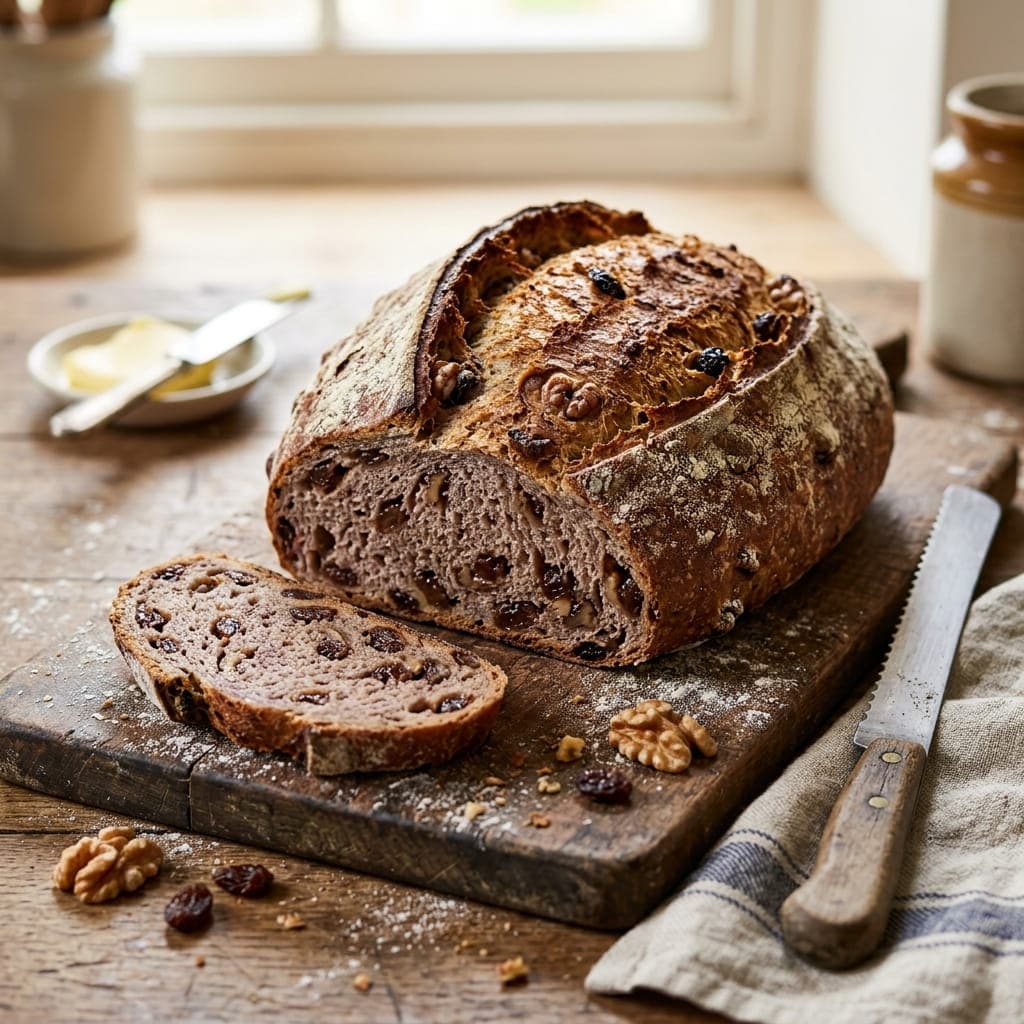
This soaks the raisins in warm water briefly before folding them into the dough, which plumps them back up so they bake into soft, juicy bites instead of drying out further in the oven's heat. Toasting the walnuts beforehand deepens their flavor, giving the finished loaf a richer, nuttier bite than simply folding them in raw.
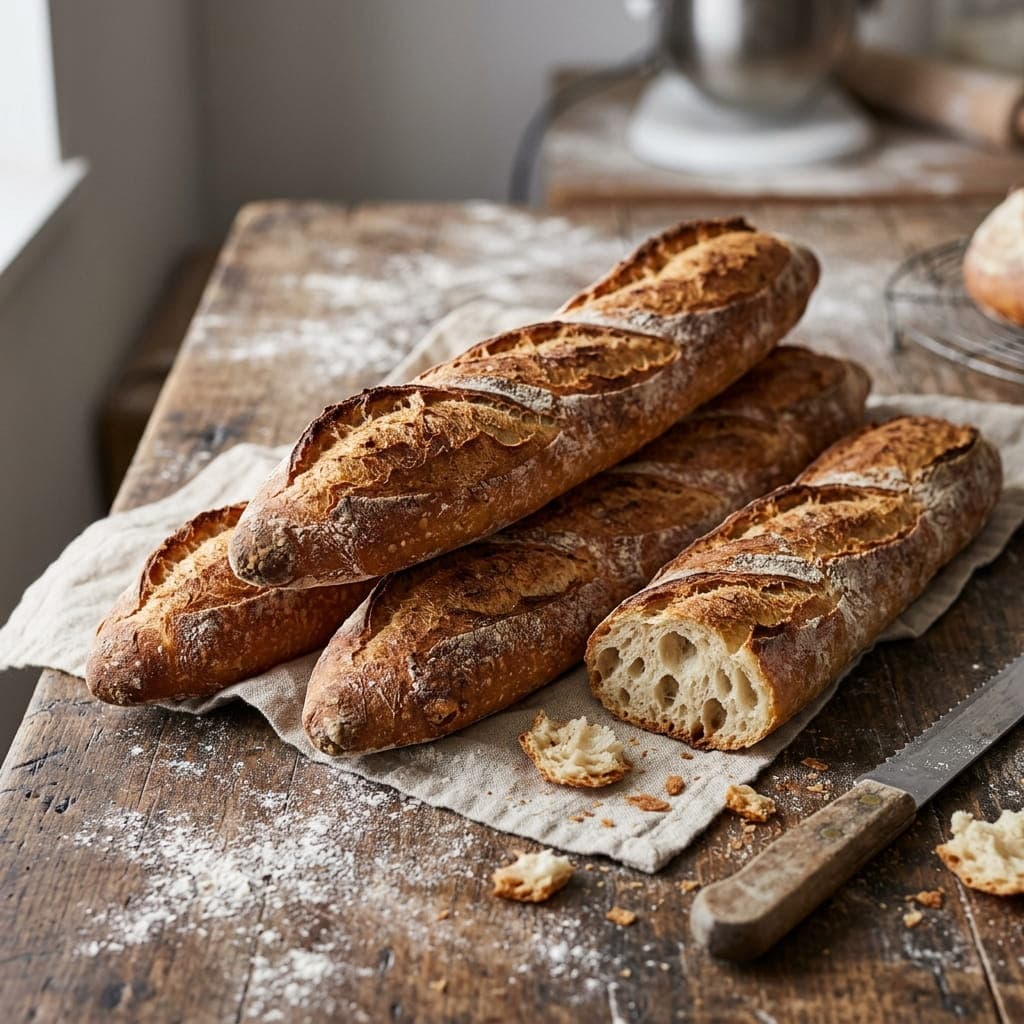
This uses a long, slow cold fermentation in the fridge overnight rather than rushing the rise at room temperature, since that extended time is what develops the deep, wheaty flavor a real French baguette depends on. Baking with steam in the first several minutes is what forces the crust to stay soft just long enough for a dramatic oven spring, before it sets into that signature crackling shell.
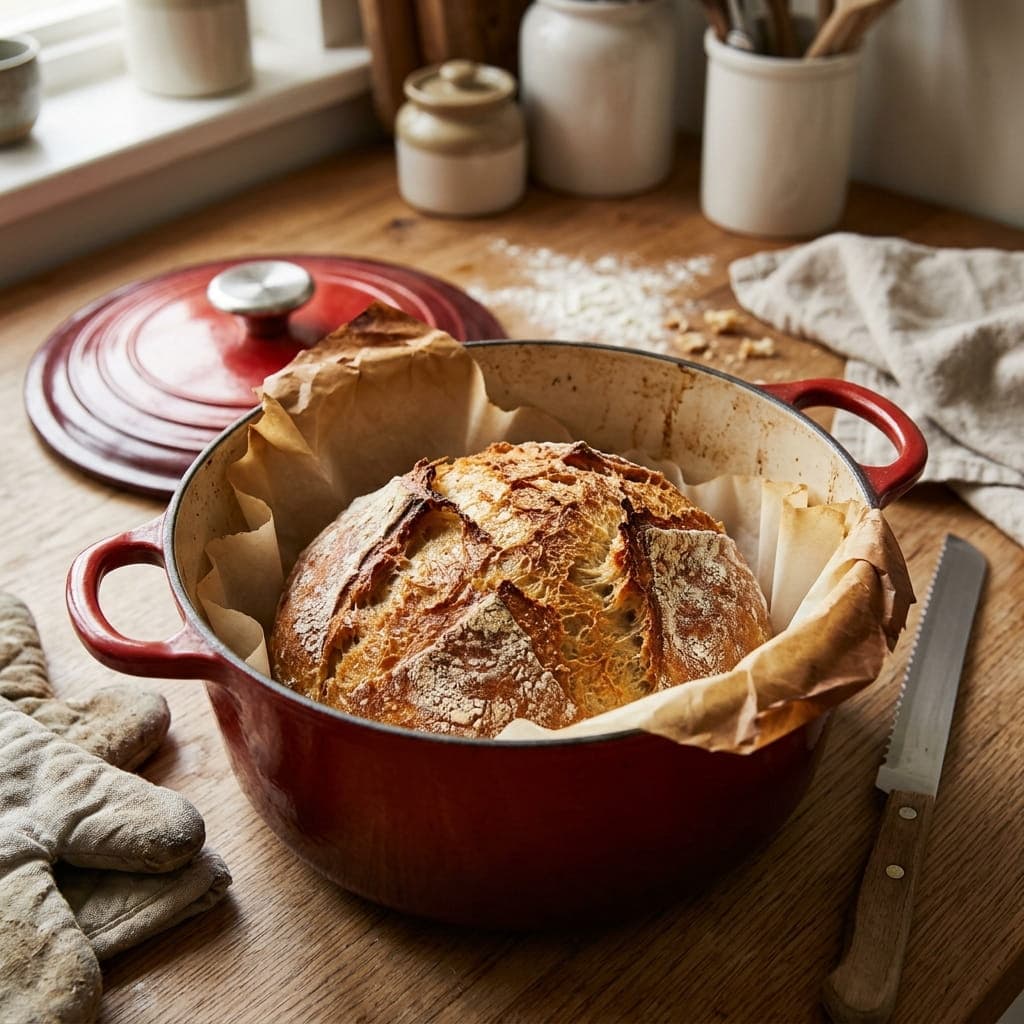
This skips kneading entirely and instead relies on a very long, slow rise, since extended time develops the gluten structure on its own, which is what makes this method so forgiving for a first attempt at homemade bread. Baking inside a covered Dutch oven traps the dough's own steam, giving even this simple, hands off recipe a crackling, bakery style crust.
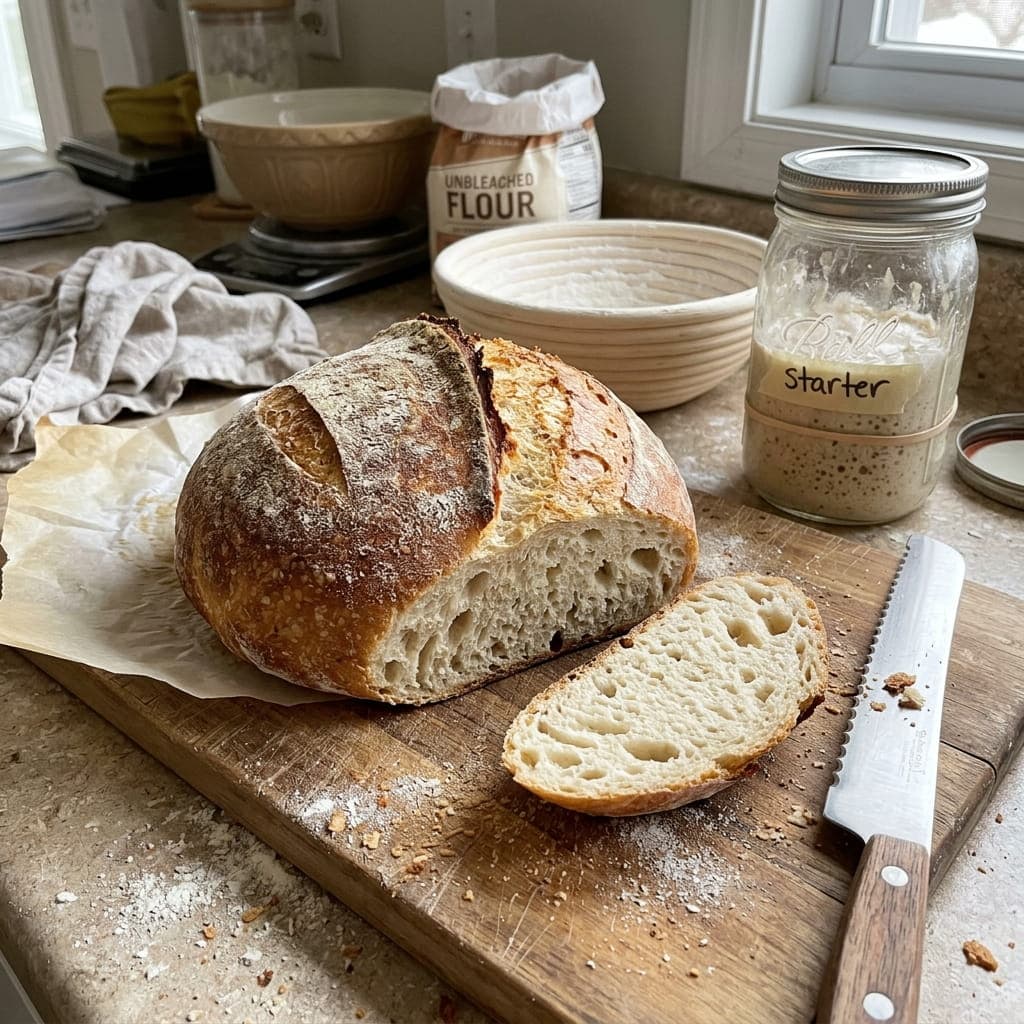
This relies on stretch and folds every 30 minutes during bulk fermentation instead of traditional kneading, a gentler technique that builds gluten strength in a wet sourdough dough without the mess of hand kneading a sticky mass. Baking the loaf inside a covered Dutch oven traps steam naturally, giving even a first attempt the kind of blistered, crackling crust that usually takes practice to achieve.