Loading...
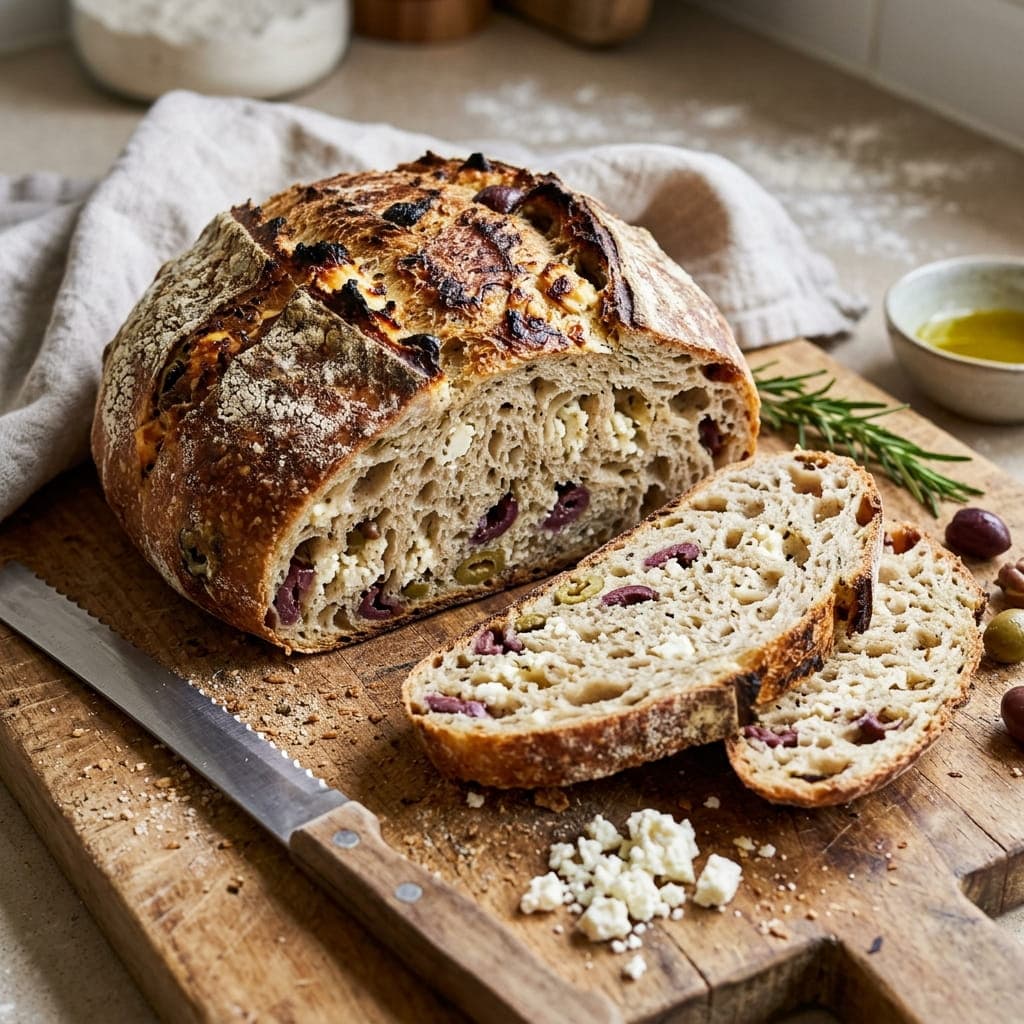
Loading...
This folds the olives and feta into the dough during the final stretch and fold rather than kneading them in from the start, which distributes them evenly throughout the loaf without overworking the dough or breaking the cheese down into a paste. Draining the olives well beforehand is what keeps their brine from adding excess moisture that could throw off the dough's hydration.
Per serving
190kcal
Calories
6g
Protein
32g
Carbs
4g
Fat
Prep Time
40 min
Cook Time
45 min
Servings
10 people
Difficulty
hard
1g
Fiber
Follow step-by-step with voice guidance.
In a large bowl, combine the active sourdough starter and water, mixing until dissolved.
Add the flour and salt, and mix until a shaggy dough forms.
Let the dough rest for 30 minutes, then perform a set of stretch and folds.
Repeat the stretch and folds every 30 minutes for 2 hours.
On the final fold, gently fold in the chopped kalamata olives and crumbled feta cheese, along with the dried oregano.
Cover and let the dough continue to bulk ferment for another 2 to 3 hours, until puffy.
Turn the dough out and shape it into a round boule.
Place seam side up in a floured proofing basket, cover, and refrigerate for 10 to 14 hours.
Preheat the oven to 230°C (450°F) with a Dutch oven inside for 30 minutes.
Turn the cold dough out onto parchment, score the top, and carefully lower it into the hot Dutch oven.
Cover and bake for 20 minutes, then uncover and bake for another 20 to 25 minutes, until deeply golden.
Cool completely on a wire rack before slicing.
Drain the Olives Well: Excess brine can add too much moisture to the dough, so pat the olives dry before chopping and folding them in. Fold the Mix-Ins In Gently: Adding the olives and feta during a stretch and fold, rather than kneading them in from the start, keeps them evenly distributed without overworking the dough. Don't Overwork the Feta: Folding gently keeps the cheese in distinct crumbles instead of breaking it down into a paste throughout the dough.
Yes, green olives or a mix of olive varieties can be used, though kalamata olives are the classic choice for their rich, briny flavor that pairs well with Mediterranean style bread.
0 reviews • 0.0 / 5 Average Rating
No reviews yet. Be the first to review this recipe!
More Like This
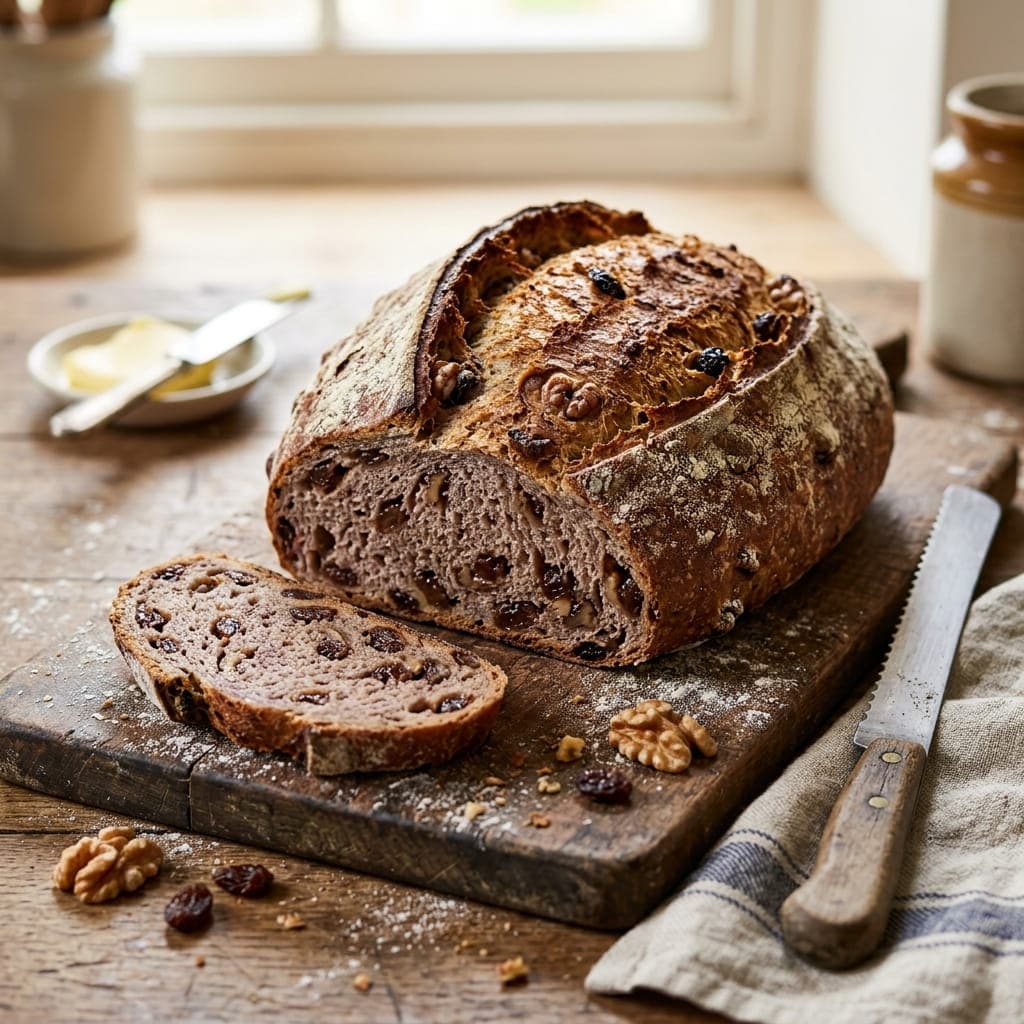
This soaks the raisins in warm water briefly before folding them into the dough, which plumps them back up so they bake into soft, juicy bites instead of drying out further in the oven's heat. Toasting the walnuts beforehand deepens their flavor, giving the finished loaf a richer, nuttier bite than simply folding them in raw.
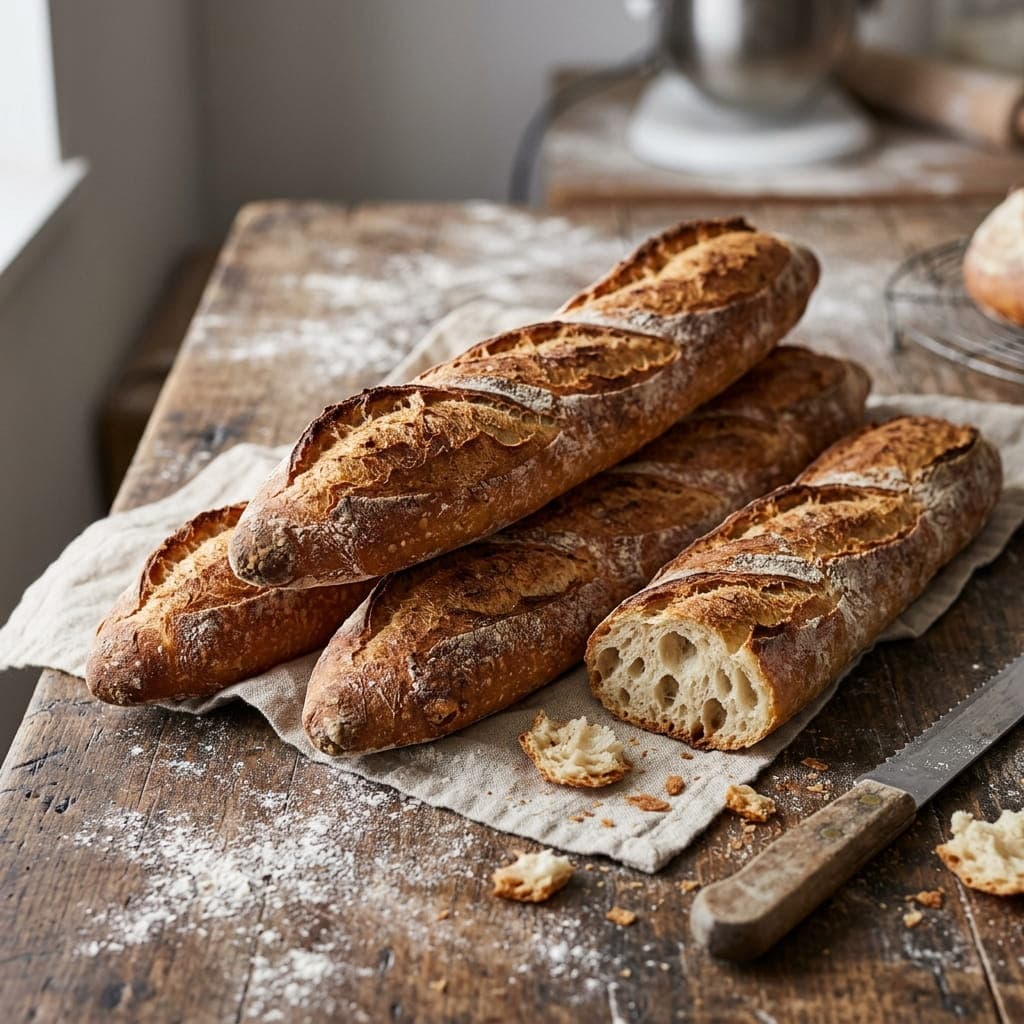
This uses a long, slow cold fermentation in the fridge overnight rather than rushing the rise at room temperature, since that extended time is what develops the deep, wheaty flavor a real French baguette depends on. Baking with steam in the first several minutes is what forces the crust to stay soft just long enough for a dramatic oven spring, before it sets into that signature crackling shell.
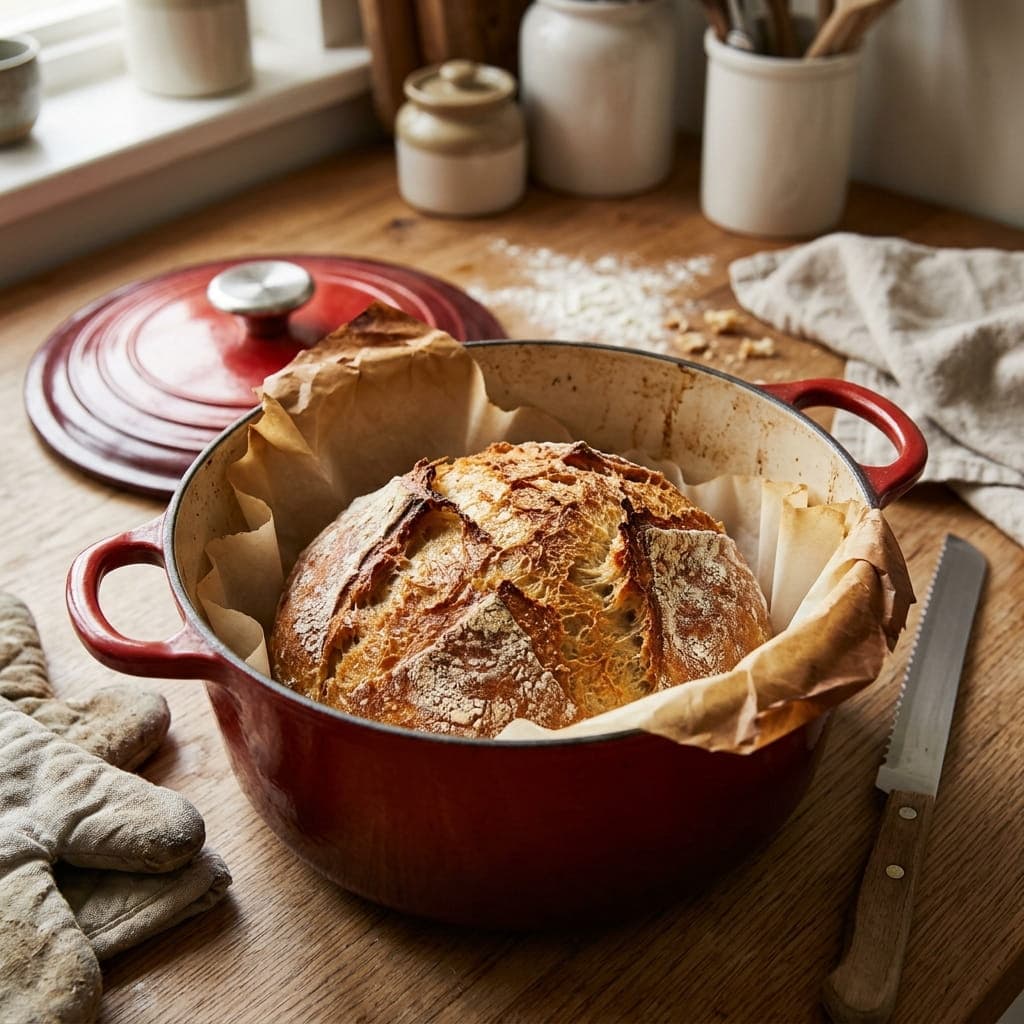
This skips kneading entirely and instead relies on a very long, slow rise, since extended time develops the gluten structure on its own, which is what makes this method so forgiving for a first attempt at homemade bread. Baking inside a covered Dutch oven traps the dough's own steam, giving even this simple, hands off recipe a crackling, bakery style crust.
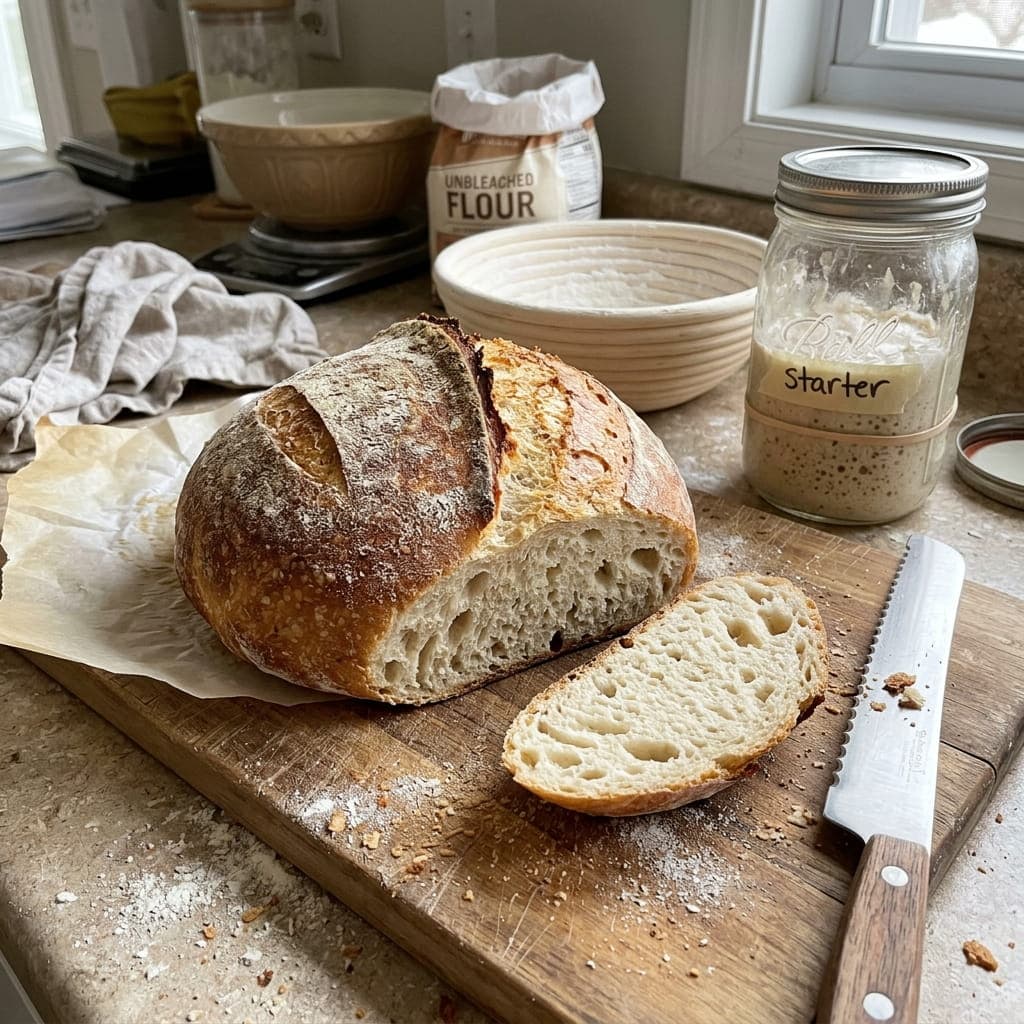
This relies on stretch and folds every 30 minutes during bulk fermentation instead of traditional kneading, a gentler technique that builds gluten strength in a wet sourdough dough without the mess of hand kneading a sticky mass. Baking the loaf inside a covered Dutch oven traps steam naturally, giving even a first attempt the kind of blistered, crackling crust that usually takes practice to achieve.