Loading...
Loading...
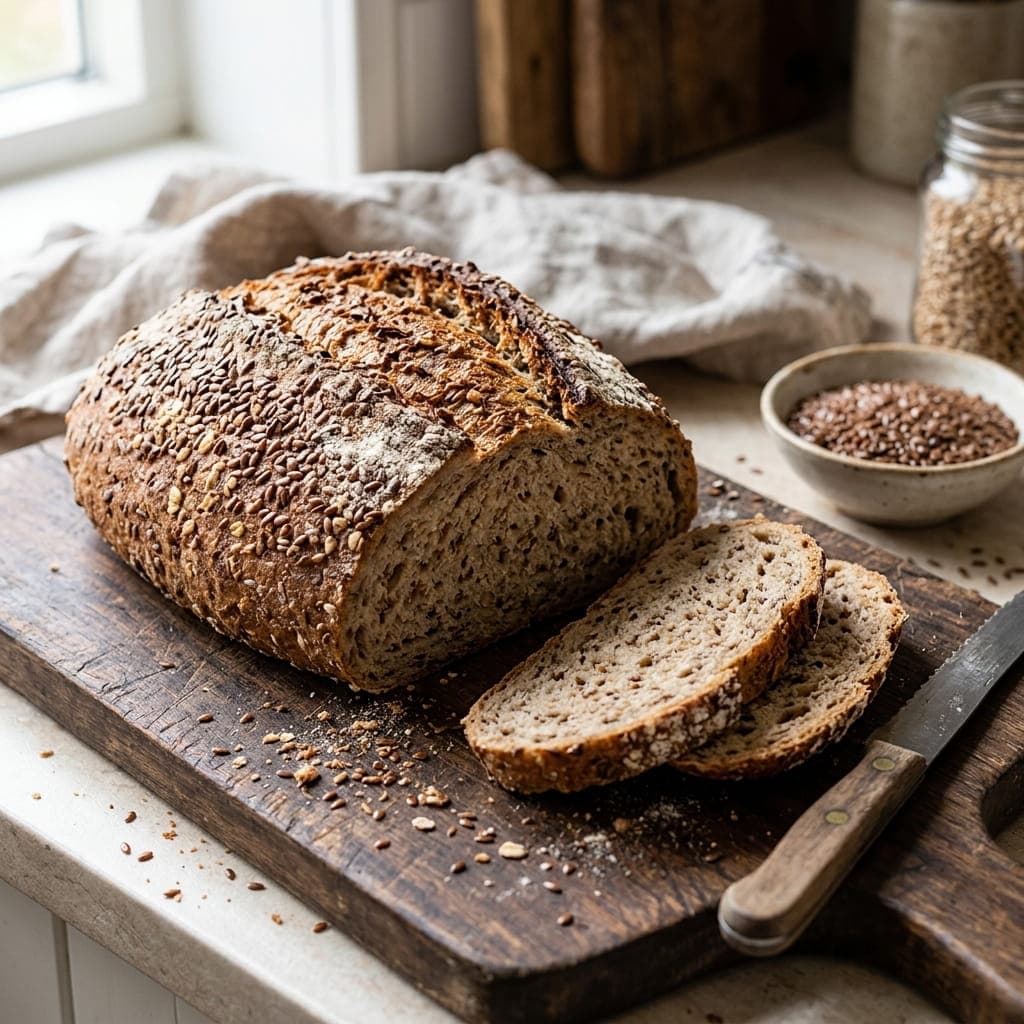
This soaks the ground flaxseed in warm water before mixing it into the dough, letting it form a gel that adds moisture and helps bind the denser whole wheat flour, which otherwise tends to bake up dry and crumbly. A blend of whole wheat and a small amount of bread flour keeps the loaf hearty and fiber rich without turning out so heavy it doesn't rise properly.
Per serving
140kcal
Calories
5g
Protein
24g
Carbs
3g
Prep Time
25 min
Cook Time
40 min
Servings
12 people
Difficulty
medium
Fat
3g
Fiber
3g
Sugar
Follow step-by-step with voice guidance.
In a small bowl, combine the ground flaxseed and warm water, and let sit for 10 minutes to form a gel.
In a large bowl, combine the whole wheat flour, bread flour, yeast, honey, and salt.
Add the flaxseed gel and olive oil, and mix until a shaggy dough forms.
Knead for 8 to 10 minutes, until smooth and elastic, adding small amounts of flour if too sticky.
Place the dough in an oiled bowl, cover, and let rise for 1 to 1.5 hours, until doubled.
Punch down the dough and shape it into a loaf, placing it in a greased loaf pan.
Cover and let rise for 45 minutes to 1 hour, until it crowns above the edge of the pan.
Preheat the oven to 190°C (375°F).
Sprinkle a few whole flaxseeds over the top of the loaf, if desired.
Bake for 35 to 40 minutes, until deeply golden and it sounds hollow when tapped.
Cool in the pan for 10 minutes, then transfer to a wire rack to cool completely before slicing.
Soak the Ground Flaxseed First: Letting it form a gel in warm water before mixing adds moisture that helps keep this denser whole wheat loaf from turning out dry. Don't Skip the Blend of Flours: A little bread flour alongside the whole wheat helps the dough develop enough structure to rise well, rather than baking up too dense. Check for Doneness by Sound: A properly baked loaf sounds hollow when tapped on the bottom, which is a more reliable test than color alone for a whole grain bread.
Whole wheat flour contains the bran and germ of the wheat kernel, which are heavier and can cut through gluten strands as they develop, resulting in a naturally denser loaf compared to refined white flour.
0 reviews • 0.0 / 5 Average Rating
No reviews yet. Be the first to review this recipe!
More Like This
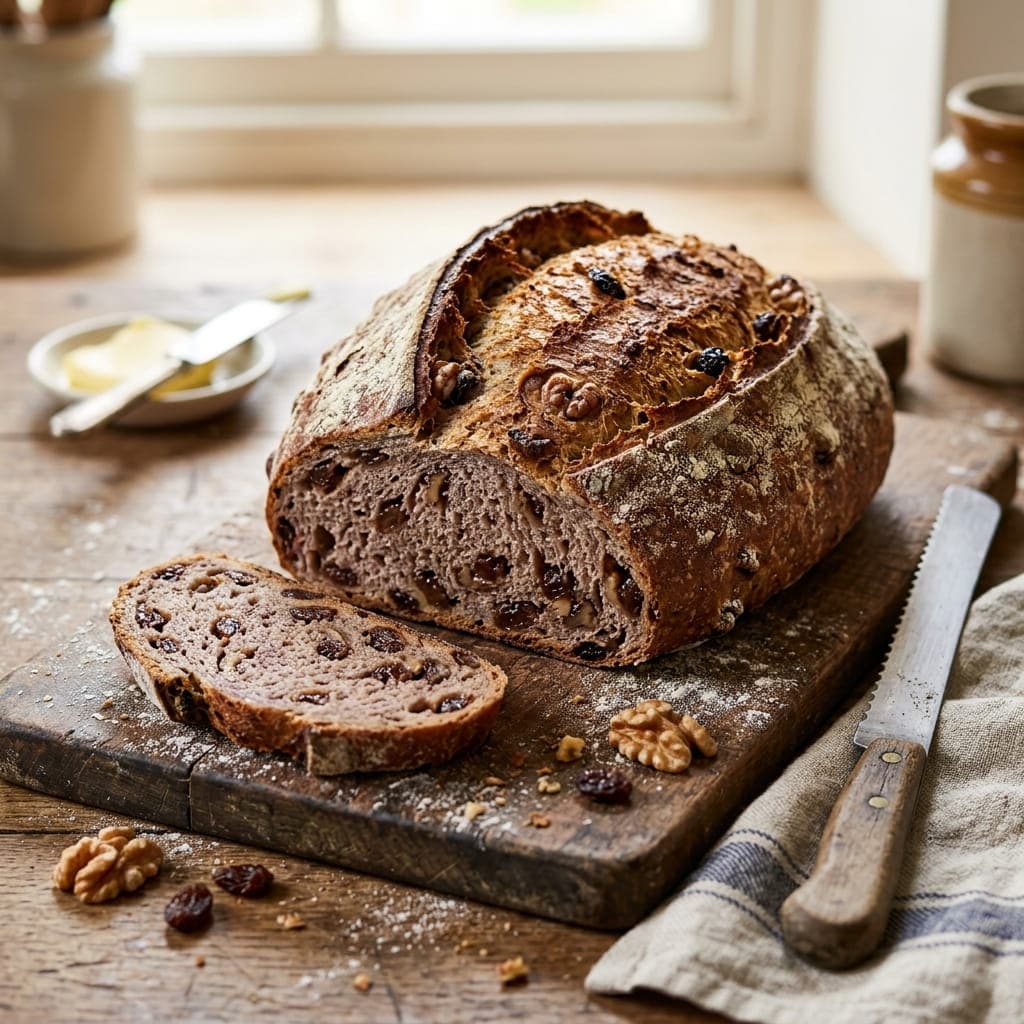
This soaks the raisins in warm water briefly before folding them into the dough, which plumps them back up so they bake into soft, juicy bites instead of drying out further in the oven's heat. Toasting the walnuts beforehand deepens their flavor, giving the finished loaf a richer, nuttier bite than simply folding them in raw.
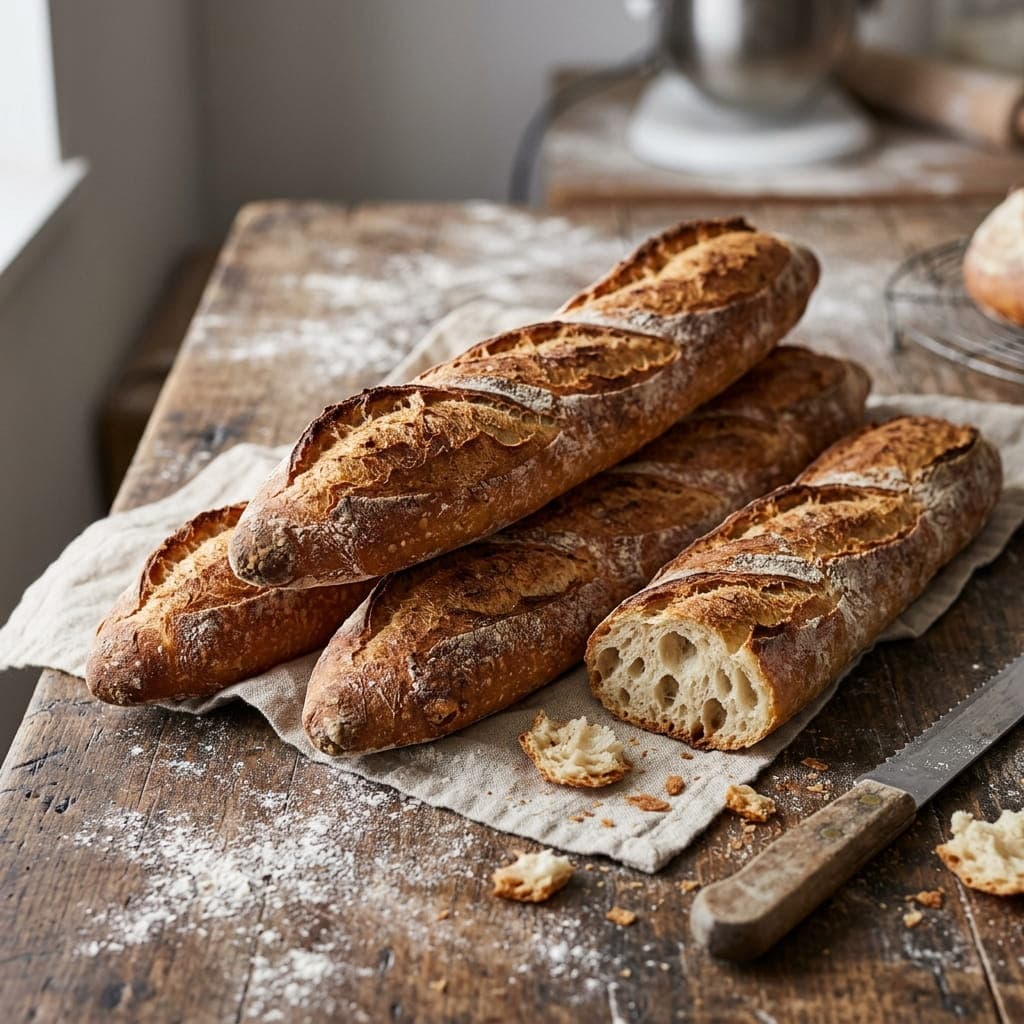
This uses a long, slow cold fermentation in the fridge overnight rather than rushing the rise at room temperature, since that extended time is what develops the deep, wheaty flavor a real French baguette depends on. Baking with steam in the first several minutes is what forces the crust to stay soft just long enough for a dramatic oven spring, before it sets into that signature crackling shell.

This skips kneading entirely and instead relies on a very long, slow rise, since extended time develops the gluten structure on its own, which is what makes this method so forgiving for a first attempt at homemade bread. Baking inside a covered Dutch oven traps the dough's own steam, giving even this simple, hands off recipe a crackling, bakery style crust.
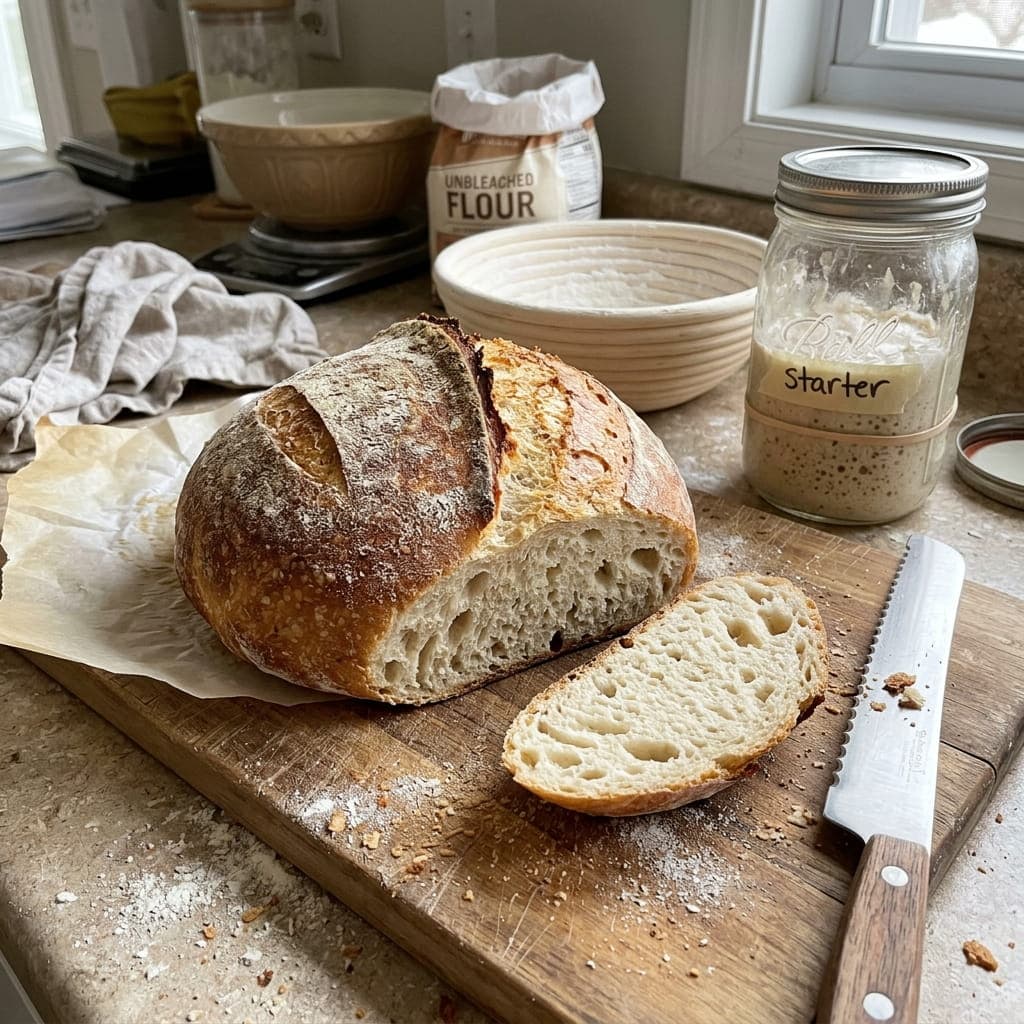
This relies on stretch and folds every 30 minutes during bulk fermentation instead of traditional kneading, a gentler technique that builds gluten strength in a wet sourdough dough without the mess of hand kneading a sticky mass. Baking the loaf inside a covered Dutch oven traps steam naturally, giving even a first attempt the kind of blistered, crackling crust that usually takes practice to achieve.